Episode Transcript
[00:00:00] Speaker A: Welcome back to behind the Scams. I'm Nick Henley, here with my wife and co host, Sue. I was gonna get an AI assistant, but I already live with someone who remembers everything I've ever said wrong.
[00:00:11] Speaker B: And I don't invent sources or hallucinate answers.
[00:00:15] Speaker A: Of course not. AI is great, but I don't think humans are to the point of marrying their favorite chatbot.
[00:00:21] Speaker B: No, I certainly hope not. But you never know.
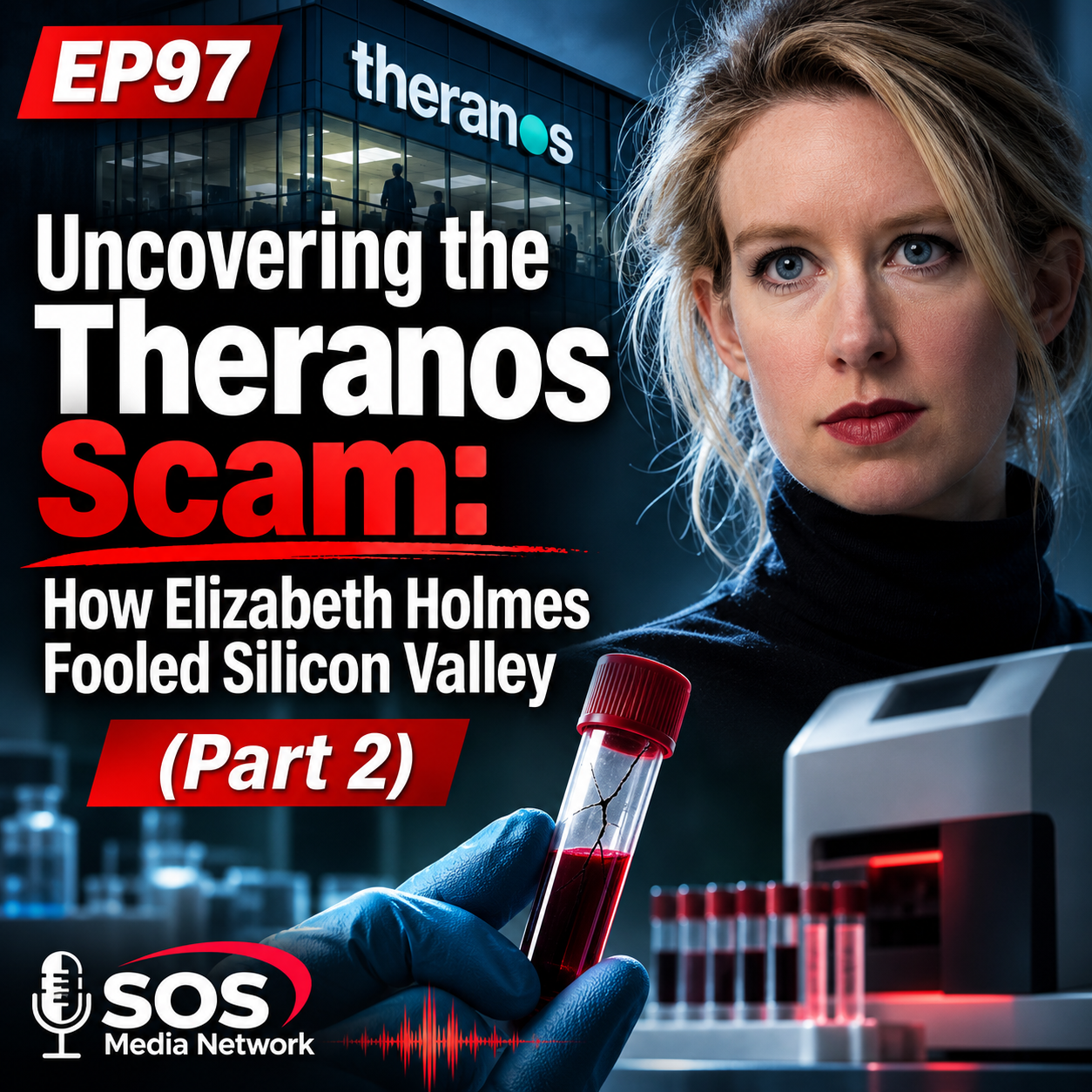
[00:00:24] Speaker A: That's true. Anyways, today's episode is part two of our Theranos investigation, the Reckoning. If you haven't done so already, please listen to part one. In that episode, we followed the promise. Small blood sample, faster answers, lower costs and the machinery built around it. Demonstrations borrowed credibility, famous names, and the idea that asking questions meant you didn't understand innovation.
[00:00:48] Speaker B: We talked about the bait and switch demonstrations, the modified commercial Siemens machines, the pharmaceutical logos that suggested approval, and the board members whose reputation seemed to do the verifying for everybody else.
Today we follow the people who looked past all that and asked whether the tests actually worked.
[00:01:07] Speaker A: Then what happened when they asked?
We'll get to whistleblowers, patients, regulators, and two criminal trials whose verdicts were not identical. We also need to say this at the beginning. Part of this episode discusses a scientist's death by suicide.
We won't describe the method, and we won't treat his death as a dramatic twist
[00:01:25] Speaker B: or treat the people who trusted Theranos as the punchline. Wanting affordable healthcare isn't foolish. Wanting an ambitious company to succeed isn't foolish. The responsibility belongs with people who made claims they could not honestly support.
[00:01:38] Speaker A: Let's start inside the laboratory, because that's where the gap between the public promise and the actual evidence became impossible for some employees to ignore.
A laboratory doesn't get to decide that. Accuracy is a nice feature to add after the launch.
[00:01:56] Speaker B: There's a person waiting for the result, not a user clicking through a beta version.
A person who may make a medical decision because of the number on that page.
[00:02:07] Speaker A: The first acronym is clia. The Clinical Laboratory Improvement Amendments.
This is the federal framework governing laboratory quality.
One safeguard is proficiency testing. For covered tests, laboratories participate in approved programs that send samples whose expected answers are unknown to the laboratory. The laboratory tests them and reports its results.
[00:02:30] Speaker B: So the lab knows it's being tested. It just doesn't know the answer it's supposed to get
[00:02:36] Speaker A: exactly. Blind doesn't mean a regulator sneaks in a sample disguised as somebody's uncle.
And these samples don't all arrive directly from federal or state inspectors. They come through approved testing programs. The key rule is that the lab must handle them in the same manner as patient specimens, using its routine methods and personnel.
[00:02:55] Speaker B: Otherwise, you're checking the special performance you prepared for the examiner, not the service you're selling to everyone else.
[00:03:02] Speaker A: Erica Chong later testified that predicate method results, the comparison methods, rather than Edison generated results, were supplied to regulators during her time there were reporting on Tyler. Schultz describes the same proficiency testing could look acceptable, while the company's own machines produced very different results. Commercial equipment, including Siemens machines, became part of that divide.
[00:03:25] Speaker B: And using a Siemens machine isn't itself the scam. Conventional laboratory equipment can be perfectly legitimate. The question is whether you are giving the outside reviewer the same process you're giving the patient, and whether you're telling people whose technology produced the result
[00:03:42] Speaker A: right. If the examiner gets the reliable comparison method and patients get a different unreliable method, the passing grade doesn't answer the safety question.
Tyler contacted the New York State Department of Health anonymously to describe the practice. According to reporting on his account. Their response characterized it as proficiency testing cheating.
There was another problem, deleting inconvenient data.
Chang testified about an outlier deletion process.
She described picking favorable data points to make quality control results appear acceptable without consistent rules or protocols. That matters because variability is part of what a validation study is supposed to reveal. If you measure the same thing repeatedly, how closely do the answers agree? You want to know whether the method is stable enough for its purpose.
A standard deviation is one way of describing the spread. If you remove the results that expose the spread, the summary can look more reassuring about the instrument becoming more reliable.
There are legitimate scientific reasons to exclude some data. An independently documented sample problem, for example. But the rule has to be defensible, consistent and transparent. You can't decide after seeing the answer that the answer is inconvenient and therefore doesn't count.
[00:04:55] Speaker B: And we should distinguish validation from daily quality control. One asks whether a method is fit for use. The other keeps checking whether it's performing properly. Neither is supposed to be a paperwork exercise that ends when someone says, we need this to pass.
[00:05:10] Speaker A: Theranos had people willing to raise that
[00:05:12] Speaker B: question. They weren't outsiders trying to ruin a business they disliked. They were employees who had believed in it. That's the laboratory problem.
Now let's follow the people who tried to get someone to act on it. Two of those employees were Tyler Schultz and Erica Chung. Their stories help explain how an internal quality problem became a public reckoning and what it cost to get there. Tyler's connection To Theranos was unusually personal. His grandfather, George Shultz, was a former Secretary of State and a board member. This wasn't simply a company Tyler found on a job listing. He, the founder, was already someone his family knew and admired.
That connection opened a door.
[00:05:53] Speaker A: It also made speaking up much more complicated.
Tyler worked on validation and saw discrepancies between the underlying experiments and the numbers presented in reports reporting described syphilis testing experiments showing sensitivity of 65% and 80%, while a report claimed 95%. And those aren't company wide accuracy rates. We're talking about particular experiments and a particular claim correct. Sensitivity concerns how well a test identifies samples that are actually positive. Specificity concerns correctly identifying negatives. They answer different questions. Tyler was challenging the claim sensitivity against the experimental evidence, not claiming that those percentages described every test the company offered.
He raised concerns internally, including with Elizabeth Holmes. The response from Sonny Balwani challenged his understanding of the science and mathematics. In belittling terms, Tyler resigned. Instead of an employee's warning becoming a reason to reassess a testing, the employee became the problem to be managed. Tyler also took his concerns to his grandfather.
Dorge initially continued to believe Holmes despite what Tyler was telling him.
Dernose lawyers later confronted Tyler at his grandfather's home and pressed for restrictive agreements that put corporate legal press inside a family relationship.
[00:07:15] Speaker B: Home is usually where you go after the difficult meeting. In this story, home became the place where the difficult meeting was waiting.
[00:07:24] Speaker A: The legal costs were substantial. The Wall Street Journal reported about $400,000 in fees for Tyler's defense. His parents helped carry that burden. At a later Stanford event, he described how they nearly had to sell their home.
[00:07:38] Speaker B: We should resist making that into a neat hero story.
He did the right thing and everything worked out. Doing the right thing did not cancel the bills or repair the family strain on schedule.
[00:07:49] Speaker A: Erica Chung's story gives us another view. She joined Theranos early in her career and worked there for roughly six months, from October 2013 to around April 2014.
She later testified about recurring quality control failures, differences between written procedures and actual practice, and unreliable Edison performance.
[00:08:09] Speaker B: She wasn't watching this from a conference stage. She was close to the samples and the daily work. The claim that the company was helping people had to survive what she was seeing at the bench.
[00:08:19] Speaker A: She raised concerns and eventually left.
Afterward, she described being followed by private investigators and receiving legal threats.
At Stanford, she said she used a burner phone for more than a year because she feared her phone was being monitored.
That's her account of fear. Not proof that her phone actually was tapped. She also changed where she lived as the pressure intensified.
Think about that disruption. A new job, a different place to stay, a phone you use because you're afraid of who might be listening.
The consequences followed her beyond the laboratory,
[00:08:56] Speaker B: and she ultimately contacted those centers for Medicare and Medicaid services, cms, with a formal complaint about the laboratory. She was trying to get someone with authority to examine what was happening to patient testing.
[00:09:09] Speaker A: David Boies and his firm, Boyes, Schiller Flexner, played a major part in the company's legal response. Trang received a cease and desist letter warning against disclosures of trade secrets and statements the company called false and defamatory.
Holmes later acknowledged hiring the firm after learning that Chang was speaking with John Carreyrou.
Companies can legitimately protect confidential information, but don't assume an NDA. A non disclosure agreement forbids every lawful report to an authority or that every disclosure is protected.
Get independent legal advice about what you can report and how to do it safely.
We also need to acknowledge Dr. Ian Gibbons, Theranos chief scientist. His story takes us back to May 2013 before the public exposure. He was an experienced biochemist who had raised concerns about the technology's performance. He was also caught up in a patent dispute in which he was scheduled to give a deposition.
[00:10:05] Speaker B: The accounts describe someone under tremendous professional and emotional strain. His wife, Rochelle, has spoken about that pressure and what the company's behavior meant to their family.
[00:10:15] Speaker A: Gibbons died by suicide on May 23, 2013, after hospitalization following a suicide attempt shortly before the scheduled deposition.
So we should not say he died on the eve of the deposition.
And we should not claim a court established that Holmes or a particular lawyer caused his death.
[00:10:34] Speaker B: Suicide is complex. We can acknowledge the reported pressures without turning a person's death into a single cause explanation. He was a scientist, a husband, and a person whose life was larger than this company.
[00:10:47] Speaker A: That's where we leave his story, with respect for him and his family, not with a cliffhanger.
[00:10:52] Speaker B: There's a common thread in these accounts. People with scientific concerns were made to feel that voicing them threatened the mission. But protecting patients was supposed to be the mission.
[00:11:03] Speaker A: Eventually, those warnings reached people outside the company.
A journalist who could investigate, regulators who could inspect.
The walls around the story were still strong, but they were no longer holding every fact inside.
[00:11:19] Speaker B: Now the story moves outside Theranos to the reporting and inspections that put its claims under public scrutiny.
[00:11:25] Speaker A: John Carreyrou's first major Wall Street Journal investigation appeared on October 15, 2015.
It challenged the central Theranos story, what the proprietary equipment could actually do, how much testing relied on other companies machines, and whether the results could be trusted.
Holmes tried to reach above the newsroom. At her trial, she acknowledged going through Rupert Murdoch to try to quash the story. Murdoch was both a Theranos investor and the owner behind the journal.
She described her effort as trying to ensure that trade secrets were not published.
The article was published anyway. Her attempt to stop it failed.
Not every powerful person cooperated with her. Institutional independence mattered
[00:12:10] Speaker B: and the public image was still being reinforced. While the reporting was underway, there was the visit from Vice President Joe Biden. In July 2015,
[00:12:18] Speaker A: he toured a Theo's facility in Newark, California.
Later reporting described a staged laboratory display prepared for the visit, using equipment arranged to support the company's futuristic presentation. The phrase often used is a Potemkin laboratory an impressive front concealing a different underlying reality.
Meanwhile, the actual checking was moving in a different direction. CMS conducted a recertification and complaint survey in 2015. The on site portion ended in November and additional information arrived in December.
January 25, 2016 letter notified Theranos of deficiencies and a finding of immediate jeopardy to patient health and safety right? A laboratory inspection is a regulatory process that can sound less dramatic, but the finding is very serious.
The March and July CMS letters describe failures involving hematology, analytic systems, laboratory leadership, supervision and personnel.
[00:13:18] Speaker B: And one of the concerns involved coagulation testing used in managing patients taking warfarin, a blood thinner. Those numbers help clinicians make treatment decisions. That's not the place to shrug and say the results are probably close enough.
[00:13:32] Speaker A: This also stops us from blaming every problem on the Edison alone. Reporting on corrected results included coagulation testing performed on a conventional Siemens device with calibration problem.
Good hardware does not rescue a laboratory whose quality system isn't working.
CMS found that the company's responses did not adequately demonstrate correction of the deficiencies or removal of immediate jeopardy.
In July 2016, it imposed sanctions, including revocation of the Newark laboratory certificate. Later proceedings and a settlement changed the regulatory disposition. So we shouldn't imply the July letter was the end of every administrative issue. By May 2016, reporting said Theranos had voided all Edison results from 2014 and 2015 and issued tens of thousands of corrective reports, including results from Edison and conventional equipment.
Two years of results withdrawn. Tens of thousands of reports changed. That is a large scale loss of confidence in information. People had already been given
[00:14:28] Speaker B: and voided and corrected aren't the same. One withdraws a result as something you can rely on. The other changes what was reported.
Either way, the original report may already have shaped a conversation or a medical decision.
[00:14:42] Speaker A: Commercial relationships were collapsing, too. Safeway's planned rollout ended with without the broad store launch once envisioned. Walgreens ended its partnership in June 2016.
Those were separate relationships with separate timelines, not one joint deal canceled on the same day.
Now we need to move from institutions to people Brittany Gould testified in Holmes trial about receiving Theranos pregnancy hormone results in 2014.
She had already experienced three miscarriages. Her clinician interpreted the following HCG results as indicating another pregnancy loss.
[00:15:20] Speaker B: Subsequent testing through another laboratory contradicted that frightening picture. She remained pregnant and eventually had a healthy baby.
A reassuring ending does not erase the experience of being told you may be losing a wanted pregnancy.
[00:15:35] Speaker A: We should describe the chain accurately.
A laboratory measurement helped lead her treating clinician to that conclusion. The machine didn't issue a standalone miscarriage diagnosis.
That doesn't make the inaccurate information less consequential. It shows how laboratory data moves into actual care.
[00:15:54] Speaker B: And the clinician testified too.
This wasn't a patient making an extravagant claim because she misunderstood a number. It was a report being used in the setting where reports are supposed to be useful. A conversation about her health.
[00:16:08] Speaker A: Erin Tompkins testified about a different experience. Uninsured at the time, she chose to Theranos in part because of the cost. Her report included a reactive HIV antibody screen. She described becoming emotional and trying to reach someone who could explain it later. Screening was negative.
[00:16:25] Speaker B: We need an important distinction here. A reactive screening result is not by itself a confirmed HIV diagnosis. Her report also contained follow up components and a note indicating no laboratory evidence of HIV 1 infection.
We shouldn't erase those details to make the story sound worse.
[00:16:43] Speaker A: And we shouldn't dismiss her distress because the interpretation was more complicated than a headline. A patient needs a clear explanation of what the screen means, what the follow up results mean, and whether another test is needed. A frightening flag on a page without accessible explanation can leave someone carrying uncertainty alone.
[00:17:04] Speaker B: Nor does one reactive screen by itself prove fraud.
Or discussing her testimony about what she received, what she understood, and what happened when she sought answers. The wider case involved much more evidence than one abnormal result.
[00:17:20] Speaker A: That's the balance. Validate the experience without making medical claims. The record doesn't establish if listeners have an unexpected result today. Talk with a treating clinician about interpretation and appropriate follow up. Don't change the first prescribe treatment on the strength of a podcast.
[00:17:36] Speaker B: And don't assume that asking for an explanation makes you difficult. The point of a test is to help you and your clinician understand something, not leave you staring at a word you're afraid to say out loud.
[00:17:49] Speaker A: When we get to the courtroom, keep these people in mind, but keep another distinction in mind, too. The harm a witness describes and the legal elements of a particular charge are not the same question.
That helps explain why two trials can concern the same company and still end differently.
[00:18:06] Speaker B: This is the part people often compress into Holmes went to prison for what happened to the patients, and that loses a crucial distinction.
[00:18:14] Speaker A: It does before the criminal verdicts. There was a civil SEC case in March 2018. The securities and Exchange Commission charged Theranos, Holmes and Balwani with an elaborate investor. Fodsky, Holmes and Theranos agreed to settle. Balwani did not join that settlement.
[00:18:33] Speaker B: What did Holmes agree to give up?
[00:18:35] Speaker A: A $500,000 civil penalty? A 10 year bar on serving as an officer or director of a public company. She returned shares and relinquished voting control by converting her super majority Class B shares to Class A share.
Those were consequences directed at her position and the investor misconduct alleged by the sec.
[00:18:56] Speaker B: But that settlement did not sentence her to prison.
[00:18:59] Speaker A: Correct. It was civil enforcement, not the criminal judgment. And Holmes and Theranos neither admitted nor denied the SEC allegations in the settlement. Saying she settled is not the same as saying she pleaded guilty. The criminal cases were in the United States District Court for the Northern District of California before Judge Edward Davilo. Holmes and Balwani were tried separately with separate juries. Their verdicts therefore have to be described separately.
[00:19:27] Speaker B: Start with Holmes.
[00:19:29] Speaker A: On January 3, 2022, the jury convicted her on four investor related counts, one conspiracy to commit wire fraud against investors and three substantive wire fraud counts involving individual investors.
It acquitted her on the patient fraud conspiracy count and three patient wire fraud counts that could not reach unanimous verdicts on three other investor counts.
[00:19:51] Speaker B: So four convictions, four acquittals and three unresolved counts. that verdict, we shouldn't quietly turn the unresolved counts into either convictions or acquittals.
[00:20:02] Speaker A: Exactly. Another patient related count had been dismissed during her trial. It wasn't an acquittal by the jury. That's one reason the count totals can look different when people compare the indictment, the counts that reached her jury and the Bawani's trial
[00:20:16] Speaker B: and a sentence.
[00:20:18] Speaker A: In November 2022, Judge Davila sentenced Holmes to 135 months in federal prison. Eleven years and three months.
That is a sentence imposed at that time, not a prediction of an exact release date.
[00:20:31] Speaker B: Then Bulwani
[00:20:33] Speaker A: On July 7, 2022, his jury convicted him on all 12 counts. Two conspiracy counts, one involving investors and one one involving patients. And 10 wire fraud count four of those substantive wire fraud counts involved patients.
In December 2022, Judge Stabila sentenced him to 155 months, 12 years and 11.
[00:20:55] Speaker B: His verdict included patient fraud. Hers did not.
But her acquittals don't mean the laboratory was safe or that the patient witnesses weren't hurt.
[00:21:05] Speaker A: Right? An acquittal means the government did not prove the charge offense beyond a reasonable doubt to that jury. It is not a certificate of reliable testing. It is not a finding that every witness invented their experience.
And it doesn't remove the investor fraud convictions that the same jury returned.
[00:21:25] Speaker B: Now the question everyone asks, why the different outcomes?
[00:21:29] Speaker A: We cannot know every juror's reasoning. Separate juries heard separate trials with different evidence presentation and counts. We can explain what the law required and how operational evidence could matter, not announce what happened inside both jury rooms.
[00:21:45] Speaker B: So Valwani ran the lab. Therefore his jury convicted him on patients is too neat.
[00:21:51] Speaker A: Yes. His position as president and chief operating officer and evidence of his involvement in laboratory operations and communications could help establish what he knew and what he did.
But operational responsibility alone is not the same as criminal intent. The government still had to prove his knowing involvement in the charged fraudulent scheme.
[00:22:14] Speaker B: Translate the legal standard.
[00:22:16] Speaker A: A failed product is not automatically criminal fraud. A person can pursue an idea that doesn't work without committing a crime.
In a wire fraud case, the questions include whether there was a scheme to defraud, whether the defendant acted with intent to defraud, whether the misrepresentations or omissions were material, and whether the required wire communication was used in furtherance of the scheme.
[00:22:39] Speaker B: Material meaning important to the decision, not a typo nobody relied on?
[00:22:44] Speaker A: Yes. Could it matter to someone deciding whether to invest or pay for a service? An intent matters because the criminal question isn't simply was this person in charge when something went wrong? It's about not annoying participation in deception. And for the conspiracy charges, you're looking at participation in the agreement to carry out the fraud, not just two people sharing an office or a relationship.
Correct. Evidence of warnings, internal messages, public representations, and responses to known limitations can help build that picture. But each item has limits. A document showing that a concern reached an executive can be evidence of notice.
It does not automatically prove every statement in the document is true.
[00:23:29] Speaker B: That brings us back to the whistleblowers. Their reports can matter because they show what leadership had been told, even while other evidence has to establish the underlying laboratory facts. There's another thing a prison sentence can't do. It can't give people back the days they spent frightened by a result. It can't refund a whistleblower's sense of safety. It can't restore life.
[00:23:53] Speaker A: Our last act is about prevention, what people and institutions can do before the next impressive story becomes the next expensive lesson.
Accountability matters, but it arrives after a great deal of damage. That's why we're not ending with just a list of punishment
[00:24:10] Speaker B: and preferably before. The people asking ordinary questions need a lawyer just to keep asking them.
[00:24:16] Speaker A: Now here's our behind the Scams playbook. Not a guarantee that you'll never encounter fraud. Not a demand that patients become laboratory inspectors.
Three habits that can help you recognize when trust is being asked to do the job of evidence.
First, when secrecy replaces verification, walk away.
And that doesn't mean a company has to publish every proprietary detail. It means you should be able to find correct, credible support for the claim that matters to your decision.
[00:24:45] Speaker B: If the claim is our testing is reliable, a photograph with famous people is not the support. Neither is a founder saying, Ms. Science is too advanced for ordinary questions.
[00:24:54] Speaker A: Ask what has been independently checked. Ask exactly which product or method was checked.
Ask whether the evidence applies to the service being offered now.
Don't let an answer about future capabilities substitute for an answer about present performance.
[00:25:10] Speaker B: That last one travels well beyond health care we're building. It is not it works. We're talking with a partner is not the partner has verified it. People you recognize invested is not. Someone independently tested the claim.
[00:25:25] Speaker A: A practical example, not a new Theranos incident. Suppose you're considering a health service that promises unusually quick results.
Before paying, ask your clinician whether the test is appropriate and how its result would be interpreted. The goal isn't to master the machinery it's to understand what the service can responsibly tell you.
[00:25:47] Speaker B: And if you're considering an investment, ask different questions. What can the product do today? What evidence supports the revenue claims? What information is independently reviewed? The answers should match the decision you're making, not just make you feel included in some something exciting
[00:26:04] Speaker A: for an organization considering a partnership. Insist that the people reviewing the technical claim have relevant expertise and genuine access. A board full of impressive resumes cannot substitute for that work. Second, beware when legitimate concerns are met with threats, legal bullying, or gaslighting, a serious answer should address the concern.
If the answer is entirely about your loyalty, your qualifications, or what will happen if you keep talking, Pause.
[00:26:34] Speaker B: The question is this accurate shouldn't turn into Are you a good person?
A company can disagree with you without trying to make you afraid of your own observation,
[00:26:44] Speaker A: and a threat is not proof that the underlying claim is fraudulent. Treat it as a reason to seek independent advice and examine the evidence, not as permission to announce every suspicion as fact. If you're an employee facing a safety concern, think about support before confrontation. An independent lawyer, an appropriate regulator, or a qualified support organization can help you assess your options. Don't let the company's own lawyer become your only source of advice about your rights,
[00:27:14] Speaker B: and be careful with records. Being concerned doesn't give you permission to expose someone's private medical incident information or take documents you have no right to possess. Get advice about lawful documentation and reporting.
[00:27:27] Speaker A: Separate what you personally observed from what somebody else told you. Keep the dates and context clear. Don't embellish the story to make it stronger. Accuracy is one of the best things you can bring to someone who is trying to evaluate a report.
[00:27:41] Speaker B: Also, if somebody you know is raising a concern, listen before you ask whether they're being disloyal. You don't have to agree with every conclusion to say tell me what you saw. Let's find someone qualified to assess it.
[00:27:54] Speaker A: Third, recognize that elite sophisticated people can be vulnerable to trust based fraud and confirmation bias. In this case, prestige and personal relationships helped people accept claims that still needed independent verification.
[00:28:09] Speaker B: We're using those terms as ways of understanding the pattern, not giving every person person in this story a psychological diagnosis. Sometimes you believe someone because people you respect believe them. Sometimes you've invested so much hope in a story that contrary evidence becomes harder to hear.
[00:28:26] Speaker A: The practical response is to build in a person or process whose job is to challenge the claim, not sabotage it. Challenge it. What would we expect to see if this were true? What evidence would make us change our minds? You don't have to abandon optimism. You need a way to stop optimism from overruling the evidence. A good idea should be able to survive honest testing if it doesn't. Discovering that early is protection, not betrayal.
[00:28:53] Speaker B: I'd add a household version. If an offer makes you feel special because you're getting access other people don't have, take a breath. Ask someone outside the circle to look at the actual claim, not someone who only knows the person selling it it. I could make a marriage joke about asking for an outside opinion.
I'm choosing Personal Growth.
[00:29:11] Speaker A: That's going in the record.
[00:29:12] Speaker B: He were doing so well without investigator language.
[00:29:16] Speaker A: Fair.
Let's bring this back to the people Tyler Schultz and Erica Chung did not make the devices unreliable by talking about them, they helped expose concerns that needed an answer. The patients did not create the problem by trusting a service offered as reliable,
[00:29:33] Speaker B: and none of them owed the company their silence to protect somebody else's reputation.
We can admire the people who spoke up without demanding that everyone facing pressure do it alone.
[00:29:44] Speaker A: If you've been deceived, shame can make it harder to ask for help. You deserve a response focused on what happened, what support you need, and what can be done next, not a running commentary on what someone thinks you should have known.
[00:29:57] Speaker B: The lesson is not never trust anyone that would make life smaller without making every decision better.
The lesson is to connect trust to evidence, make questions welcome, and take people seriously when they report harm.
[00:30:13] Speaker A: That's the work we're trying to do on behind the Scams, part of the SOS Media Network's nonprofit mission. Turn these stories into clear, practical conversations about fraud, accountability, and prevention. Not to shame the people who were deceived to help the next person recognize the pattern sooner.
[00:30:31] Speaker B: If there's one thing to take from these two episodes, let it be this. You do not need to be the most powerful person in the room to ask a necessary question, and the most powerful person in the room still owes you an honest answer.
[00:30:43] Speaker A: Before we sign off, why revisit a company whose rise and collapse are already history?
Because the headlines are old, but the warning signs are not.
I wanted to cover Theranos so we can recognize the same patterns in a different package today.
[00:30:59] Speaker B: Good point, Nick. The stage is yours. Let us know what you see from the law enforcement eyes of yours.
[00:31:05] Speaker A: Thank you, Sue. Start with borrowed authority and social proof. Famous names making claims feel verified before anyone checks the science. FINRA warns about sellers borrowing credibility from reputable firms or credentials and suggesting savvy investors are already on board. Ask what's independently verified, not who looks impressed.
Confirmation bias means favoring evidence that supports the story we want to believe. Affordable, accessible testing was an appealing promise. Hope wasn't the problem. Letting hope decide which results counted was.
Ask what evidence would change my mind and will I look for sunk cost? Is letting money, time, or effort already spent justify continuing when the evidence says stop? That's a psychological lens, not a diagnosis of everyone. In this case, ask if I hadn't committed, would I choose this today? Yesterday's decision doesn't obligate you to make the next one worse.
Personal connections also complicated. Hearing warnings at Theranos today. The FTC warns about investment pitches from friends or online love interests. FINRA warns that Scammers may build trust over time.
Feeling close to someone is not the same as verifying their client.
Remember the gap between presentation and performance? Theranos demonstrations and reports did not establish reliable testing. The FTC describes modern investment scams using fake growth reports to encourage more deposits. Different schemes, same lesson. A polished display controlled by the seller needs independent checking.
Finally, pressure that crowds out verification. At Theranos, concerns became questions of loyalty. Finrail warns about manufactured scarcity. Act now or lose the opportunity. Those tactics differ, but both prompt this question. Do I have room to think, check and disagree, or am I being pushed to obey? That's why the story still matters. Not every ambitious company is Theranos. These are warning patterns, not a verdict. Or defending yesterday's decision matters more than protecting yourself today. Keep your hope, keep your questions.
Never be ashamed to change your mind when the evidence changes.
[00:33:09] Speaker B: Wow, Mick, when I said this stage is yours, I didn't even put on a full blown rock and roll drum solo.
[00:33:17] Speaker A: That's my lovely wife, sue, who seems to be getting a little impatient with me, which means it is time to say goodbye. Thanks for spending this time with us. I'm Nick.
[00:33:27] Speaker B: I'm kidding, of course. Those takeaways matter. This is Sue. Please take care of yourselves and take care of each other.
[00:33:34] Speaker A: We'll see you next time on behind the Scams. Bye for now.