Episode Transcript
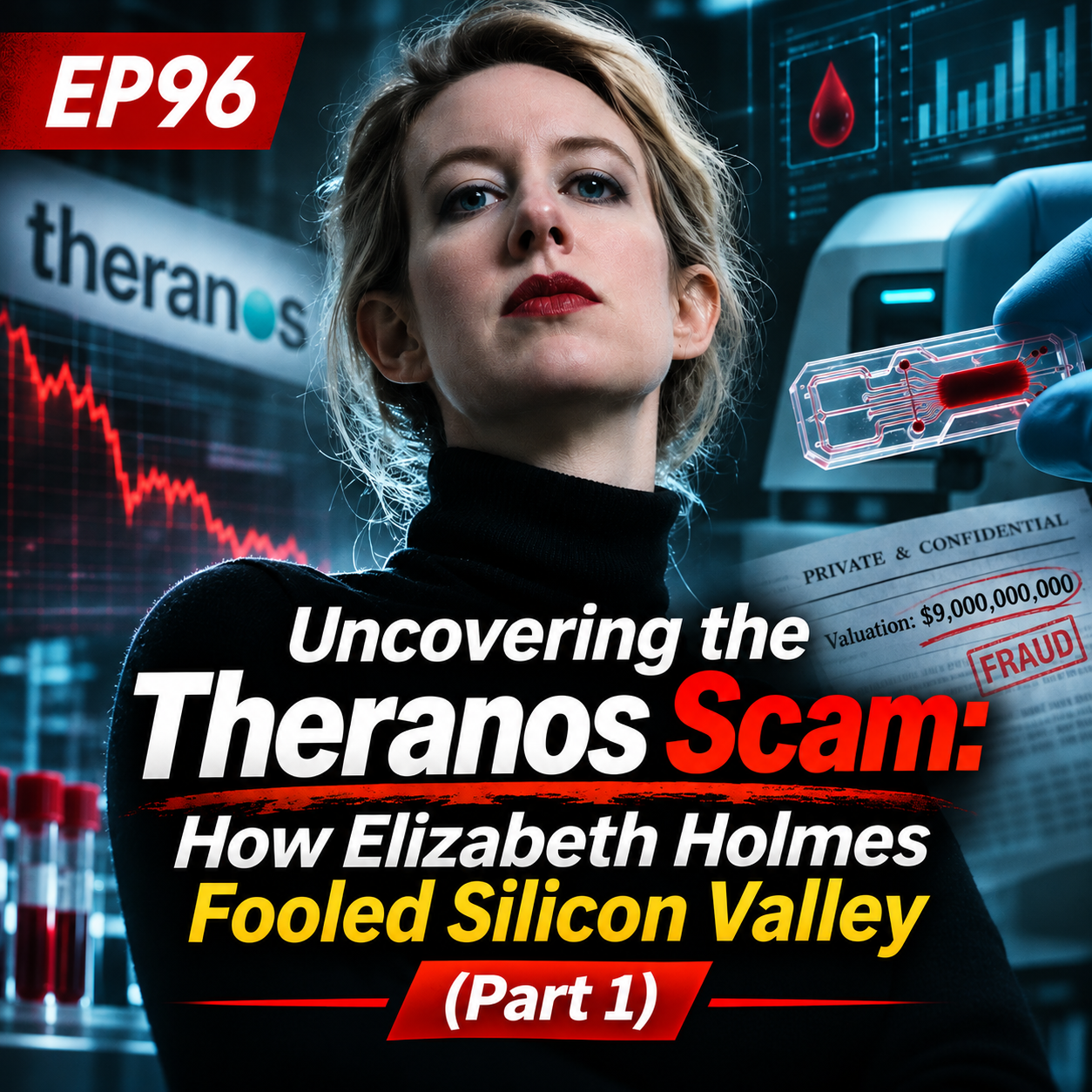
[00:00:00] Speaker A: Welcome to behind the Scams. I'm Nick, and I'm here with my wife and co host, Sue. I got a real good episode today. Like everyone else in the world, you know that former startup queen Elizabeth Holmes and that there were no scandal are back in the news. Seems like everyone is talking about the new documentary. You can see everything.
[00:00:17] Speaker B: Of course. I've heard of it. You have to have been living underneath a rock to not know about that one. And I'd also like to remind you that you've been promising to take me to that movie since it came out.
[00:00:30] Speaker A: Your Honor, this is irrelevant.
[00:00:32] Speaker B: Sustained.
[00:00:34] Speaker A: Thank you. And I promise I'll take you.
[00:00:36] Speaker B: Good. I'm keeping that promise. On the record.
[00:00:39] Speaker A: Fair enough. But there are two reasons I want to revisit this old Tilikon Valley tale. First, the documentary has brought Holmes and Theranos back into the conversation.
Second, this was a huge scam built on familiar con games, borrowing credibility, making people afraid they'll miss out, dressing claims up as proof and shutting down questions. Those same pressures still matter today.
[00:01:03] Speaker B: So the documentary is the reason it's back in the headlines. The scam itself is the reason it's worth talking about again.
[00:01:10] Speaker A: The scale was extraordinary. Many of the tricks were familiar. That's what makes the story compelling and useful. Beyond Silicon Valley. So we're not treating Holmes like some mysterious exception to the rules. We're asking a simpler question. What were people promised? What did they actually get? And how did the gaps stay hidden?
[00:01:30] Speaker B: Because if we spend the whole episode asking how a famous person fooled billionaires, we miss the part that matters to the rest of us.
What does the same sales pitch sound like when it arrives in our inbox? Comes from someone we trust or offers something our family really needs.
[00:01:47] Speaker A: That's the heart of it. Everyday scam mechanics operating at corporate scale.
A black turtleneck doesn't create a special category of fraud.
[00:01:55] Speaker B: And wanting cheaper, easier health care doesn't make a person foolish. That was a genuinely appealing promise. The responsibility for deception belongs to the people doing the deceiving.
[00:02:06] Speaker A: Let's put some substance behind that promise. The SEC said investors were led to believe Theranos had developed a proprietary analyzer that could perform a comprehensive range of laboratory tests from a few, few drops of blood. The pitch was faster results, lower costs, and greater accuracy than conventional laboratories.
[00:02:26] Speaker B: That reaches people in two different places. An investor hears an enormous business opportunity. A patient hears, maybe getting the care I need won't be so expensive or unpleasant.
[00:02:37] Speaker A: Exactly. It's easier to believe a promise when you really Want it to be true. That's how we read the appeal here. But wanting better health care and knowing this machine could deliver it are two different things.
[00:02:51] Speaker B: And there's nothing wrong with that hope. The question is whether you can ask, does it work without being made to feel you're against helping people.
[00:02:59] Speaker A: As we go, we'll put names to some of these tricks. Borrowed authority, social proof, scarcity. They're familiar ideas and persuasion. We're using them to explain what the evidence shows, not pretending we know everything Holmes is thinking.
[00:03:14] Speaker B: Because convincing someone isn't automatically dishonest. The trouble starts when a convincing story stands in for proof.
[00:03:21] Speaker A: The distinction is between we hope to build this and this is what our product does. Now, a research goal can be ambitious. A description of an operating medical service has to match reality.
[00:03:34] Speaker B: So the promise wasn't just a smaller needle. Could people trust the results? And could Theranos own machine really deliver the whole menu?
[00:03:43] Speaker A: The SEC complaint gives us an important comparison. Theranos had more than 200 tests on its published patient menu, but its proprietary analyzer performed only approximately 12 of them in its clinical laboratory.
The remainder were processed on commercial analyzers, some modified for finger stick samples.
[00:04:03] Speaker B: So a long menu didn't mean their machine could run all those tests. Does that approximately 12 figure tell us whether the results were reliable?
[00:04:12] Speaker A: Right. And that approximately 12 figure is about which tests the device performed. It doesn't establish that all 12 were consistently accurate. We have to keep capability and reliability separate.
[00:04:26] Speaker B: Then the question is, what can this particular device do? Not just what does the company offer. How does the blood sample itself fit into that?
[00:04:34] Speaker A: We also need to be fair about finger prick testing. It's legitimate for appropriate tests. The World Health Organization describes how collection technique matters, including how excessive squeezing can introduce tissue fluid, increase the risk of hemolysis. The problem isn't that every small sample test is impossible. It's that a sweeping claim needs test specific evidence.
Hemolysis means blood cells breaking open. Tissue fluid contamination is a different problem. Those are sample quality issues. And neither disappears because a company has a persuasive founder.
[00:05:07] Speaker B: In plain English, the machine needs a usable sample, not just a little red liquid. And smaller doesn't automatically mean better.
[00:05:16] Speaker A: A product failing doesn't by itself establish fraud.
The question is whether people were told the truth about what existed, what worked, and what was still experimental.
[00:05:27] Speaker B: There's a big difference between we're trying to solve a hard problem and please pay us as though we've solved it. All right, let's follow the test. If another company's equipment is doing the work. Where does a legitimate workaround become a bait and switch?
[00:05:41] Speaker A: Using someone else's laboratory equipment isn't automatically wrongdoing. The deception is representing one process while delivering another. Especially when the claim process is central to the investment.
[00:05:54] Speaker B: You're buying the breakthrough, not a familiar machine behind a curtain with a new story attached.
[00:06:00] Speaker A: In her trial testimony, Holmes acknowledged using modified Siemens analyzers. She said the modifications were inventions Theranos wanted to protect as trade secrets.
That was her explanation for not telling partners about them.
That's the bait and switch. People were backing a breakthrough. If ordinary equipment was doing the work and they weren't told, they couldn't judge what Theranos had actually built.
[00:06:25] Speaker B: And does calling it a trade secret shift the conversation? You ask, what did the test? And suddenly you're discussing why a valuable secret needs protecting.
[00:06:33] Speaker A: It can. That's why you bring it back to the process. Seeing blood collected, a cartridge inserted, and a report delivered later doesn't show what happened in between. You need evidence connecting the sample, the instrument, and the result.
[00:06:47] Speaker B: Otherwise, you've watched the beginning and the end of a process and supplied the middle yourself.
[00:06:52] Speaker A: Erica Chung described what happened behind the demonstration. The former Theranos employee testified that a finger prick was followed by a cartridge going into an Edison device. Employees then stood ready to remove it and take it downstairs to the lab called Normandy, where modified third party machines tested the small sample. That gives us a concrete account alongside the SEC's allegation of misleading technology demonstration.
[00:07:19] Speaker B: So the visitor sees the device and gets results, but doesn't see the part that would change the whole story.
[00:07:24] Speaker A: That's what her account describes. The demonstration links the result to the visible device on the visitor's mind, even though different equipment did the work.
[00:07:33] Speaker B: That's more than making a product look attractive. You're giving somebody a reason to say, I watched it work.
[00:07:40] Speaker A: That's right. It's misdirection. Through a managed experience, a result can be real and still be used to support a false explanation of how it was obtained. That's why verifying the entire process matters. But if you were there and they took your
[00:07:55] Speaker B: blood, wouldn't you feel you checked it yourself? What do you look for when that feeling of proof carries over into the paperwork?
[00:08:03] Speaker A: With paperwork, my financial crime background is useful. I want to know who created the document, who approved it, what it establishes, and what the recipient was led to believe. A logo is not independent validation.
So who's actually speaking through that letterhead? What happened with the pharmaceutical company logos? Here's the concrete document issue. Holmes admitted on the witness stand that she added Pfizer and Charing Plough logos to Theranos reports.
Witnesses from those companies testified that the logos had not been authorized.
Holmes said she meant to reflect work done in partnership and denied intending to suggest the companies had written the report.
[00:08:43] Speaker B: Yeah, which just doesn't fly with a jury when you've got this long a trail of actual corporate executives lined up to call her a fraud. That's her explanation.
But what would a recipient reasonably take those logos to mean?
[00:08:57] Speaker A: Right. Prosecutors argued that those reports made the technology look independently validated by the drug companies.
It's borrowed authority. The logo makes it look as though a name you trust is vouching for the claim.
[00:09:10] Speaker B: So it's not just trust us. It looks like these people checked us. That's a very different message.
[00:09:17] Speaker A: It's the same verification problem in an advance fee or investment pitch that uses a bank's logo. Who created the document? What did the named institution actually confirm?
You. You verify with that institution through a channel you choose, not just through the person selling the deal. And what about the retailers? Seeing a medical service in a familiar pharmacy would make it feel less like an untested startup. Walgreens and Safeway were important parts of the story. Reporting on trial testimony described Walgreens finance executive Wade Mikalon saying the outside review involved interpreting data. Theranos applied review rather than taking the machine apart.
Experts consulted by the retailers considered the idea sound without getting their hands on the device to test it themselves.
[00:10:05] Speaker B: So an opinion about the idea could be mistaken for proof that the actual product worked.
[00:10:11] Speaker A: That's the distinction. Evaluating a concept, reviewing the seller, selected information, and independently testing a working device are different levels of scrutiny. A psychological shortcut is treating them as though they're the same.
[00:10:26] Speaker B: And once a familiar retailer offers it, a customer can reasonably think, surely somebody checked this before putting it here.
[00:10:34] Speaker A: That's how a partnership can pass credibility along.
But we shouldn't assume from that alone what every executive knew. Walgreens began offering Theranos testing in 2013 and ended the partnership in 2016. 16. The lesson is to ask what the partnership actually establishes, not to treat a recognizable storefront as scientific validation.
[00:10:57] Speaker B: It's another version of borrowed trust. The store's reputation makes the service feel established before the customer ever asks about the test. A logo can be copied in seconds. Its credibility took years to build. What about the financial picture? Did the revenue match the pitch?
[00:11:15] Speaker A: The SEC said investors were told Theranos would generate more than $100 million in revenue in 2014.
Actual revenue from operations that year was a little more than $100,000.
[00:11:27] Speaker B: Those aren't slightly different business pictures, but how do you distinguish a failed forecast from fraud?
[00:11:33] Speaker A: A forecast missing its target doesn't automatically prove fraud.
The issue is what the projection was based on and whether investors were also misled about the company's existing technology, partnerships and business.
[00:11:47] Speaker B: To me, that's the pull. Tomorrow looks so exciting that you stop asking what's happening today. Everybody's talking about the big number instead of what supports it.
[00:11:57] Speaker A: Which is why we separate money raised from customers payments and both from expected future revenue.
A company receiving investment money is not proof it's product. It's producing the business results it promised.
[00:12:10] Speaker B: Let's follow the money a little further. How much did Holmes actually persuade people to put into Theranos? We've mentioned the SEC's figure, but was that the whole amount?
[00:12:20] Speaker A: No. The SEC described more than $700 million raised from late 2013 through 2015. CNBC's reporting on the trial put the broader total invested in Theranos at more than $900 million. Those figures cover different scopes. Neither means Holmes personally received that amount in her bank account.
[00:12:37] Speaker B: And these weren't just small tracks from a lot of people.
[00:12:40] Speaker A: Court document reporting identified $150 million from the Walton family, $125 million from Rupert Murdoch, and $100 million from the DeVos family.
Those commitments made Theranos look exceptionally well backed. We'll come back to how the devos investment grew after the meeting with Holmes.
[00:13:01] Speaker B: Which creates another temptation.
If they put that much in, they must know something I don't.
[00:13:07] Speaker A: Exactly. But the amount someone invests tells you the size of their commitment, not the quality of their evidence. Another investor's confidence can become a substitute for your own verification.
[00:13:18] Speaker B: And the famous $9 billion valuation was that money the company had?
[00:13:23] Speaker A: No. Reporting described Theranos as privately valued at $9 billion and Home's ownership stake as worth as much as $4.5 billion. On paper.
Evaluation is an estimate of what ownership is worth. It's not cash available to pay the bills, and it isn't revenue from customers.
[00:13:42] Speaker B: Just to be clear, was Theranos a publicly traded company?
[00:13:46] Speaker A: No. Theranos was privately held and it never went public. That nine billion dollar figure was a private company valuation, not a value set by shares. Traditional trading on a public stock exchange.
[00:13:58] Speaker B: So billionaire founder, hundreds of millions raised, and successful business aren't three ways of saying the same thing,
[00:14:05] Speaker A: right? Keeping them separate helps us avoid Mistaking the appearance of wealth for proof of a working product,
[00:14:13] Speaker B: then where did the money go? Was it all paying for the lifestyle or was there an actual company spending it?
[00:14:19] Speaker A: There was a real operation with research laboratory work, equipment, employees and corporate expenses.
We don't have a complete audited breakdown that assigns every investment dollar to a category. What we can describe is the financial picture presented at trial and specific spending reported in the case.
[00:14:40] Speaker B: What did that picture show?
[00:14:42] Speaker A: Reporting on former controller Denisiam's testimony described Theranos burning roughly $2 million a week in cash by 2013.
By 2015, she said, its accumulated deficit had reached $575 million.
An accumulated deficit is an accounting measure of losses over time, not a finding that somebody stole that amount.
[00:15:04] Speaker B: So the company could attract enormous investment and still be running through cash rather than supporting itself from its testing business.
[00:15:13] Speaker A: Yes. Holmes lawyers argued that substantial research and development spending was normal for a startup, and that deferred revenue helped explain financial financial discrepancies.
Research losses alone aren't fraud. The problem is whether investors are told the truth about the results, the remaining work, and the risks.
[00:15:34] Speaker B: That gives we are still developing it a very different meaning from we've solved it and now we're expanding.
[00:15:40] Speaker A: Exactly. Yom also testified that the financial statements went unaudited for years.
Separately, reporting describes rising legal costs such Theranos face lawsuits and investigations.
Money was being consumed by the business and its problems, not simply sitting behind that headline valuation.
[00:15:59] Speaker B: So the question isn't just how much have you raised? It's what did that money accomplish and what evidence shows it
[00:16:06] Speaker A: Right. A large budget can fund real work. It can also keep an unsupported story going longer.
Spending money on a problem doesn't prove you've solved it.
[00:16:16] Speaker B: But did homes really live lavishly? The black turtleneck suggests somebody too busy working to care about luxury.
[00:16:23] Speaker A: The lifestyle evidence was disputed in court. Prosecutors said Theranos paid for private jet travel and expensive lodging in addition to her salary. They also described company paid assistance handling personal errands and purchasing luxury goods. So the plain wardrobe wasn't a complete picture of the benefits she enjoyed.
[00:16:43] Speaker B: What did her lawyer say?
[00:16:45] Speaker A: They argued that her travel was overwhelmingly for company business, often encouraged or arranged by the board. They also stressed that she hadn't cashed out her shares and hadn't asked for a higher salary. That matters. Benefiting from company funded travel is different from selling billions of dollars of stock and pocketing the proceeds.
[00:17:03] Speaker B: So we shouldn't turn the paper billionaire into a story about billions in personal cash. But we also shouldn't assume
[00:17:10] Speaker A: she lived modestly because she dressed simply. Exactly. The judge allowed general evidence of executive benefits and status, but restricted references to particular luxury brands and purchases to avoid unfair prejudice. Wealth and expensive travel don't establish fraud. The underlying deception still has to be proved.
[00:17:31] Speaker B: And psychologically, the image can work both ways. Luxury can suggest success, while a plain uniform can suggest total devotion to the mission.
Neither tells us whether the claims are true.
[00:17:42] Speaker A: Right. Prosecutors argue that celebrity access to powerful people and executive benefits gave her reasons to maintain the company's apparent success. That was their motive argument, not permission for us to invent what she felt. Our practical question is whether the financial and scientific evidence supports the image.
[00:18:01] Speaker B: So follow the evidence, not the outfit. And don't confuse an impressive fundraising story with a business that can deliver a spreadsheet, can wear a convincing suit. It still needs numbers that come from somewhere. And beyond the paperwork, who was making this company look credible?
[00:18:18] Speaker A: Theranos board included former Secretaries of State George Shultz and Henry Kissinger, retired Marine General James Mattis, retired Navy Admiral Gary Rogud, and former Senators Sam Nunn and William Frist.
[00:18:32] Speaker B: That's a lot of authority around one table.
What medical expertise was there and what does an impressive board actually prove?
[00:18:40] Speaker A: And we need to correct an oversimplification. Frist was a transplant surgeon. William Fogey, a former CDC director, also served. This wasn't a board with literally no medical knowledge. The question is whether the relevant claims were independently tested and challenged.
[00:18:57] Speaker B: Mattis name also brings up the military claims.
What were investors being told about that?
[00:19:02] Speaker A: The SEC said Theranos claimed its products have been deployed by the Department of Defense on battlefields in Afghanistan and on medical evacuation helicopters. According to the sec, that deployment had never happened.
[00:19:17] Speaker B: That makes it sound as though the technology has already passed an enormous real world test. If it's being used in a war zone, you'd assume it must work.
[00:19:25] Speaker A: Exactly. It's not just another impressive name. It's a claimed track record.
Discussion about possible use or an evaluation is very different from saying a device is already being used to care for people.
[00:19:38] Speaker B: So the pitch skips a step. Instead of proving the product, it tells you somebody else has already trusted it in the toughest possible setting.
[00:19:47] Speaker A: That's the scam connection. Ask what used by actually means? Was there a conversation, a study, a purchase or routine use? Those aren't interchangeable. And a claim about deployment can't be checked independently.
[00:20:02] Speaker B: There are two shortcuts there, aren't there? Important people believe it. That's authority. Other People have already invested. That's social proof. But neither tells me what anyone actually checked.
[00:20:14] Speaker A: Exactly. Those names made the pitch feel credible.
That doesn't mean every director knew it was false. They could have been misled too.
[00:20:23] Speaker B: So her claim gets to borrow somebody else's good name. Is that similar to what happens when a scam spreads through people who trust one another?
[00:20:31] Speaker A: That's similar to the trustee see exploited in affinity fraud. The SEC described scams that spread through groups and trusted leaders, Even leaders who've been fooled themselves. It's a useful comparison, not the formal label the verdict gave Theranos.
[00:20:46] Speaker B: I can trust my friend and still check the investment. How did that personal trust work alongside the invitation to invest in Theranos?
[00:20:53] Speaker A: We have a specific example from Lisa Peterson, who handled the Theranos investment for the DeVos family office trial reporting described an invitation to a small, hand picked group of families. The family initially contemplated $50 million and ultimately invested 100 million. After meeting Holmes, Peterson testified that they worried too many questions would get them uninvited.
There's the fear of missing out. We have that account.
We shouldn't assume every investor face exactly the same pressure.
[00:21:21] Speaker B: So the questions that protect your money start to feel like the ones that might get you shown the door.
Did other well known investors add to that feeling that somebody must have checked it?
[00:21:31] Speaker A: Rupert Murdoch and the Walton family also invested alongside the DeVos family.
That gives the pitch another bit of social proof. But their investment tells us they said yes, not that they independently proved the technology worked.
[00:21:47] Speaker B: And being specially invited is flattering. You don't want to spoil it by seeming difficult.
That's how I read the pressure of the invitation. Not something we're claiming. Holmes said out loud.
[00:21:57] Speaker A: The SEC's case concerned more than 6,700 million dollars raised from late 2013 through 2015, not the company's entire fundraising history.
[00:22:09] Speaker B: That's the trap. Is this true? Becomes Am I about to lose my place? Manufactured urgency is where common sense goes to die. What happens once you've already said yes?
[00:22:19] Speaker A: Then there's commitment and consistency.
Once you've invested or told everyone you believe in the company, it can be harder to change your mind. That's a common human pressure, not something we can claim every Theranos investor felt.
[00:22:34] Speaker B: Because now you're asking whether you were right to back it. What happened when investors did start to question the story?
[00:22:40] Speaker A: Peterson testified that Holmes downplayed the negative reporting when investors asked what was going on. Reassurance like that can make it easier to stay with a story. You already believe instead of looking at what challenges us,
[00:22:53] Speaker B: you're allowed to change your mind. I believed what I was told. Now I know more. That's not disloyal. That's paying attention.
[00:23:01] Speaker A: You can see a similar pattern in relationship linked investment scams. Investor.gov warns about trust building, shared connections and fear of missing out. It's a different setting, but the same question matters. Did the relationship take the place of checking the investment?
[00:23:18] Speaker B: This isn't a competition to decide which victims should have known better. It's a chance to notice the shortcuts a convincing story asks us to take.
[00:23:27] Speaker A: The deception is still the deceiver's responsibility.
The safeguard is an independent check, time to think and
[00:23:35] Speaker B: a willingness to hear bad news.
[00:23:37] Speaker A: We've talked about who backed the company. What about Holmes
[00:23:41] Speaker B: herself? How did her image fit into the story people were being asked to believe?
[00:23:45] Speaker A: Reporting based on John Carreyrou's work described Holmes adopting the Steve Jobs style black turtleneck and hiring former Apple employees, including designer Ana Arreola. Those details help explain the image surrounding the company.
[00:23:59] Speaker B: It's a story we recognize, isn't it? The visionary who sees what everybody else has missed. But looking like the next chapter of that story doesn't make it true.
[00:24:09] Speaker A: The image can lend credibility, but it doesn't prove honesty or deception. Reports about her voice need attribution, and eye contact can't establish intent. The claims and evidence matter more.
[00:24:22] Speaker B: Otherwise we judge a woman's voice instead of checking the claims. What happened when people inside the company question those claims?
[00:24:30] Speaker A: A warning sign is when the organization stops examining the problem and starts attacking the person who reported it.
That trade secret explanation also matters inside the company.
Confidentiality can be legitimate, but it doesn't excuse misleading claims about what a method does.
[00:24:48] Speaker B: So not getting an answer can start to feel like proof that you found something special.
It's too revolutionary to show you. That's how we're describing the pitch's logic, not quoting her. Not every secret is a scam, but secrecy can't grade its own homework. Who inside Theranos was raising concerns?
[00:25:08] Speaker A: Two people we need to name are Tyler Schultz and Erica Chung. They worked inside Theranos and raised concerns about the testing. Tyler was also the grandson of board member George Schultz, so the conflict reached into his family as well as his workplace.
[00:25:22] Speaker B: That makes it painfully personal.
What were they seeing in the lab and how were their concerns handled?
[00:25:29] Speaker A: At a Stanford event, Chung described supervisors responses to worrying laboratory results as gaslighting. Schultz described colleagues getting alarming syphilis results on Theranos machines and having their concerns dismissed. We're using gaslighting as Chung's account of her experience, not as a clinical diagnosis of Holmes.
[00:25:48] Speaker B: Yeah, that's important to clarify. This isn't therapy talk. This was her experience on the ground in a lab where people's lives were literally on the line. You see a problem and somebody above you said you're the one who doesn't understand.
After a while you might start questioning yourself instead of the result.
[00:26:05] Speaker A: And the result still needs checking.
Making an employee feel small doesn't explain why the tests don't matter.
[00:26:13] Speaker B: What did the quality control problems look like? In practice that can sound like a dry laboratory phrase. And until you know what was happening.
[00:26:21] Speaker A: Chang testified that the Edison machines frequently failed quality control checks.
Those checks used samples with known concentrations to see whether the machine returned the right result.
She described deleting one or two outline data points to make the results appear to pass without clear rules for choosing what to remove.
[00:26:42] Speaker B: So instead of the check telling you whether the machine was dependable, the bad results could disappear from the check.
[00:26:49] Speaker A: That was the concern in her testimony. Handling an outlier isn't automatically improper and he's a justified method. Choosing which results to discard just to get a passing picture is a very different thing.
[00:27:02] Speaker B: That's selective proof. You show people the results that support your story and leave out the ones that might change their minds.
[00:27:09] Speaker A: And Chung described differences when the same samples were tested again. Conventional equipment typically gave consistent results while the Edison's could give very different readings. Her concern was whether that system could be trusted with patient samples. We shouldn't turn her account of lab practices into a claim that Holmes personally directed every deletion.
[00:27:30] Speaker B: The everyday question is am I seeing the full record or just the good looking part? That applies to an investment pitch's claim claimed successes as much as to an impressive demonstration.
[00:27:42] Speaker A: Zhang also testified about raising concerns with Ramesh Sunny Balwani, Theranos president and chief operating officer. She came away with the impression that continuing to work there meant processing patient samples without question.
[00:27:57] Speaker B: So Balwani wasn't just somebody standing beside Holmes. What gave him so much authority inside the company?
[00:28:03] Speaker A: He was president and chief operating officer overseeing day to day operations and he also served on the board.
That put him in a position to influence how the company operated and how employees concerns were handled.
Zhang's account shows the pressure that could create. The person with authority over the work was challenging. Whether she should question it.
[00:28:24] Speaker B: And his role went beyond how employees were treated.
[00:28:27] Speaker A: Yes. The Justice Department described evidence that he reviewed and approved approved a 2013 Wall Street Journal article promoting claims that Theranos could automate and miniaturize more than 1,000 laboratory tests and deliver faster, cheaper, more accurate testing. Those claims were false and misleading. He wasn't merely hearing the pitch. He helped approve the story being presented to the public.
[00:28:51] Speaker B: That connects the power inside the company to the confidence outside it. Employees feel pressure to keep going. Or while outsiders hear a story that sounds settled and successful.
[00:29:01] Speaker A: Right. But his corporate authority and his legal responsibility are separate questions. We should describe the conduct and then name what the jury actually convicted him of, not assume his job title proves every allegation.
[00:29:14] Speaker B: So the pressure wasn't just to believe the company. It was to keep doing the work despite your doubts. That's how fear about your job can make a serious concern harder to raise. And when fear gets added to self doubt, speaking up gets harder. What kind of pressure did Schultz and Chang face?
[00:29:30] Speaker A: Trial reporting described aggressive legal pressure involving Theranos attorney David Boies and Holmes admission that private investigators followed former employees.
Schultz and Chang face enormous pressure while helping expose the problem.
[00:29:44] Speaker B: And once those concerns reached a reporter, did Holmes try to stop the story itself?
[00:29:49] Speaker A: Yes. During cross examination, Holmes acknowledged that she went to Rupert Murdoch to try to stop the Wall Street Journal's reporting. Murdoch was a Theranos investor as well as the owner behind the Journal. She said her effort was about preventing publication of trade secrets.
[00:30:05] Speaker B: So an investor we've already mentioned was also someone she could approach over the coverage.
What happened to the investigation?
[00:30:13] Speaker A: John Carreyrou's article was published on October 15, 2015.
Holmes later described the company's handling of the Journal investigation as a disaster.
Whatever her explanation for intervening, the attempt to stop the reporting is something she acknowledged in court.
[00:30:30] Speaker B: That's a different kind of control from persuading an investor. If uncomfortable information never reaches people, they can't weigh it against the pitch.
[00:30:39] Speaker A: Right. That's why independent reporting matters. In a case like this, the company shouldn't get to decide which questions outsiders are allowed to hear.
A disagreement with reporting can be answered with evidence. Trying to keep it from appearing limits that outside check.
[00:30:54] Speaker B: That's no longer just trying to convince you. It's making you afraid to disagree.
What's true gets pushed aside by what will happen to me if I speak.
[00:31:04] Speaker A: And we shouldn't judge people for being afraid.
Challenging a powerful company can cuffs a lot.
Not everyone can see the whole problem. And not everyone has a safe way to raise it.
[00:31:14] Speaker B: There's another person we need to talk about. Ian Gibbons. What do we know about his experience.
[00:31:19] Speaker A: Dr. Ian Gibbons was Theranos chief scientist and died by suicide in 2013.
His widow, Rochelle Gibbons, told CBS that he was distressed about the company and feared losing his job if he told the truth in an upcoming deposition.
[00:31:35] Speaker B: That's Rachelle's account.
We can hear what she says about the pressure without claiming it explains every cause of his death. People under pressure deserve support, not a judgment about whether they were brave enough.
And on the patient side, what did people experience when they relied on the tests?
[00:31:51] Speaker A: Then there's Brittany Gould. She testified that Theranos pregnancy hormone results led her clinician to tell her she was miscarrying.
Hessing at another laboratory story contradicted that interpretation. And she later had a healthy baby.
[00:32:05] Speaker B: She wasn't chasing a fortune. She wanted dependable information about a pregnancy. What did the other patient testimony describe?
[00:32:13] Speaker A: Another patient, Aaron Tompkins, testified about an abnormal HIV antibody result and the distress it caused.
She said she struggled to reach qualified staff at Theranos, and later testing elsewhere was negative. We need to distinguish an alarming screening finding from. From a confirmed diagnosis.
[00:32:31] Speaker B: How do we keep those patient experiences separate from the legal outcome? What did the jury actually decide,
[00:32:38] Speaker A: and we need to be precise, about accountability. In January 2022, the jury convicted Holmes of one investor fraud conspiracy count and three investor wire fraud counts. It acquitted her on the patient related conspiracy count and three individual patient counts.
[00:32:54] Speaker B: And Balwani had a separate trial. What was he convicted of?
[00:32:58] Speaker A: On July 7, 2022, a federal jury convicted him on all 12 counts. Two counts of conspiracy to commit wire fraud and 10 counts of wire fraud. One conspiracy concerned investors and the other concerned paying patients. The 10 wire fraud counts comprised six involving investors and four involving patients.
[00:33:16] Speaker B: So, unlike Holmes, his convictions included the patient fraud scheme. What sentences did they receive?
[00:33:22] Speaker A: At his December 7, 2022 sentencing, Alwani received 155 months in federal prison, 12 years and 11 months, followed by three years of supervised release.
The prison terms on the 12 counts ran concurrently, meaning at the same time, not one after another.
Holmes was originally sentenced on November 18, 2022, to 135 months, 11 years and three months in federal prison, followed by three years of supervised relief.
Her convictions were three counts of wire fraud and one count of conspiracy to commit wire fraud, all concerning investors.
Those are the original sentences imposed in 2022, not a statement of their current release date.
[00:34:03] Speaker B: Same company, separate trials and different verdicts. That distinction matters just as much as the prison terms. So we don't rewrite the verdict to make the story simpler. We can respect patients experiences and still describe exactly exactly what the jury decided before the prevention checks. Let's put the scam tactics into one five item checklist what did Holmes do that listeners might recognize in an everyday scam pitch
[00:34:27] Speaker A: borrowed credibility the pharmaceutical logos she added to Theranos reports weren't authorized according to company witnesses. An everyday scam pitch can do the same thing with impressive names and official looking documents make you think somebody trustworthy has checked protect the claim sold a breakthrough while concealing the substitute. Holmes acknowledged that there are no use modified Siemens analyzers without telling partners. That's the bait and switch pattern story that gets you interested doesn't match what actually delivers a service made axis feel exclusive Peterson described a handpicked group of families and fear that too many questions would get them uninvited. That resembles the everyday don't miss your chance business pitch Protecting your place starts to matter more than checking the opportunity presented an impressive track record that wasn't real.
The SEC set Theranos claimed military deployment that never happened. In an everyday scam, claims about prestigious customers or successful users can make an unverified product look proven. Ask what actually happened, not just who gets try to keep contrary information from recent people.
Holmes acknowledged trying to stop the Journal's reporting and described her efforts as protecting trade secrets. The familiar scam pattern is controlling what you hear, using secrecy and resistance to outside scrutiny to keep the pit from being tested.
[00:35:45] Speaker B: So when it comes down to it, Holmes was using the same tricks as an everyday borrow somebody else's credibility, sell a story you can't verify and make questions feel unwelcome. Only the packaging was different. A pretty blonde in a black turtleneck with a polished pitch and powerful people backing her.
The looks weren't the scam. The gap between what she promised and what people could actually verify was.
[00:36:10] Speaker A: That's exactly right. And thanks for bringing up the black turtleneck. I wanted to talk about that. Steve Jobs famously wore a black turtleneck too. It became part of his signature look and Holmes work uniform invited that comparison.
[00:36:22] Speaker B: What was her explanation for wearing it?
[00:36:25] Speaker A: In a 2015 Glamour interview, Holmes said wearing the same thing every day gave her one less thing to think about. She estimated she owned about 150 black turtlenecks and said she'd worn turtlenecks since childhood.
Her explanation was that she was focused on her work and that seriousness carried over into how she dressed.
[00:36:47] Speaker B: That's her explanation? I'm skeptical, but skepticism isn't proof that it's false. How does it compare with what Ariola just described.
[00:36:55] Speaker A: Good point.
Former Theranos designer Anna Arreola later described Holmes's admiration for jobs as uniform and interest in achieving a similar look. That's Areola's account, distinct from Holmes's explanation. The useful lesson isn't to distrust a turtleneck. It's not to mistake a familiar image of success for proof that somebody's claims are true.
[00:37:18] Speaker B: We can't undo what those families experienced. But what can listeners take from these examples before they face a convincing pitch of their own?
[00:37:27] Speaker A: Let's turn those examples into four checks you can actually use. Not can I spot a convincing liar, but what would let me verify this claim?
[00:37:35] Speaker B: Start with the demonstration.
Ping described a cartridge going into an Edison while the testing happened downstairs on other machines.
So what should someone watching a demo ask?
[00:37:47] Speaker A: Did the device I saw produce this result?
Follow the whole process, not just the impressive beginning and end.
Ask for independent testing of the actual product under the conditions in which it will be used.
A convincing demonstration isn't the same as dependable routine performance.
[00:38:05] Speaker B: Then there's the familiar retailer. You see the service in a pharmacy and think somebody must have checked it. How do you get past that assumption?
[00:38:14] Speaker A: Ask what was checked? Was an expert judging the idea, reviewing information the seller provided or independently testing the device? Those aren't the same. A partnership tells you there's a business relationship. It doesn't by itself establish that the medical technology works.
[00:38:33] Speaker B: Third, the military claim being told something was used on a battlefield sounds like the Old Testament endorsement. What does used by need to mean?
[00:38:42] Speaker A: Make the seller be specific? A conversation, a study, a purchase and actual use in patient care are different claims. Ask who used it for what purpose and when and confirm that through an independent source. Don't let a famous institution's name answer questions the evidence hasn't answered.
[00:39:01] Speaker B: And fourth, the quality control results.
Chang described removing data points to make the test appear to pass.
[00:39:08] Speaker A: How do you avoid being shown only the good looking part? Ask what failed, what was left out and why? Were there clear rules for excluding results or were the rules being bent to get a pass?
The repeat testing give consistent answers. Get someone qualified and independent to review the evidence. A clean looking report means little if the inconvenient results were removed.
[00:39:31] Speaker B: And Balwani's role adds something to that fourth check, doesn't it? He oversaw the day to day work and Chong described feeling she had to process samples without question.
What happens to the value of those checks if people are afraid to report a problem?
[00:39:45] Speaker A: That's why we ask how concerns were handled, not just whether There's a report saying the tests passed. Were inconsistent results examined? Or was the person raising them challenged? Balwani's title didn't prove the technology worked. His operational authority made the response to those concerns especially important.
[00:40:04] Speaker B: So the boss says it's fine. Isn't another layer of independent verification. It may be the same reassurance coming from somebody with power over the people doing the checking.
[00:40:14] Speaker A: Right. The person overseeing the work shouldn't be the only source you rely on to assess it. That brings us back to qualified independent review. And remembering that pressure to stay quiet doesn't resolve the underlying problem.
[00:40:27] Speaker B: So we're checking the process. What the partnership proves, the claim track record, and the full results.
What if they tell you there's no time? Or that asking means you don't trust them?
[00:40:38] Speaker A: Ask for the information in writing and take time for independent review. If they won't allow meaningful verification, walk away. Secrecy isn't validation. Titles are in test results.
And urgency isn't a reason to skip question.
[00:40:53] Speaker B: I need time to check. This is a complete sentence. You don't have to earn the privilege of handing over your money. And if someone has deceived you, that isn't a character flaw.
[00:41:05] Speaker A: You know what? We've covered a lot in this episode, and we haven't even scratched a surface.
[00:41:11] Speaker B: Well, you know what that means.
This has got to be a two parter.
[00:41:15] Speaker A: Yes, I agree.
So in Theranos Episode two, we'll focus on the internal cracks, the retaliatory intimidation, and the legal reckoning that ultimately brought the whole affair down.
[00:41:27] Speaker B: We've touched on those pieces today. Next time, we'll give them the time they deserve.
[00:41:31] Speaker A: Thanks for spending this time with us on behind the Scams. Our goal is to make these stories useful. Not just to look back at what happened, but to help people ask better questions before the next convincing pitch.
[00:41:44] Speaker B: And if you've been deceived, you deserve support.
Shame doesn't help anyone sort out what happened. A little space, good information, and people who will listen can make a difference.
[00:41:55] Speaker A: We're grateful for your support of the nonprofit work of the SOS Media Network and for helping bring these conversations to more people.
[00:42:03] Speaker B: We couldn't do it without you. Take your time, ask your questions, and join us for Theranos Episode two on behind the Scams. Bye for now.