Episode Transcript
[00:00:00] Speaker A: Your phone rings. A man says he's a deputy. Calm voice, local area code. He says your daughter missed jury duty. There's an active warrant, and unless you post a bond right now, officers will arrest her at work.
[00:00:13] Speaker B: Or you hear crying. A voice says, mom, please. Then a second man takes the phone. He knows the route your grandson drives to school. He says no police, no hanging up, and demands Green Thought money pack codes, Dell Cash app or Bitcoin before you can verify a single word.
[00:00:31] Speaker A: The urgency is the weapon. The victim is not being asked to think. The victim is being ordered to obey.
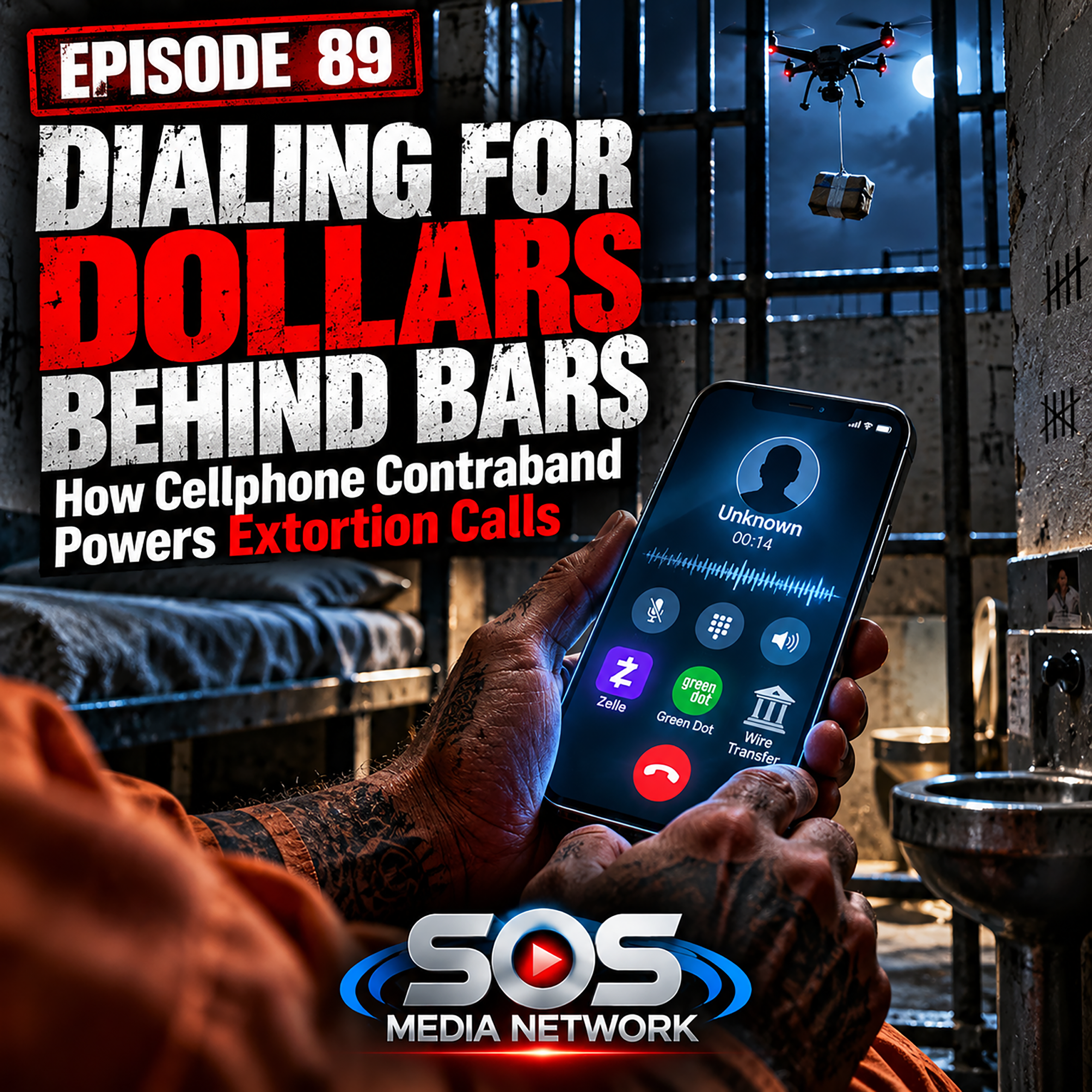
[00:00:38] Speaker B: And here's the turn. The caller may not be overseas. He may be sitting on a steel bunk in a maximum security prison in Georgia or South Carolina holding a 4G smartphone the institution says he is forbidden to possess.
[00:00:52] Speaker A: That fact changes the geography of fraud. A locked cell is no longer an endpoint. With data service, payment apps, public records, and a spoofed local number, it becomes a workstation.
[00:01:04] Speaker B: A workstation with worse furniture and apparently
[00:01:07] Speaker A: a very relaxed bring your own device policy.
[00:01:10] Speaker B: The security policy says no phone.
[00:01:12] Speaker A: The fraud department appears to be working remotely.
[00:01:15] Speaker B: This did not begin with one Georgia cell block or one generation of smartphones.
Prison systems had fought illicit mobile phones for years before family extortion scripts became this polished.
[00:01:27] Speaker A: So when do we date the start?
[00:01:29] Speaker B: There is no clean birthday. Small mobile phones became easier to conceal as consumer adoption accelerated in the 2000s. By 2008, federal prisons were collecting enough devices to measure a trend. Between 2008 and 2010, confiscations in federal facilities doubled. California's seizures quadrupled over the same period, reaching 10,000 phones in 2010 alone.
[00:01:55] Speaker A: 10,000 phones in one year.
[00:01:57] Speaker B: At that point, the confiscation report needs
[00:02:00] Speaker A: its own cellular plan that predates zelle mainstream cryptocurrency kiosks and today's easy caller ID spoofing apps. The original breakthrough was simpler. An unmonitored line out of prison.
[00:02:12] Speaker B: Exactly.
Early documented uses included coordinating drug sales, intimidating witnesses, organizing activity across institutions, and identity theft. A federal review described one incarcerated operator whose identity theft ring obtains more than $250,000 in stolen goods. Fourteen years were added to a sentence.
[00:02:34] Speaker A: The infrastructure came first, the scripts evolved
[00:02:37] Speaker B: later, and the economics changed when a phone stopped being only a telephone. A smartphone could search court records, hold stolen identities, reach social media, spoof a local number, receive payment screenshots, and coordinate money mules, all on the same device.
[00:02:55] Speaker A: Congress responded in 2010 with the cell Phone Contraband act, making possession of a mobile phone or similar wireless device a crime by a federal prisoner. That law addressed possession inside federal facilities. It did not legalize signal jamming, govern every state prison, or eliminate the outside supply chain.
[00:03:15] Speaker B: By the same year, Mississippi became the first state to deploy a prison managed access system at the state penitentiary at Parchman. Instead of broadcasting brute force interference, the system was designed to distinguish approved devices from contraband.
[00:03:30] Speaker A: That 2010 deployment shows how mature the problem already was. Lawmakers were criminalizing possession while engineers were building a prison sized cellular gatekeeper.
[00:03:40] Speaker B: By 2011, the Government Accountability Office called illicit prison phone use a growing national security problem. By fiscal years 2012 through 2014, federal prisons recovered more than 8,700 phones, more than any other contraband category recorded in that review. The data was incomplete, so even that number was a floor, not a full inventory.
[00:04:03] Speaker A: Then the scam economy becomes visible in prosecutions. The Alabama Green Dot operation in this script ran from 2012 to 2014.
Georgia indictments in 2015 and 2016 described inmates using Internet capable phones for identity theft, credit card fraud, extortion, drug distribution and social media, sometimes with corrections employees allegedly smuggling the devices for bribes.
[00:04:30] Speaker B: In September 2015 alone, federal authorities charged 12 people in two Georgia prison based cases. By January 2016, prosecutors said 75 people had been charged since the previous September, and a new round of cases named more than 50 defendants. That is the point where illicit phones stop looking like isolated disciplinary violations and start looking like infrastructure for organized fraud and public corruption.
[00:04:56] Speaker A: The fraud was not invented in prison. Grandparent scams, fake arrest calls, romance fraud, and retail impersonation already existed outside.
What prison operators did was adapt those familiar scripts to an environment with time, captive labor, unmonitored access, and trusted outside accomplices.
[00:05:16] Speaker B: Then drones altered the supply side. At Fort Dick in New Jersey, court records placed repeated nighttime drone deliveries between October 2018 and June 2019.
The pilot operated from concealed positions in surrounding woods, covered the aircraft's lights with tape, and dropped requested cell phones, accessories, tobacco and other goods. Inside and outside, participants coordinated orders and payment.
[00:05:42] Speaker A: That timeline matters. Drones did not create prison phone fraud. They made replenishment more scalable and reduced dependence on a single corrupt employee or a lucky throw over the fence.
[00:05:54] Speaker B: So no, drones didn't invent the business, they just added delivery.
[00:05:58] Speaker A: Right? Except what they're delivering is a communications hub and the people on the other end never agreed to join the supply chain.
[00:06:06] Speaker B: The timeline accelerates from there. A Georgia jury duty scheme operated from 2015 through July 2020 as drones made resupply more scalable prosecutions documented increasingly organized operations.
The Macon State Prison drone was intercepted in September 2020. The Donaldson Credential Facility skit operation ran from September 2020 through May 2022. Healthcare worker impersonators took payments in March 2022. And the Weatherspoon arrest warrant conspiracy ran from March 2022 through April 2024.
[00:06:40] Speaker A: That is the institutional timeline. Now let's move from confiscation totals and indictments to what one of these calls sounds like from the other end.
[00:06:49] Speaker B: The Journal's investigation described retired engineer Art Monk. Messages came from someone claiming to represent a real bail bonds business. Monk's adult child actually was incarcerated, which gave the story a hard kernel of truth. The supposed bondsman, James, used a polite southern drawl and kept the conversation going over bail, rehabilitation, psychiatric medication. Monk sent nearly $12,000. Authorities later alleged the operator was an inmate at Washington State Prison in Davisboro, Georgia, about two hours away.
[00:07:26] Speaker A: Notice the construction. The scammer did not invent a random emergency. He attached himself to an existing family fracture and a real incarceration. He sounded helpful, not theatrical. He let concern do the persuading.
[00:07:41] Speaker B: Another reported victim, retired nurse Sylvia Brooks, was contacted after her grandson landed in jail. A color posing as a court diversion worker took $1,368. The call was traced to a Georgia prison. That is the recurring architecture. Fresh booking information, a relative's phone number, a credible institutional role, and the payment channel that moves faster than doubt.
[00:08:07] Speaker A: And a small payment is not small psychologically. Once a victim pays, once the fraudster has proof of compliance, then comes the second processing, transport, medication, release a lawyer, a final clearance. Final keeps moving.
When they say one last fee, they mean the last one before the next one.
[00:08:29] Speaker B: Let's put names, numbers and court outcomes around the machinery.
In one Louisiana prosecution, Andre Davion Reese admitted participating in a jury duty scheme while incarcerated at Autry State Prison in Georgia. The conduct began in 2015 and continued through July 2020.
Inmates used contraband phones to search the names, addresses and telephone numbers of potential victims, then posed as law enforcement officers and said an arrest warrant could made it disappear in if the victim paid a fine.
[00:09:02] Speaker A: And they built a callback environment. The phones carried fake voicemail greetings identifying the callers as legitimate agencies, including the U.S. marshals Service. That matters because a frightened victim may call back, hear an institutional greeting, and treat that loop as independent verification when it is really the same fraud system. So the victim calls back for reassurance and reaches the same lie wearing a necktie.
[00:09:29] Speaker B: Exactly. The scam has promoted itself to the verification department victims bought prepaid cash cards or wired funds into prepaid debit accounts after numbers were read over the phone. Outside co conspirators transferred the value to other cards and withdrew cash at ATMs or retail stores.
Reith received a 33 month federal sentence and was ordered to pay $9,797.95 in restitution.
[00:09:57] Speaker A: That is stronger than saying a suspicion. Suspicious call came from prison. Prosecutors could describe the entire sequence. Research Impersonation card number accomplice contact Transfer withdrawal the handoff is crucial. The voice creates fear, but the outside network converts numbers on a card into spendable cash. By the time a victim understands what happened, the original prepaid value may already have moved through another account.
[00:10:25] Speaker B: Then there's Robert Bo Ananwubas, who pled guilty in federal court after operating from Calhoun State Prison in Georgia. Prosecutors said he and others targeted health care workers nationwide, used contraband phones and Internet calling technology to impersonate deputy U.S. marshals and claimed the workers had ignored subpoenas and now faced an arrest.
[00:10:47] Speaker A: Healthcare workers were a calculated target. A subpoena sounds plausible in a profession that intersects with injuries, records and court testimony.
In one Seattle area call, the impersonator used the name. Deputy Marshal Gary Hartnett said two subpoenas had been sent to the workers workplace, demanded $2,000 and invoked a supposed gag order to stop her from consulting a lawyer or law enforcement.
[00:11:12] Speaker B: The caller even named the federal courthouse at 700 Stewart street as the place where she would have to surrender. Pete did not pay. Other victims did.
In March 2022, an account attributed to Nonwoobas received about $15,000 over Zelle from eight victims, while three more victims sent another $5,300 through PayPal and Venmo. And then the performance hits the bank
[00:11:37] Speaker A: record, the script said federal authority. The bank records said 11 deposits paperwork
[00:11:44] Speaker B: has a way of interrupting dress up.
[00:11:46] Speaker A: One victim's memory shows the method. 11 payment records show repetition. The plea connects both to defendant. Listen to the layering Occupation Workplace delivery Federal title Local phone number Real courthouse Legal vocabulary Secrecy order. Any one detail can be checked. The scam survives by preventing the victim from checking any of them.
[00:12:11] Speaker B: A separate nationwide arrest warrant conspiracy rant from March 2022 through April 2024.
Federal court records say Russell Taffron Weatherspoon organized it from a Georgia state prison using phones dropped into the yard by drone. Paulers spoofed local law enforcement numbers, borrowed the names of real officers and told victims they had missed court after being summoned as expert witnesses. The supposed cure was a cash bond.
[00:12:37] Speaker A: That expert witness is a smart wrinkle because it can sound both flattering and bewildering. A victim may think, perhaps I overlooked something official. Confusion fills the gap that evidence should Occupy.
[00:12:49] Speaker B: Weatherspoon received 130 months in federal prison. Three CO defendants received 36, 51 and 72 months. The court also ordered victim restitution. The sentence matters because it shows how investigators linked a street level payment demand back through spoofing tools, outside participants and a handset delivered over a prison fence.
[00:13:10] Speaker A: In other words, geography helped expose them. A victim in one state sees one frightening call. Investigators pooling complaints across state lines see the same performance touring nationally.
[00:13:22] Speaker B: Alabama records show a different business model between 2012 and 2014, inmates Michael Shane Garrison and Marlon Ramon Costin used smuggled phones from Bullock Correctional Facility to call service stations and convenience stores while posing as managers. They ordered clerks to count the register, announced a fictional shortage and directed the employee to use store cash to load a green Dot card.
[00:13:47] Speaker A: That is social engineering aimed at an employee, not a family. The caller creates hierarchy. I am your manager, then creates an accounting emergency. The clerk believes compliance will protect the job and correct the books.
[00:14:01] Speaker B: Once the clerk read out the card number, outside participant Pamela Lee moved the funds to alternate prepaid cards. Before the first card could be frozen, she kept a cut and maintained multiple cards at her home. Court records say the inmates then used those account numbers to purchase contraband from correctional officers. Fraud proceeds were feeding the prison supply line that made more fraud possible.
[00:14:23] Speaker A: That gives investigators three places to corroborate the story. The victim stores call and register records the prepaid card transfers and the alternate cards maintained outside the prison.
[00:14:35] Speaker B: And that brings us to a later Donaldson case, one prosecutors described in 2023.
[00:14:40] Speaker A: The indictment said current and former inmates, relatives and other outside participants used contraband phones, caller ID spoofing and social engineering calls to trick retailers into transferring funds. Prosecutors alleged the proceeds financed controlled substances and bribes to corrections officers.
[00:14:59] Speaker B: Because that case was charged by indictment, those details remain allegations unless proved or admitted in court. The later Donaldson case gives US Prison vocabulary for the retail version. Participants called the fraud calls skits. Between September 2020 and May 2022, prosecutors said skit runners used contraband phones, spoofing technology and rehearse social engineering to persuade Home Depot employees to activate prepaid gift cards.
One participant was identified in court records specifically as a skit caller.
[00:15:31] Speaker A: Calling it a skit reveals the production model. There's a role, a premise, a sequence of lines and a desired ending. Success can be taught a persuasive caller is not merely improvising. He's performing a tested scene against an employee who doesn't know there's a script.
[00:15:48] Speaker B: Sentencing records show the scale of the response. The operations leader received 234 months. A manager received 144 months. The identified skit caller received 61 months. Another defendant who smuggled drugs and other contraband into the prison received 235 months. Those sentences reflect overlapping fraud, money laundering, identity theft, drug and contraband conduct, not phone possession alone.
[00:16:16] Speaker A: So the prosecution was not relying on the word skit as colorful prison slang. It could follow activated value through purchases, receivers, conversion and benefits paid back inside.
[00:16:27] Speaker B: The physical interception can be just as revealing. At about 1:30 in the morning on September 14, 2020, Georgia Corrections K9 handlers encountered Dedrick Dasan Sermons leaving woods near Macon State Prison. He claimed he was meeting a woman from Tinder. Officers instead found a large drone, two black duct tape bundles attached to fishing line and a payload containing $1,000 cash, marijuana, tobacco, three cell phones, chargers, a Bluetooth device, clothing and rolling papers. Three pistols were found in his car
[00:17:04] Speaker A: trunk, and the drone kept a record
[00:17:06] Speaker B: of all that it did. Investigators recovered 25 recorded flight paths from that drone. Several crossed Macon State Prison and another crossed a probation detention center. Sirmans later pleaded guilty to operating an unregistered aircraft to facilitate a controlled substance offense. That flight history turned one interrupted drop into evidence of a repeated route person,
[00:17:32] Speaker A: payload, aircraft vehicle timestamp and stored route data all in one evidentiary frame. That is why the Tinder explanation could not carry the weight.
[00:17:42] Speaker B: Put those cases side by side, and a pattern emerges. The fraud changes costumes, but the proof keeps returning to the same places. Devices, payment rails, outside accomplices and repeated language.
[00:17:56] Speaker A: We have the scripts and the money. But true crime listeners usually ask the next question. How did investigators prove the call came from inside?
[00:18:04] Speaker B: Usually not through one cinematic breakthrough. It's accumulation. Payment records identify a recipient, ATM and store video place an outside participant at the cashout device Extractions recover contacts, messages, photographs and app data. Cell site and Internet records help establish where a device was operating. Correctional rosters, housing assignments, search logs and recorded legal or institutional events. Narrow who had the motive and the
[00:18:33] Speaker A: information and repetition leaves a signature. The same fake title, the same unusual phrase, the same payment account. The same instruction to remain on the line. To a victim, the call feels singular. To an analyst reviewing 20 complaints, it starts to look like a script.
[00:18:51] Speaker B: The Macon drone case is a perfect example of physical evidence becoming historical evidence. The Intercepted aircraft did not merely carry a shipment. Its stored flight paths showed 25 routes, several over correctional property. Investigators could move backward from one cop pilot to a pattern of prior trips.
[00:19:12] Speaker A: That's the part audiences remember. The machine kept its own travel diary.
[00:19:16] Speaker B: A correctional insider case in New Jersey shows another investigative route. Former Essex county officer Efren Wade admitted taking $14,000 in bride payments to smuggle tobacco and the cellophone. The supposed supplier was an undercover FBI agent. On February 1, 2023, was Wade sent an associate to a Bayonne parking lot to collect $10,000 in cash and tobacco. A week later, in a Jersey City parking lot, he accepted a phone concealed inside tobacco. Officers recovered the items from hiding places after Wade disclosed where he had left
[00:19:52] Speaker A: them, so investigators didn't have to infer the route. They watched the pickup, controlled the contraband, and recovered it at the destination.
[00:20:01] Speaker B: Wade also described the planned delivery of 15 more phones for at least $30,000. That figure gives scale to the insider market. Roughly $2,000 per device before anyone inside resells or rents it.
[00:20:16] Speaker A: And it explains why confiscation alone can become a game of expensive wackaphone.
[00:20:21] Speaker B: Yeah, except nobody wins a stuffed animal, and every round costs the real person money. 2024 federal case at Butner, North Carolina, shows why inmates may try to destroy the evidence.
During a visual search, an officer found Antwan Stanfield with a contraband phone. When ordered to surrender it, Stanfield attempted to destroy the device. He later received seven additional months consecutive to his existing sentence. And the conviction made him ineligible to earn time credits under the First Step Act.
[00:20:51] Speaker A: That reaction tells investigators the handset may be more valuable as evidence than as a contraband. The handset can connect an inmate to victims, outside accounts, accomplices, and prior calls.
[00:21:02] Speaker B: Contraband phones can also support threats, intimidation, and other crimes beyond fraud. That wider context sharpens the fraud story. The same feature that lets an inmate impersonate a deputy, the ability to communicate beyond monitoring can also coordinate threats, contraband, intimidation or violence. True crime is not complete when the handcuffs go on. Art Monk lost nearly $12,000. Sylvia Brooks lost $1,368.
Other victims in these prosecutions sent thousands through Zelle, PayPal, Venmo, prepaid cards and wires. But the account balance is only the cleanest part to print in a court filing.
[00:21:42] Speaker A: Restitution orders do not mean a check arrives promptly or at all. Federal victim guidance is blunt. Full recovery is often unlikely because defendants may have few reachable assets. Enforcement can continue for years. But the order and the payment are two different events.
[00:21:58] Speaker B: Then there's the damage. That's harder to calculate. Shame, disrupted sleep, fear of answering the phone, tension with a relative whose real crisis made the lie believable, and the humiliation of explaining the loss. A victim impact statement can put those consequences before the judge, but it cannot
[00:22:16] Speaker A: rewind the call that gives us the full true crime. The lure, the method, the mistake, the evidence, the arrest, the sentence and and the people still living with it. After the case number closes, the harm
[00:22:28] Speaker B: lands outside the prison. To understand why it keeps recurring, we have to go back inside the system and follow the device itself. From delivery to concealment to the first call.
[00:22:38] Speaker A: Start outside the fence. A prepaid handset may cost $40 in a store. Inside, reporting and prosecutions have placed functioning smartphones in roughly the $1,000 to $3,000 range because the price reflects scarcity, risk and earning power. It's not merely a phone. It's access to victims, accomplices, payment accounts and the open web.
[00:23:00] Speaker B: So the underground price is a forecast of revenue. If one successful call yields four digits, the handset can pay for itself quickly. Delivery methods range from low tech to airborne footballs or taped bundles are thrown over fencing of blind spots. Corrupt staff or contractors may accept alleged payments in the hundreds or low thousands. Figures such as 500 to $1,500 are frequently cited in contraband investigations, though the amount varies by case. Drones arrive at night carrying duct taped packages on fishing line so the bundle can be lowered or released while the aircraft stays above obstacles. One Georgia prosecution documented a drone package found with fishing line attached. The bundles contained a thousand dollars in cash, marijuana, tobacco, three cell phones, chargers, a Bluetooth device, clothing and rolling papers. Investigators recovered 25 flight paths from the aircraft, including routes over correctional property. In another federal case unsealed in 2026, prosecutors allege six drones made at least 38 drops into 10 federal prisons across eight states.
[00:24:10] Speaker A: Drones making at least 38 drops into 10 federal Prisons across eight states. That's not an occasional delivery. That's a distribution network.
[00:24:20] Speaker B: Correct. Operation night drop charged 23 defendants in alleged conspiracies involving drones, drugs and cell phones at Georgia prisons. The alleged activity reached back to 2019.
The lesson is scale pilots, purchasers, packagers, outside coordinators, inside receivers, lookouts, resellers and end users.
[00:24:42] Speaker A: Then the device has to survive a search.
[00:24:45] Speaker B: Phones rotate through hiding places, hollowed out masonry, fake outlet plates, ventilation cavities, fluorescent light fixtures, mattresses, plumbing chases.
Power may come from miniature battery packs, improviser, magnetic charging leads or a mobile hotspot shared among cells, several users. A handset may move constantly hidden, rented, then passed to a different tier when officers enter the unit, people imagine a
[00:25:10] Speaker A: scam call as improvisation. Often it is a script. Plus research an inmate with long stretches of unstructured time can search Facebook, Instagram, obituary pages, county court dockets, local jail booking logs, property records and public staff directories. Schedules differ by facility, but the operational advantage is repetition.
Research, call, revise, repeat Build a target
[00:25:35] Speaker B: sheet recently jailed person parent or grandparent Home address Employer names of children A judge from the county website A real sheriff's employee A local bond agency now add a voice over Internet app that makes the caller ID display the sheriff's public number and a voicemail greeting for anyone who calls back.
[00:25:56] Speaker A: The information does not have to be seen secret it only has to arrive in the right sequence. Your address proves authority. Your granddaughter's name proves access. The name of a real judge proves legitimacy. None of those conclusions actually follow. But under threat, the brain accepts the bundle.
[00:26:13] Speaker B: Public records do not need to reveal everything. They only need to provide enough nouns for the caller to supply the verb.
[00:26:20] Speaker A: That is the most unsettling grammar lesson we've ever done.
[00:26:24] Speaker B: Thankfully, no quiz. Just remember, sounding certain is not the same as being right.
[00:26:30] Speaker A: The caller opens with confusion and noise, perhaps a person saying one familiar word. Then the controller takes over. He recites a routine learned from public posts school gym, commute and orders the victim to stay connected. Isolation is the key. If the victim cannot call the loved one, a school, a spouse or police, the fiction gets time to harden.
[00:26:52] Speaker B: Heyman instructions are designed for speed and distance, thousands by wire cryptocurrency kiosk, peer to peer transfer or prepaid card codes read aloud. The operator may send the victim to multiple stores to avoid transaction limits and tell the victim to lie to a cashier who asks questions. That coaching is evidence of fraud, not evidence of a real kidnapping. A federal case offers the template in black and white. Prosecutors said men operating a multi state arrest warrant scam used names of local officers, spoofed law enforcement numbers, legal terminology and threats of arrest.
Victims were told to post cash bond. The organizer rammed the activity from a Georgia state prison after phones were dropped by drone. Four defendants received sentences rank ranging from 36 to 130 months.
[00:27:44] Speaker A: The emotional lever is obedience to authority. The scammer says. Do not hang up. That will be recorded as refusal or a gag order prevents you from discussing this. The victim mistakes procedural vocabulary for procedure. The same device supports slower fraud. A fake romantic identity can cultivate an older Target for weeks or months alternating attention, vulnerability and future plans.
Then an emergency appears or an investment platform is introduced. In so called pig butchering schemes, the target might see fabricated gains before being pressed to deposit more. The prison setting can even help the operator. Long hours, constant availability and a ready made excuse for why video calls fail.
[00:28:28] Speaker B: And the operator may not control every layer. One person supplies profiles, another handles messaging. A money mule receives funds, a broker converts value.
The inmate may be the caller manager or script trainer. Digital reach lets the enterprise divide labor across a wall.
[00:28:49] Speaker A: Unmonitored connection beyond the wall that brings us to the obvious.
Why not simply shut the Signal down?
[00:28:58] Speaker B: Section 333 of the Communications act prohibits willful or malicious interference with licensed radio communications for non federal actors. Conventional jamming has therefore been unlawful. The practical concern is spillover Radio waves do not respect a razor wire perimeter. A jammer strong enough to blanket a housing unit can interfere with lawful phones, public safety communications and 911 calls near the facility.
[00:29:24] Speaker A: Which means the obvious solution can create create a different emergency.
[00:29:28] Speaker B: The FCC has supported contraband interdiction systems. Instead, Managed access behaves more like a controlled cellular network. It captures connection, attempts and permits authorized devices while blocking or identifying unauthorized ones. Under the current federal process, specially approved systems can support requests to carriers to disable contraband devices. After site testing, but works in a
[00:29:53] Speaker A: test is not the same as solves every prison. Thick concrete, sprawling campuses, neighboring homes, legitimate staff phones, changing carrier bands, WI fi calling, SIM swaps, virtual numbers, burner applications and unauthorized repeaters complicate the map alright, but searches alone cannot stop it. What else can facilities do?
[00:30:16] Speaker B: Detection dogs can find electronics and storage media, but searches are labor intensive, devices are small and the inventory keeps moving. Managed access systems are expensive to install and tune. Perimeter detection does not stop a corrupt insider. Drone sensors do not automatically confer legal authority to bring an aircraft down. As of the FCC's 2025 proceeding, the agency was considering a framework that could permit tightly controlled jamming in correctional facilities with licensing, technical restrictions and and explicit study of effects on emergency calls. That is a proposal and regulatory process, not a blanket permission slip. Meanwhile, corrections agencies confiscate phones by the thousands, make smuggling arrests and still face replacement devices so there is no single
[00:31:05] Speaker A: switch labeled stop prison scams. Rule 1 Establish a family duress word offline. Not a birthday, pet name, street score, school or anything visible online.
Agree that in a real emergency the caller must provide it. Treat the word as a circuit breaker, not absolute proof. If it's missing or wrong, stop and
[00:31:26] Speaker B: choose Something the family can remember under
[00:31:28] Speaker A: stress and not something so obscure that everyone needs the family group chat to remember it.
[00:31:34] Speaker B: If the emergency code requires minutes from a prior meeting, pick another code.
[00:31:38] Speaker A: Yeah, if the code is emergency code. First, final, final two, we've already lost the plot.
[00:31:44] Speaker B: Rule 2 no government agency resolves an immediate arrest threat through gift cards, money pack codes, cryptocurrency, or a retail payment kiosk. Hang up from a separate line. If possible, manually dial the sheriff, court clerk, jail, hospital, school or loved one using a number you independently obtained. Do not use the callback number supplied by the caller and do not trust caller ID.
[00:32:08] Speaker A: Rule 3 Authorize interruption. Families should say out loud before a crisis, if someone claims I'm kidnapped, arrested, injured or stranded, hang up and verify. A genuine helper will tolerate verification. A coercive scammer will forbid it.
[00:32:25] Speaker B: Rule 4 Reduce reconnaissance. Lock down friend lists. Remove public phone numbers and daily routines. Delay vacation and location posts. Turn off public check ins. Review old posts that reveal schools, employers, relatives, vehicles and recurring routes. Obituary notices and public records cannot always be controlled, so assume a caller may know real facts.
[00:32:48] Speaker A: If money has already moved, do not let embarrassment steal more time. Contact the bank card issuer, payment platform, wire service or cryptocurrency kiosk operator immediately and ask for a fraud hold, recall or destination account. Freeze. Preserve screenshots, receipts, phone numbers, usernames, voicemails, transaction IDs, wallet addresses, store locations and exact times.
Report to local law enforcement and the FBI's Internet crime complaint Center.
[00:33:21] Speaker B: Then warn the family. A paid victim may be recirculated as a proven target.
Expect recovery scammers, people who promised to retrieve the money for an upfront fee, and new impersonations built from the first case.
[00:33:35] Speaker A: The safest rule is simple. Urgency does not get to choose your payment method.
[00:33:40] Speaker B: If the alleged deputy wants gift cards, he has resigned from law enforcement and joined retail art.
[00:33:46] Speaker A: Monk's story began with a real family crisis and a caller who seemed to know how to help. That is why the final defense is not simply skepticism.
It's permission to pause. Even when the facts sound right, the voice sounds credible, and someone you love may truly be in trouble. Prison used to mean physical separation. It still confines a body. It does not automatically confine a voice, a false identity, or a payment request.
[00:34:17] Speaker B: A contraband phone collapses the wall. It connects public records to private fear and private fear to instant money.
[00:34:25] Speaker A: So break the sequence. Hang up, verify independently. Use the family code. Pay nothing under threat.
[00:34:34] Speaker B: That pause may be the only thing the scammer can't control scammers, count on
[00:34:39] Speaker A: fear, isolation and silence. Your donation helps us expose their tactics, give families practical tools before a crisis, and keep this reporting available to the people who need need it most. If this work has helped you or someone you love, please donate today because the next warning could stop the next victim from losing everything. A donation link is in the description for this podcast episode. Thanks for listening and bye for now.