Episode Transcript
[00:00:00] Speaker A: Welcome to behind the Scams from the SOS Media Network. I'm Nick, and beside me is my favorite co host, my wife, sue, the person who checks both my facts and my tendency to ramble.
[00:00:12] Speaker B: Favorite is a strong word when I'm the only co host in the room, but I'll allow it at this point. But I will definitely have to agree with you on the rambling part.
[00:00:21] Speaker A: Gee, thanks, honey. But sue, let me ask you something. Who was one of your favorite bands when you were in high school?
[00:00:29] Speaker B: Oh, well, it wasn't Led Zeppelin. They were too hard to dance to.
[00:00:33] Speaker A: Yeah, Led Zeppelin was not exactly get your groove on music. Well, let me give you a clue. It sounds like a dish you'd order at an Italian restaurant.
[00:00:43] Speaker B: Ah, ah.
If you're talking about a large order of Bon Jovi, then it must be Bon Jovi.
[00:00:51] Speaker A: See, I know you pretty well. Of course, that one was easy. We both love a generous helping of Bon Jovi. And since we're already cruising down the Jersey shore, I have to mention my favorite, the Boss. Bruce Springsteen. But Bruce gets the night off. This story belongs to Bon Jovi, or more accurately, to a scammer who borrowed his name, his face and his reputation to serve up something far more sinister than anything on an Italian metal.
[00:01:19] Speaker B: Well, now, this sounds like an interesting story for our listeners. It's got rock and roll and most likely a little bad medicine.
[00:01:28] Speaker A: Oh, not a little bad medicine. A lot of bad medicine. This case begins with a fan comment, becomes a seven month relationship and ends with more than $10,000 gone, a home facing foreclosure and a painful discovery. The rock star on the screen was just a mirage.
[00:01:48] Speaker B: The woman at this center is Leslie Pickett, a single mother and mortgage lender from northern Louisiana. She had loved Jon Bon Jovi's music since she was 14.
That history mattered because the scammer did not invent a desire. He found something meaningful that was already there and weaponized it.
[00:02:06] Speaker A: Her admiration was not only about the music. She got older. She also respected Bon Jovi's philanthropy, his work around affordable housing and hunger. So the identity the criminal borrowed already represented generosity and decency to her.
[00:02:22] Speaker B: That is worth slowing down for. An impersonator inherits the real person's reputation. The criminal does not have to spend years earning trust. He steals trust that the public figure already earned.
[00:02:35] Speaker A: And because Leslie had followed him since adolescence, the contact touched two versions of her at once. The capable adult mortgage professional and the 14 year old fan who never expected her idol to know her name.
[00:02:49] Speaker B: Hope did not erase her judgment. It gave his camera a powerful place to negotiate with it.
[00:02:54] Speaker A: And we need to say this at the start, Jon Bon Jovi did not scam Leslie. A criminal impersonated him. Leslie is not the punchline. The point of this conversation is to understand the machinery around her, the patience, the technology, the pressure, and make that machinery easier to recognize.
[00:03:16] Speaker B: Because I would never fall for that is not a safety plan.
[00:03:20] Speaker A: Exactly. In late 2024, Leslie commented on Bon Jovi's verified Instagram page. About five minutes later, a different account messaged through privately. It was not verified. The sender said John wanted a private connection with fans, but management couldn't know.
[00:03:39] Speaker B: Leslie was 55 and worked as a mortgage lender in northern Louisiana. She knew finance, but Instagram was not familiar territory. Her daughter had introduced her to it. That matters, because the scammer met her in a place where the platform's trust signals the blue check the account history, the difference between a verified page and a convincing copy were not second nature.
[00:04:02] Speaker A: The first private message used Bon Jovi's image and asked ordinary fan questions. How long she had followed him, which songs she loved, nothing about money, nothing that sounded like a crisis. The extraordinary claim arrived wrapped in very ordinary conversation.
[00:04:20] Speaker B: Then the account supplied its own explanation for being unverified.
Management would shut it down if they discovered he was speaking privately with fans.
It also gave a reason to move the conversation away from Instagram and onto private messaging services.
Every missing safeguard was recast as proof of intimacy.
[00:04:40] Speaker A: And that explanation does two jobs at once. It makes the contact feel exclusive. And it turns every missing safeguard into proof of intimacy.
Wrong account secrecy, odd messaging app secrecy, no public acknowledgment secrecy.
And that exposes the unverified channel traffic.
A celebrity, public figure or a legitimate representative does not privately sell access to a secret alternate account. Get an email chain or side channel that supposedly must be concealed from management.
[00:05:16] Speaker B: And let's pull on that for a second, because it sounds great in theory, but let's look at the actual reality behind it. If the story requires you to distrust the official channel and trust the unofficial one, stop, Go back to the verified website or public account yourself. Don't use the link the stranger supplied.
[00:05:36] Speaker A: In this episode, we'll follow the relationship from the first message to AI videos, a fake meet and greet, a Louisiana hotel, and finally, a digital trail pointing to Lagos, Nigeria.
We'll also separate what can help identify a scammer from what can actually recover stolen money. Those are not the same thing.
[00:05:57] Speaker B: And throughout, keep one question in mind. Not why didn't she see it? But what made the deception feel reasonable.
[00:06:03] Speaker A: At each step, that question takes us to the slow burn.
[00:06:09] Speaker B: Seven months is important. This was not one reckless afternoon.
[00:06:13] Speaker A: Right?
The messages came during the day and at night.
The scammer remembered small details Leslie has shared, asked about ordinary life, and became part of her routine. He sent flowers to her home.
Eventually, he said he loved her.
[00:06:31] Speaker B: It became several messages a day and several more at night. They talked about music, work, meals, family, and the small frustrations that make up a normal week. That ordinariness is part of what made it persuasive.
[00:06:48] Speaker A: When Leslie questioned why a global celebrity would choose her, the scammer did not answer with a generic compliment. He reached backward into details she had already shared and built a personalized explanation.
He told her he wanted someone untouched by, someone who saw the man rather than the brand.
[00:07:11] Speaker B: At one point, she challenged him directly. You don't even know me. Name five things about me you love.
He came back with five personal details, including things from the earliest months of their conversations.
[00:07:24] Speaker A: That response is revealing. The proof was not a fact about Jon Bon Jovi. It was a demonstration that the person had carefully cataloged. Leslie remembering her life felt like evidence of his identity because it felt like evidence of intimacy.
[00:07:40] Speaker B: She later described the exchange as beautiful and the relationship as a never ending love bomb.
That phrase captures the pace. Affirmation was not occasional. It surrounded her.
[00:07:53] Speaker A: And when the mixed bouquet arrived in a vase, Leslie did not proudly display it. She reportedly threw it away because she did not want anyone asking where it came from.
She told him not to send flowers again or call unexpectedly.
[00:08:09] Speaker B: That is a complicated moment. The flowers increased credibility, but they also threatened the secrecy. The relationship was already shaping what could be said inside her own home.
[00:08:20] Speaker A: Her caution was active. She set boundaries.
The offender simply continued operating inside the boundaries that remained.
[00:08:28] Speaker B: The physical delivery also showed how easily online grooming can cross into the real world.
Public records and commercial delivery services can make a stranger appear to have privileged access to someone's private life.
[00:08:43] Speaker A: She shared some of the photos and videos with her cousin Jerry, who had been skeptical. The material looked convincing enough that even an outside observer reportedly thought it was him.
So Leslie did seek a reality check. The manufactured evidence survived it.
[00:08:59] Speaker B: Remembering the little things can feel like care.
In a healthy relationship, it often is. Here it was data collection put to emotional use.
[00:09:10] Speaker A: The offender was building what investigators might call a behavioral file. Family details, hopes, stressors, routines, and the phrases that produce the strongest response. But listeners don't need the jargon. The simple version is every conversation taught him how to sound more convincing tomorrow.
[00:09:31] Speaker B: Thank you for translating yourself before I had to.
[00:09:34] Speaker A: 25 years of practice and a very effective editor.
[00:09:39] Speaker B: At home, Leslie was not chasing celebrity money. The fake John told her he wanted someone normal, someone who cared about him rather than fame.
That flips the script. Suddenly, her lack of celebrity status becomes the reason she is special.
[00:09:55] Speaker A: Then came the COVID story.
He and his wife had quietly filed for divorce, but it had to remain secret for public relations reasons.
That story neutralized an obvious contradiction. His public marriage, while deepening the sense that Leslie was trusted with confidential truth.
[00:10:15] Speaker B: And if she asked why they couldn't be public, the answer was already loaded. You'll hurt me if you expose this. Secrecy becomes a loyalty test.
[00:10:25] Speaker A: This is grooming through consistency, not brilliance.
Daily contact creates familiarity.
Familiarity starts to feel like authenticity. The scammer does not need every claim to be perfect. He needs the relationship to become emotionally expensive to question.
[00:10:43] Speaker B: That's why smart, capable people can be caught. Intelligence does not switch off. Loneliness, hope, grief, admiration, or the basic human need to be seen.
[00:10:55] Speaker A: Leslie had run a business and worked in finance. Those facts did not immunize her. In fact, competent people may be practiced at solving problems. When a scammer creates a problem, the target's competence can be recruited into fixing it.
[00:11:11] Speaker B: So instead of saying, how could she believe this?
Ask how many believable moments had been stacked before the first unbelievable request.
[00:11:22] Speaker A: Good distinction.
A bouquet arrives at the house. A message recalls something said months ago. A video uses her name. A short call seems to show the right face.
Each item supports the next one.
[00:11:36] Speaker B: There's also isolation. If the relationship is secret, you lose the outside voices that might interrupt it.
Leslie did show material to a skeptical cousin, and even he reportedly found the visuals convincing.
[00:11:49] Speaker A: Which tells us not to make ask one person the entire safety plan.
Ask someone, yes, but also verify through an independent official channel. A loved one can be fooled by the same fabricated evidence. A useful family phrase might be, I'm
[00:12:05] Speaker B: not judging the relationship. I want to verify the payment and the identity separately. That keeps the door open.
[00:12:12] Speaker A: And if someone you care about is entangled? Don't lead with ridicule or an ultimatum. James drives people back toward the scammer, who is already saying, only I understand you. Stay connected. Slow the next payment. Preserve messages. Help them. Call the banker platform.
[00:12:30] Speaker B: The goal is not to win an argument. It's to create enough space for reality to re enter.
[00:12:36] Speaker A: After months of that emotional conditioning, Leslie asked for stronger proof.
What came back in five minutes changes the old rulebook.
Leslie did what safety advice used to recommend. She asked for a custom action on
[00:12:52] Speaker B: video, not just say my name. She told him to pull his right ear, cross his eyes and stick out his tongue.
[00:12:59] Speaker A: And within about five minutes, she received a video appearing to show Jon Bon Jovi doing exactly that.
[00:13:06] Speaker B: The videos also addressed her personally.
Hearing her name from a familiar face closed another gap. This no longer looked like stolen celebrity footage circulating online.
It looked made for Leslie.
[00:13:20] Speaker A: There was also a live video connection, but it was brief and visually poor.
Those limits should have made the evidence weaker inside the relationship. They did the opposite.
Even a few seconds seemed to confirm months of messages and custom clips.
[00:13:40] Speaker B: It's an illusion of intimacy.
Public accounts described that live call as lasting only about 5 seconds. The figure was grainy and far from the camera, but the resemblance was enough to reinforce what she hoped was true.
[00:13:56] Speaker A: 5 seconds gives almost no time to test continuity.
You cannot ask follow up questions, watch natural reactions, compare the voice over a sustained exchange, or see whether the image breaks when the person turns.
[00:14:12] Speaker B: And yet the label live carries enormous psychological weight. We hear that word and think the authenticity question has been settled.
[00:14:21] Speaker A: That is why a suspicious call often has controlled limitations. Poor lighting, weak bandwidth, distance from the lens, a tiny frame, no spontaneous conversation. Then a technical failure.
Each limitation protects the illusion while still allowing the scammer to say, you saw me.
[00:14:41] Speaker B: Leslie's ear pull challenge was much stronger than simply asking for a wave. But the response arrived as another recorded clip where the operator controlled every frame.
[00:14:53] Speaker A: The modern safety lesson is uncomfortable.
Personalized media is evidence that the sender has access to capable tools, tools and source material. It is not identity proof, that is confirmation.
[00:15:06] Speaker B: Stacking the flower delivery makes the message feel real. The message makes the video feel real. The video makes the call feel real. Each piece borrows credibility from the others, although none independently establishes identity.
Five minutes is what makes it so powerful. A pre recorded library clip shouldn't be able to answer a bizarre specific request that quickly.
[00:15:29] Speaker A: That assumption used to be useful. It no longer carries the way people think it does.
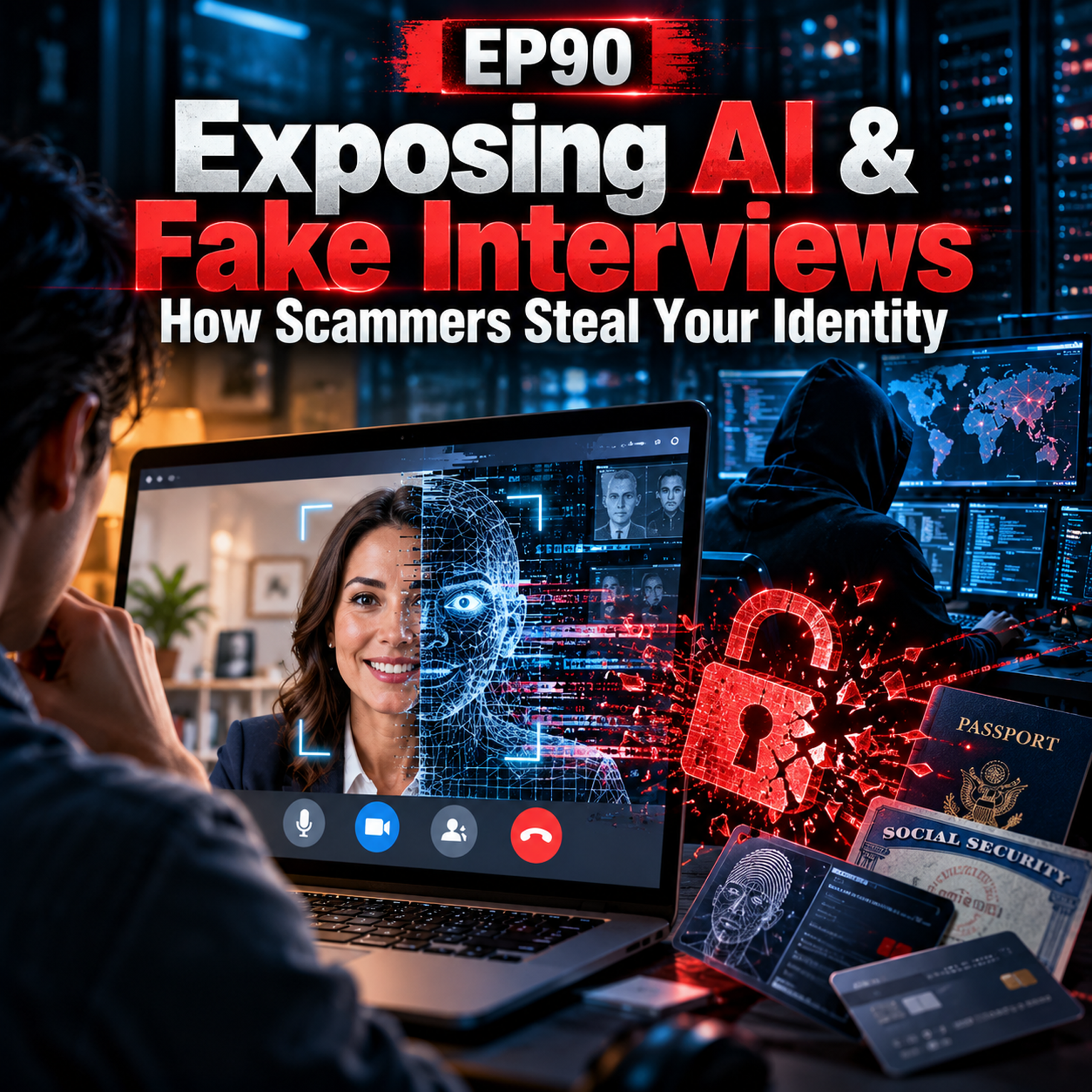
Modern generative systems can synthesize a face, voice, head movement and spoken name from existing media.
An operator can type a request, generate or modify a short clip, and send it back while the target is still waiting.
[00:15:50] Speaker B: Plain English check.
Seeing the person perform your challenge proves that someone can produce a video of the challenge. And it does not prove who is operating the account precisely.
[00:16:02] Speaker A: The old physical proof tests pulling an ear, blinking, holding up fingers, turning the head or saying a code word can no longer establish Identity on their own.
[00:16:13] Speaker B: What about a live call?
[00:16:15] Speaker A: Better than a file, but not decisive. A scammer can use face replacement, voice conversion, replayed video, a confederate, or a deliberately poor connection.
Very short calls, tiny windows, low resolution, frozen frames and abrupt hangups should reduce confidence, not increase it.
[00:16:38] Speaker B: Especially when every technical failure somehow protects the fantasy. The camera's bad because I'm famous. The call must be short because management is watching.
[00:16:48] Speaker A: Exactly. The explanation adapts faster than the evidence. So the better test is channel verification, not performance verification.
Independently locate the person's official website, verified representation, venue, ticket seller, or publicly listed business contact.
Ask that channel whether the outreach and offer are real.
[00:17:10] Speaker B: And don't ask the person in the suspicious chat where to verify them. That's like asking the caller who claims to be your bank for the bank's phone number.
[00:17:18] Speaker A: Also establish a family verification phrase for emergencies, something not posted online. If a loved one appears on a call asking for money, hang up and call a known number. The callback matters more than the face on screen.
[00:17:32] Speaker B: For a celebrity case, we can make the rule even simpler.
Affection is not a ticketing channel. A private romance does not turn Cash app into Ticketmaster.
[00:17:43] Speaker A: There's the line I wish I'd written.
[00:17:46] Speaker B: You did, but I borrowed it.
[00:17:50] Speaker A: Nicely done.
But the serious point is that those custom videos did more than answer Leslie's doubts. They made later request feel supported by direct visual proof.
Then a real Nashville event created the opening for Money.
[00:18:05] Speaker B: Leslie said there was an exclusive Nashville performance with 1,000 tickets and they sold out in four minutes.
[00:18:11] Speaker A: The event itself gave the scammer borrowed legitimacy. When Leslie said she couldn't get a ticket, Fake John offered a private meet and greet. But access had to be arranged through
[00:18:22] Speaker B: management, which meant a new set of fake email addresses and new people who all happened to confirm the same story.
[00:18:30] Speaker A: That is a common confidence trick. Manufactured corroboration.
The romantic partner, manager, security team and payment agent may look like separate authorities, but they can be one operator or one coordinated group.
[00:18:47] Speaker B: Then came the payment explanation. Regular ticketing sites supposedly get hacked all the time, so Bitcoin was safer.
[00:18:54] Speaker A: That reverses the risk.
A credit card purchase through an authorized seller creates records and may present provide dispute rights.
Cryptocurrency transfers are generally irreversible, and sending to a wallet supplied in a private message gives up those safeguards.
[00:19:12] Speaker B: That is payment diversion. When someone moves you away from the normal payment path and calls it security, treat that as danger, not reassurance.
[00:19:22] Speaker A: The initial asks were small, roughly 100 to $150.
Then came Re repeated claims that a payment had failed. Try CashApp, try PayPal, try Venmo, buy Bitcoin. Send another amount.
[00:19:37] Speaker B: The promised prize was not just a handshake backstage. The offer was framed as private time together, a meet and greet, a day together, even dinner. By then, Leslie believed she was paying to finally meet someone she already regarded as a romantic partner.
[00:19:54] Speaker A: Public accounts put the meet and greet payments at roughly $3,000 in installments.
Many individual transfers were in the hundreds, and at least one reportedly reached $1,000.
That installment pattern matters. The total can become catastrophic without any single early request. Feeling catastrophic?
[00:20:16] Speaker B: Notice that the first serious request was tied to a legitimate event.
The concert existed. The scarcity was real.
The scammer attached a fraudulent solution to a genuine disappointment.
[00:20:30] Speaker A: That is stronger than inventing an entire concert. A victim can search the event and confirm it. The criminal only has to falsify the private access layered on top of it.
[00:20:41] Speaker B: Leslie said she expected something concrete in return.
Meet and greets are real products that made the transfer feel less like giving money to a stranger and more like purchasing an unusual experience through an unusual process.
[00:20:56] Speaker A: The supposed management emails added paperwork and authority. But an email signature, a logo, or a professional tone does not establish that the sender represents the artist. The relevant question is whether the address is published through the artist's independently verified channels.
[00:21:14] Speaker B: Most of the reported payments ranged from about $150 to $500, with one payment around $1,000.
The meet and greet total reached roughly $3,000 before the later demands pushed the overall loss beyond $10,000.
[00:21:29] Speaker A: Small increments exploit mental accounting.
One transfer feels survivable.
The victim may not pause to total every transfer across cash, app, PayPal, Venmo, and Bitcoin, especially while being told some payments never work.
[00:21:45] Speaker B: And if a payment supposedly failed, she was not merely asked to pay again. She was given another technical task. Try a different service. Follow another screenshot, Learn another process In a fraud interview.
[00:21:58] Speaker A: I would want a ledger, date, amount, platform, recipient identifier, claimed purpose, transaction status, and what the scammer said next.
That chronology often reveals escalation that felt invisible in real time.
[00:22:15] Speaker B: That is useful for families, too.
Don't begin by arguing about the romance.
Sit together and build the payment timeline.
Facts can lower the emotional temperature.
[00:22:26] Speaker A: The scammer also coached her through the mechanics, screenshots, instructions, which app to try and how to buy Bitcoin. That was not customer service. It was the offender. Removing every point where confusion might otherwise stop. The payment and the changing destinations made reconciliation harder. One amounts on One app another. Through a different service than cryptocurrency, the victim is kept busy executing steps instead of stepping back to calculate the total.
[00:22:56] Speaker B: Each failure does three things. It creates confusion, makes the victim solve a technical problem, and turns another payment into the quickest way to keep the promised meeting alive.
[00:23:10] Speaker A: This is where urgency overrides common sense. A sold out show, a deadline, a failed transfer, a clearance that expires. The clock is part of the scam because it suppresses the pause where independent verification happened.
[00:23:25] Speaker B: My rule is simple. If the payment has to happen before you can think, it should not happen.
[00:23:32] Speaker A: By July 2025, the story moved physically closer. The scammer claimed he was at a hotel in Louisiana. He sent photos with carpet, furniture, light fixtures, and even napkin rings that matched a local hotel.
[00:23:47] Speaker B: The hotel photographs were granular.
Carpet, furniture, light fixtures, table settings.
Leslie recognized the visual details.
After months of distance, the images made the promised meeting feel geographically immediate.
[00:24:05] Speaker A: She joined the Google chat call from her cousin's house. The video window was small and the figure difficult to see.
When she tried to enlarge it, the connection ended almost immediately. The narrative changed from romance to alleged misconduct.
[00:24:21] Speaker B: Management claimed she had triggered a security breach and might have been trying to record the call for blackmail.
That accusation put her on the defensive. Instead of asking why the call failed, she was pushed to prove she was trustworthy.
[00:24:34] Speaker A: The scammer then offered a cruel bargain. Pay a larger bitcoin amount for another screening or restored clinic clearance, and he would remain in Louisiana.
The closeness of the supposed meeting increased the pressure. He was presented as being only a drive away, but ready to leave unless she paid.
[00:24:52] Speaker B: Leslie was at Jerry's house and reportedly took the Google chat call in the bathroom. She had never used the app before. All she could see was a tiny box near the bottom of the screen.
[00:25:02] Speaker A: That detail matters. She was managing unfamiliar technology, secrecy, anticipation, and the presence of the one relative who knew the story all at the moment, she believed the relationship might finally become real.
She reached to enlarge. The call ended.
[00:25:21] Speaker B: A completely ordinary action was then redefined as threatening behavior.
[00:25:26] Speaker A: The blackmail accusation reversed, victim and offender. Suddenly, Leslie had to defend her intention to the person deceiving her.
That can produce compliance because an innocent person wants to clear the misunderstanding.
[00:25:39] Speaker B: And the hotel detailsthe wall fixtures, table setting, rug floor pattern had already answered the question, is he really nearby? So when the call failed, she was not deciding whether a stranger existed. She believed she was one procedural hurdle away from meeting him.
[00:25:57] Speaker A: Biscuit is a classic escalation.
Proximity plus loss.
The reward Is close, but it will disappear unless the target act.
That combination can overpower concerns that would look obvious from a compt.
[00:26:14] Speaker B: After the larger bitcoin payment, the meeting still did not happen.
The promised solution created only another problem.
That is the pattern. Payment never resolves a crisis because the crisis is the product.
[00:26:28] Speaker A: And when Leslie finally recognized that it was not real, she had to absorb two losses at once. The financial damage and the collapse of the person she had spoken with every day. The supposed fix was a massive bitcoin payment to restore her security clearance and keep the meeting alive. That demand had no legitimate logic. Real protective teams do not sell security. Security clearance to a fan after a glitchy video call.
[00:26:55] Speaker B: But after seven months, this wasn't presented as buying clearance. It was presented as saving the relationship and preventing all the earlier sacrifices from being wasted.
[00:27:07] Speaker A: That's sunk cost pressure. Money already sent cannot be recovered by sending more. But the scammer makes the next payment feel like the only route to rescue the last one.
[00:27:18] Speaker B: The damage was more than $10,000.
Leslie's home faced foreclosure. And the emotional injury was not merely embarrassment. It was grief for a relationship that felt real to her.
[00:27:31] Speaker A: Leslie described her heart as shattered. She knew the real Jon Bon Jovi had not harmed her. Yet the association itself became painful because his face and music had been used as the costume for the fraud.
[00:27:47] Speaker B: She has said that songs she once loved became difficult to hear and that seeing him in ordinary places could trigger the memory.
Financial statements can measure the money. They cannot measure what it costs to lose a source of joy.
[00:28:01] Speaker A: There was family impact, debt and the threat to her home.
There was also the humiliation that victims are made to anticipate the fear that disclosure will be met with laughter instead of help.
[00:28:15] Speaker B: Jame is operationally useful to scammers. It delays bank calls, police reports, platform complaints, and conversations with family.
Silence gives the criminal more time and protects the same account for the next target.
[00:28:31] Speaker A: That is why victim centered language is not just kindness. It improves reporting. Tell me what happened next. Gathers evidence.
How could you do that? Shuts the evidence down.
[00:28:43] Speaker B: Leslie chose to speak publicly anyway. She has used her experience to warn other people and to challenge the idea that education or financial experience makes someone immune.
[00:28:55] Speaker A: Across those public accounts, Several brief statements capture the case, especially clearly. Hearing Leslie's own words matters because they show how the relationship felt from inside it, not how it looks after the fraud has been exposed.
[00:29:12] Speaker B: Describing the relationship, she said, it was like talking to my best friend.
That helps explain why a warning about a stranger may not land by the time money was requested, the person behind the account no longer felt like one.
[00:29:26] Speaker A: On the customized videos, Leslie said that's how good AI is. Her point is practical. She asked for unusual gestures and received them within minutes.
She is warning us not to treat a personalized clip as conclusive proof.
[00:29:44] Speaker B: When the Louisiana meeting collapsed, she described the realization plainly. Oh, my God, this is just not real.
That is the moment hope gave way to the recognition that every new payment would produce another excuse.
[00:29:59] Speaker A: She has also been direct about the emotional injury. My heart was shattered. The money mattered enormously, but so did learning that the care, memory, and companionship had been used as tools.
And that right there, that is what
[00:30:15] Speaker B: makes these so devastating. It's one thing to lose, you know, a huge chunk of your, your life savings, but discovering that, that the entire relationship was basically a weapon used against you. It's really no wonder that her heart was shattered.
[00:30:29] Speaker A: It's just evil.
[00:30:31] Speaker B: Her most helpful message to other victims is also the one we want to underline. Don't be embarrassed. Don't be ashamed.
Jane belongs with the offender, not the person who is deliberately groomed and deceived.
[00:30:44] Speaker A: Leslie has said that if someone feels they are at rock bottom, the only way is up.
Reporting, asking for help and stopping the next payment are not admissions of weakness. They are the first acts of recovery.
Her case also raises an accountability question beyond the individual offender.
Impersonation accounts, payment platforms, banks, crypto services, and social networks each see a fragment of the activity.
Prevention improves when those fragments are connected quickly.
[00:31:17] Speaker B: Awareness still matters, but we should not make victims carry the entire burden of defeating industrial scale fraud with perfect judgment in every emotional moment.
[00:31:27] Speaker A: If a listener recognizes this pattern midstream, stop sending. Contact each payment provider immediately. Ask whether any transfer can be frozen or recalled.
Secure accounts, preserve the full message history, and tell someone trustworthy, do not pay a recovery agent who contacts you unexpectedly. Recovery scams often target victims a second time.
[00:31:51] Speaker B: Speaking out also connected Leslie with Mariana Van Zeller, whose investigative team helped turn the scammer's appetite for more money into a digital lead.
[00:32:00] Speaker A: Leslie had followed Van Zeller's reporting and sent her the entire story in in one long message.
After being deceived once, she wanted more than text. Before trusting that she was speaking with the real journalist, her caution had not disappeared. It had been manipulated Inside one relationship.
Cybersecurity expert Armand Sadhri helped build a lure around a fake opportunity for additional Bitcoin. The scammer's desire for one more payment cross created the opening when the link was used the technical return pointed to Lago.
[00:32:36] Speaker B: The team then compared the digital lead with mapping and location information to narrow where that connection appeared to originate.
For Leslie, the importance was not only a dot on a map. It was independent evidence that the account activity did not match the relationship story she had been told.
[00:32:56] Speaker A: The documentary follows two distinct investigative threads. Leslie's impersonator generated a lead toward Lagos, Nigeria.
Separately, Van Zeller's own undercover romance scam investigation took her to Ghana, the man targeting her fictional Persona.
[00:33:13] Speaker B: The lure was built around the scammer's strongest motivation, the possibility of more Bitcoin that made him willing to interact with a controlled link that could return technical
[00:33:24] Speaker A: connection data at a high level. A controlled link or webpage can log technical connection data when someone opens it, such as an Internet address, time device clues and network information.
The team used that type of lore to capture an IP address linked to Lagos, Nigeria.
[00:33:43] Speaker B: The team then used mapping tools, including Google Earths, to examine the area associated with the technical lead before Van Zeller traveled to Africa.
[00:33:52] Speaker A: Here is the critical caution.
An IP address is a lead, not a conviction.
It can point to a network or approximate area.
A virtual private network, shared WI fi, mobile carrier, proxy, compromised device, or another person using the connection can complicate attribution.
[00:34:16] Speaker B: So the click came from this network. Is not automatically this named person committed every act correct?
[00:34:24] Speaker A: Investigators corroborate with account records, provider returns, wallet tracing, device evidence, communications timing, identity documents, and sometimes physical surveillance.
The documentary's digital trap helped break the illusion and generated a geographic lead.
It did not magically solve every evidentiary question.
[00:34:45] Speaker B: Could an ordinary victim send a tracking link?
[00:34:49] Speaker A: I would not recommend running a private sting. It can alert the offender, contaminate evidence, expose your own information, violate terms or laws, or create physical risk.
Preserve what you have and bring it to law enforcement, the platform, your financial institutions, or a qualified attorney or investigator.
[00:35:11] Speaker B: And that is the difference between generating a lead and recovering money.
Finding a likely location may provide closure or help an investigation, but it does not reverse a blockchain transfer.
[00:35:24] Speaker A: Crypto recovery is difficult because transactions are fast, cross border and usually irreversible. Funds may be split across wallets, swapped into other assets, routed through services, or cashed out through and to meet intermediaries. Speed matters. If an exchange or identifiable service still controls the funds, a prompt report may create an opportunity. But no honest person should promise recovery,
[00:35:50] Speaker B: especially not for an upfront fee paid in more crypto.
[00:35:54] Speaker A: Exactly. Recovery scammers monitor public complaints and contact victims claiming they have special access, a government connection or a Guaranteed tracing tool that is often the next fraud.
[00:36:07] Speaker B: The investigative value here was also emotional.
Leslie had spent months being told that doubt meant disloyalty. The digital trail supplied an outside fact the scammer did not control.
[00:36:20] Speaker A: And Leslie's decision to speak publicly turns private harm into collective warning that deserves respect.
Reporting also helps platforms and investigators connect accounts, wallets, email addresses and repeated scripts across victims.
[00:36:36] Speaker B: One report may look isolated. Ten reports can reveal an operation.
[00:36:42] Speaker A: The case ends without an easy reset button. The money and emotional damage do not disappear.
But the story gives us rules we can use before the next five minute miracle arrives in someone's inbox.
[00:36:56] Speaker B: Let's leave people with three rules they can remember under pressure.
[00:37:00] Speaker A: Rule 1 Verify through a channel you find independently verified public profile, official website, venue, box office, authorized ticket seller or known phone number.
Not a link, email or manager supplied by the person asking for trust or
[00:37:17] Speaker B: money and separate identity from emotion. Someone can make you feel deeply understood and still be lying about who they are.
[00:37:26] Speaker A: Rule 2 Treat unusual payment methods as a stop sign.
No celebrity relationship, meet and greet, security clearance, customs problem, medical emergency or account fix should require Bitcoin, gift cards or repeated transfers across peer to peer apps.
[00:37:47] Speaker B: If the first payment fails, do not send it again somewhere else. Check your real account directly and call the provider using a number you independently locate.
[00:37:59] Speaker A: Rule 3 urgency means pause and add another person.
Create a 24 hour rule for unexpected payments. Call someone who is not emotionally invested. If the sender says secrecy is proof of love or that delay will ruin everything, that is more reason to send
[00:38:18] Speaker B: Stop Ida the sentence for families I believe that this feels real to you and I'm staying with you while we verify it.
That is far more useful than how could you.
[00:38:29] Speaker A: If you suspect someone you love is in a romance scam, first protect the relationship you actually have with them. The scammer has spent months becoming the safe, affirming voice. If you arrive with contempt, you may confirm the scammer's warning that nobody else understands.
[00:38:47] Speaker B: Start with curiosity.
What have they promised? What have to happen before you meet? Who receives the money? Can we verify that part together?
You are looking for a pause, not a confession.
[00:39:02] Speaker A: Separate four questions Is the public figure real?
Is this account controlled by that person?
Is the offer legitimate?
Is the payment method protected?
A scammer wants one emotional answer. I trust him to cover all four.
[00:39:20] Speaker B: Then make the test independent. Call the venue from the number on its official site.
Contact the artist's representation through a published channel.
Search the exact email domain. Ask the payment provider what protections apply
[00:39:35] Speaker A: before Money moves if the answer is, you cannot verify this because our relationship is secret.
Treat secrecy as disconfirming evidence.
Legitimate security procedures may be private, but they do not require a fan to send Bitcoin to preserve a romance and
[00:39:54] Speaker B: write down the stopping rule before the pressure arrives. No unexpected crypto no gift cards, no repeat payment because the first supposedly vanished, and no financial decision during a countdown
[00:40:08] Speaker A: for anyone already involved. Avoid confronting the offender with everything you know until accounts and evidence are secured. Change reused passwords, protect email, review recovery addresses and phone numbers, turn on stronger authentication and check whether remote access software was installed.
[00:40:26] Speaker B: Then contact every payment service. Even when a transaction cannot be reversed, reporting can flag recipient accounts and help connect other victims.
[00:40:36] Speaker A: Preserve original files when possible. Not only screenshots, keep message exports, email headers, transaction IDs, wallet addresses, profile links, phone numbers, and timestamps. A clean chronology is more useful than a folder of unlabeled images.
[00:40:53] Speaker B: And if the victim is overwhelmed, sit beside them while they make the calls. Practical support reduces the chance that shame wins.
[00:41:01] Speaker A: If money has already moved, act quickly. Contact the bank card IS or payment
[00:41:08] Speaker B: app or crypto exchange. Ask for the fraud team and whether a transfer can be stopped, recalled, or flagged. Change passwords. Turn on Multi Factor Authentication and secure email first, because it often controls password resets. Save the evidence before blocking usernames, profile links, phone numbers, email, email addresses, wallet addresses, transaction IDs, receipts, voice messages, videos and the full conversation. Do not edit screenshots in a way that removes dates or context.
[00:41:37] Speaker A: In the United States, reports can go to the FBI's Internet Crime Complaint center at ic3.gov, the Federal Trade Commission at report fraud.ftc.gov local law enforcement and the platformer payment provider involved. If foreclosure or debt is looming, contact the mortgage servicer or creditors early and ask about hardship options. A nonprofit credit counselor or legal aid office may also help.
[00:42:03] Speaker B: And for the love of God, document everything for emotional support. Choose someone who can listen without making you defend yourself.
If you are supporting a victim, remember that they may be grieved, leaving a person who never existed and a future they had begun to believe in.
[00:42:22] Speaker A: Leslie Pickett's case shows why the old question, did you see their face? Is no longer enough. She saw customized videos. She saw specific gestures. She saw a live call.
The stronger questions are, who controls the channel? Can an independent source confirm the identity? And why is more money being diverted away from normal safeguards?
[00:42:45] Speaker B: Technology made the mask convincing. Patience made the relationship convincing. Pressure turned that trust into payments and
[00:42:54] Speaker A: Compassion is not softness here. It is prevention. When victims can report without being mocked, everyone gets better information sooner.
[00:43:03] Speaker B: I know there's strength in vulnerability, and it might just be the one thing that stops this cycle in its tracks. Also, if a world famous rock star needs you to troubleshoot Bitcoin before dinner, dinner can wait.
[00:43:17] Speaker A: A gentle but firm policy from the household truth checker. That's right, this has been behind the scams from the SOS Media Network.
Remember one last thing. The custom video is not proof of identity, and a deliberate pause can protect both your money and your trust. Take care of each other.
Bye for now.