Episode Transcript
[00:00:00] Speaker A: Sue.
Sometimes I hear something on the news involving a federal case and a fraud operating on a massive scale. And I want us to do a quick episode because the case is unusual, something that deserves special attention.
This is one of those cases.
[00:00:16] Speaker B: What caught your attention?
[00:00:18] Speaker A: On August 12, 2026, the Justice Department held a press conference and announced that a two count fail federal indictment had been unsealed in the Southern District of New York.
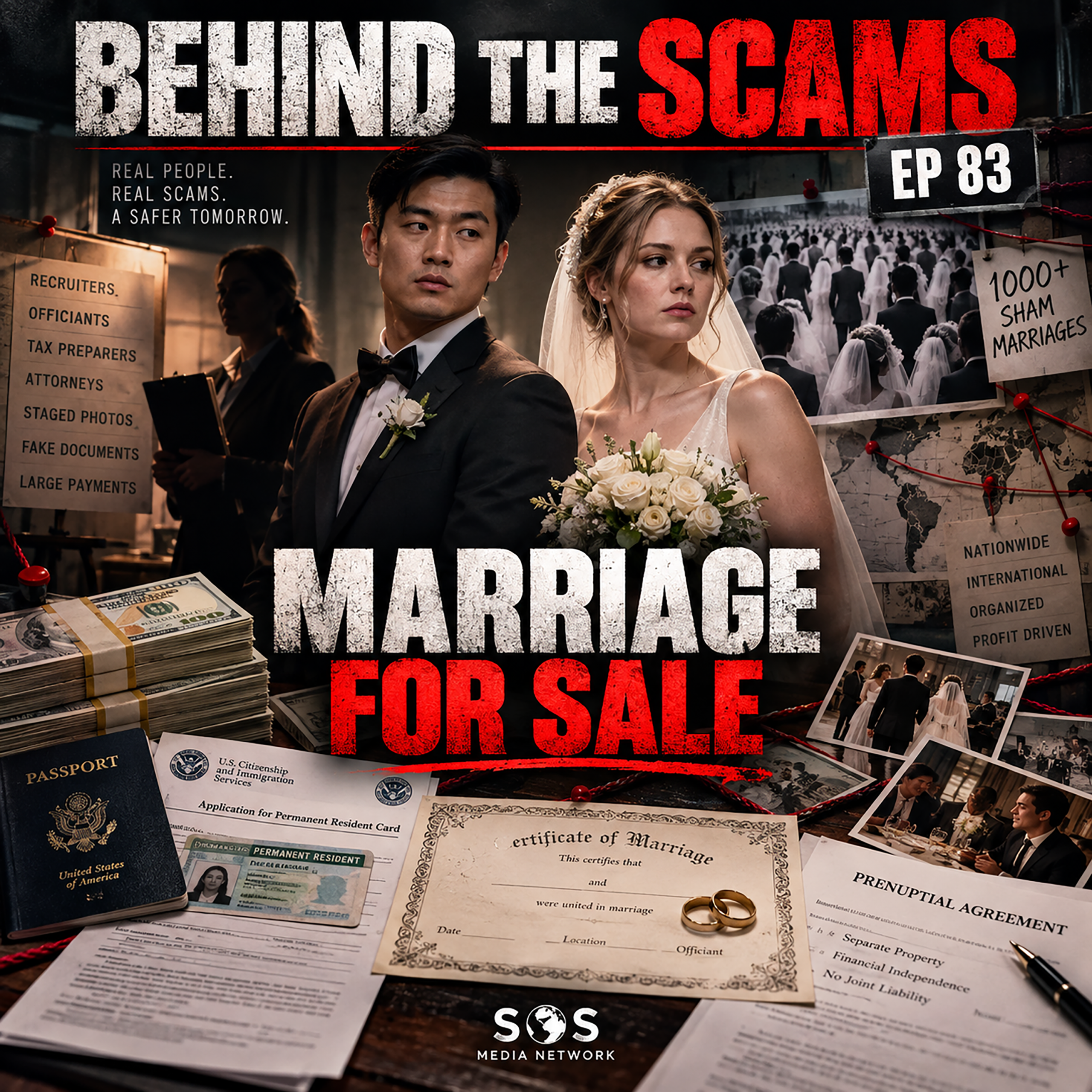
Eleven people were charged in an alleged nationwide and international marriage fraud scheme that prosecutors say ran for more than a decade and arranged more than 1,000 sham marriages, primarily involving citizens of China and United States citizens.
[00:00:50] Speaker B: Who was standing behind that announcement?
[00:00:53] Speaker A: It was a coordinated federal and local presentation. The announcement brought together Attorney General Todd Blanch, Jamie McDonald, the United States Attorney for the Southern District of New York, Pete Gizas of Homeland Security Investigations in New York, USCIS Director Joseph Edlow, and Westchester County District Attorney Susan Kakase.
That lineup signaled that this was not being presented as a paperwork violation involving a few couples. The government was describing an alleged criminal network that crossed immigration enforcement, federal prosecution and local investigative work.
[00:01:36] Speaker B: And the arrests had already happened by the time officials went public.
[00:01:40] Speaker A: Ten of the 11 defendants were arrested that morning and were expected to appear before United States Magistrate Judge Judith State McCarthy in White Plains. Federal court count one charged a conspiracy to commit marriage fraud and immigration document fraud.
Count two charged a conspiracy to encourage or induce foreign nationals to come to enter or reside in the United States unlawfully.
[00:02:05] Speaker B: And those were conspiracy charges. So prosecutors were alleging that different people filled different roles in one coordinated operation.
[00:02:14] Speaker A: Exactly. The indictment identifies alleged facilitators, recruiters, an assistant who coordinated services, and others accused of helping create ceremonies, financial records, immigration filings, and interview preparation.
[00:02:31] Speaker B: Right.
[00:02:31] Speaker A: Those are allegations, and the defendants are presumed innocent unless proven guilty. But the charges show why the government described the case and as an organization rather than a collection of unrelated couples.
[00:02:47] Speaker B: So the press conference was doing more than announcing names. It was laying out the government's theory of the whole enterprise.
[00:02:54] Speaker A: Exactly.
Officials called it a nationwide and international multimillion dollar operation.
They said the alleged network treated the immigration system like a business opportunity, charging foreign nationals exorbitant fees, recruiting United States citizens, and manufacturing evidence for green card applications.
[00:03:17] Speaker B: Wow.
[00:03:18] Speaker A: The United States attorney said the arrests had dismantled a central component of one of the largest marriage fraud schemes charged in American history.
That phrase central component also matters. It describes what prosecutors say they disrupted without claiming that every unanswered question had already been resolved.
[00:03:38] Speaker B: More than 1000 marriages.
[00:03:40] Speaker A: More than 1000 marriages.
Not love stories. Transactions. Prosecutors allege foreign nationals allegedly paid as much as $100,000 for the package.
American citizens were offered as much as $30,000 to become spouses on paper.
Around them stood recruiters, efficient tax preparers. Attorneys staged photographs, rehearsed interviews, and prenuptial agreements that prosecutors say expose the contradiction at the heart of the arrangement. Marriage and name, separate lives and practice.
[00:04:20] Speaker B: Stop there. They put the truth in writing.
[00:04:22] Speaker A: They allegedly had to. The organizers feared immigration investigators. The participants feared each other. The public file needed to say, we joined our lives. The private agreement needed to say, you cannot touch mine.
[00:04:37] Speaker B: One marriage, two stories. And if either story reached the wrong person, the whole thing could collapse.
[00:04:44] Speaker A: Exactly. And federal prosecutors say that contradiction sat at the center of one of the largest marriage fraud cases ever charged in the United States.
Eleven people were indicted in the Southern District of New York.
Ten were arrested when the case was announced.
The alleged conspiracy ran from at least 2016 through July 2026, reached across the country and overseas, and arranged more than 1,000 sham marriages, primarily pairing citizens of China with United States citizens.
[00:05:19] Speaker B: Today, we are looking at how marriage was allegedly converted into an inventory item, how a network industrialized the paperwork of intimacy, and why the strangest document in the case may also be one of the most revealing.
[00:05:35] Speaker A: This is behind the scams. I'm Nick.
[00:05:37] Speaker B: And I'm Sue.
[00:05:38] Speaker A: Before we get into the mechanics, a legal reminder. These are allegations in a federal indictment. An indictment is a charging document, not a conviction. And every defendant is presumed innocent unless proven guilty.
[00:05:53] Speaker B: And the case begins with scarlet scale.
1000 marriages is a number that almost stops behaving like a number.
Put it into human terms for us.
[00:06:04] Speaker A: If you Spread more than 1,000 marriages across roughly a decade, the pace approaches 100 a year, close to two every week. Each one required two people.
Identity documents, a marriage record, financial paperwork, photographs, an immigration filing, and a story that could survive questions from federal officials.
This was not one dishonest couple taking a chance.
Prosecutors describe an alleged production system, and
[00:06:34] Speaker B: that pace assumes the marriages arrive neatly spaced. In reality, there may have been clusters, several couples moving through the same process
[00:06:42] Speaker A: at once, which is where logistics start to expose the operation.
More couples mean more appointments, more payments, more documents, and more chances that the same names, addresses, or service providers recur across files.
[00:06:58] Speaker B: Growth makes the enterprise richer and more visible at the same time.
A production system for relationships.
[00:07:06] Speaker A: Or, more precisely, for the outward signs of relationships. The alleged network did not have to manufacture affection.
It had to manufacture evidence of a shared life.
[00:07:18] Speaker B: Let's map the assembly line. Who did what?
[00:07:20] Speaker A: At the center were facilitators.
They allegedly marketed immigration services, connected foreign nationals with American citizens and coordinated the supporting cast.
Recruiters found Americans willing to enter the marriages.
Officians performed ceremonies.
Tax preparers helped produce filings that made the couple appear financially connected.
Attorneys assisted with immigration applications.
The indictment describes a network in which specialized tasks could be handed from one participant to the next.
[00:07:56] Speaker B: That is what makes the phrase cottage industry feel almost too gentle. A cottage industry sounds like handmade candles. This was allegedly handmade credibility.
[00:08:07] Speaker A: And credibility was the product.
The foreign national was allegedly paying for a path toward lawful permanent residence.
The American participant was being paid for access to a legal status only a real spouse could supply.
The organizers collected the difference and managed the risk.
[00:08:29] Speaker B: $100,000 comes in. 30,000 goes to the citizen spouse. Whatever the exact average, that gap is where the business lives.
[00:08:39] Speaker A: It does.
But those figures are ceilings, not an average. The charging materials say some foreign nationals paid as much as $100,000 and American citizens could receive as much as 30,000.
We cannot multiply the maximum fee by every marriage. What the numbers do reveal is the business model. A high value client funded a chain of lower cost services and payments, even
[00:09:06] Speaker B: without knowing the average fee. The maximum prices tell us this was being sold as a premium service, not a casual favor between acquaintances.
[00:09:17] Speaker A: And a six figure customer does not pay for improvisation. They expect the papers to clear, the spouse to cooperate, and the story to hold.
If any of that fails, the messages change. Where is my case? Where is my money? Who made the mistake? Those complaints can become a roadmap for
[00:09:37] Speaker B: investigators, because the moment a criminal customer feels cheated, loyalty gets very expensive.
[00:09:42] Speaker A: That financial imbalance also tells you who controlled what. The foreign national had the money and the immigration objective. The American citizen had the legal eligibility to the client needed. The facilitators controlled the match, the paperwork and the script.
In fraud investigations, control points matter. Who recruits? Who collects payment? Who keeps copies of documents? Who tells people what to say? A conspiracy becomes durable when no single participant has to understand or perform every part.
The recruiter may know only the American spouse. The tax preparer may see only a return.
The efficient may perform dozens of ceremonies. The facilitator is the person who can connect those fragments.
[00:10:37] Speaker B: And prosecutors say the marketing happened through social media and other advertising primarily aimed at people from China.
[00:10:44] Speaker A: Right. That matters because the alleged enterprise was not merely waiting for friends of friends.
Advertising can widen the customer pool, normalize the service, and create the appearance that there is a tested process.
Once a criminal service begins attracting strangers it needs rules, templates, and quality control.
That is where the staging comes in.
[00:11:08] Speaker B: Then come the photographs. A restaurant table, plates of food, people leaning toward the camera. In a split second second, an arranged gathering can be made to resemble a family album.
[00:11:21] Speaker A: And that is what makes the image dangerous.
It does not merely show people at dinner. It suggests a ceremony, approval, intimacy, memory.
The photograph is silent, so the viewer supplies the story.
The scheme only needs every document to whisper the same lie.
[00:11:42] Speaker B: And the setting matters. A restaurant is public enough to look natural, but controlled enough to stage.
You can gather a few people, put food on the table, take 20 photographs, and produce the visual shorthand of a family occasion.
[00:11:59] Speaker A: It is efficient theater. No one reviewing the photograph can hear the conversation or know what happened before or after the camera came out.
The people may be real and the dinner may have happened, but the intimacy the image is being used to prove may never have existed.
[00:12:17] Speaker B: So when investigators look at one of these photographs, the question is not simply, is this picture real? It is, what story was this picture created to sell?
[00:12:28] Speaker A: Which is why investigators do not stop at the photograph. They compare it with the bank records, addresses, tax filings, messages, and every other document claiming these two lives are connected exactly. Think of it as a stack.
Marriage certificate, shared address, joint account, tax filing, photographs, messages, travel affidavits, and interview. A genuine marriage can produce that record. Naturally, because two lives are actually merging in an alleged sham, the organizers have to reverse engineer the same record.
[00:13:09] Speaker B: Meaning they start with the checklist and then build the life backward.
[00:13:13] Speaker A: That is the heart of it. A real couple remembers the same trip because they took it. A sham couple has to be taught the trip. Prosecutors allege participants were prepared for interviews with immigration officials.
Facts about each other, details about the relationship, answers that needed to line up.
[00:13:35] Speaker B: They are not preparing for an interview. They are memorizing a marriage.
[00:13:39] Speaker A: And the examiner can go anywhere. Which side of the bed? Who buys groceries? What did you do Sunday morning?
Where is the coffee kept?
One hesitation may mean nothing, but two different answers to the same ordinary question can split the story wide open.
[00:13:59] Speaker B: Then the cracks multiply. The bank statement points one way. The address points another. The same officiant appears again. The same tax preparer, the same language. What looked like one nervous couple starts to look like a system.
[00:14:16] Speaker A: That is where scale becomes a liability.
Repetition makes a scheme efficient, but repetition also makes patterns. The same process that helps an organization manufacture 1000 files can help investigators connect one file to the next.
[00:14:33] Speaker B: Which brings us to the prenuptial agreements. Read the idea behind that clause again.
[00:14:38] Speaker A: According to the material presented with the case, agreements included language saying that except for using the names husband and wife, the parties would live independently and not interfere with each other.
[00:14:51] Speaker B: That is not a prenup. It is the emergency exit built before the couple even walks through the door.
[00:14:58] Speaker A: Exactly. The American participant fears debt, property claims, support obligations, or a paid spouse who suddenly wants more. The foreign national fears the citizen will use the legal marriage, and as leverage, the facilitator cannot close the deal while both sides are imagining betrayal.
So the agreement makes a promise. Perform the marriage for the government, but protect yourself from the person standing beside you.
[00:15:25] Speaker B: It is almost a perfect fraud document. It says, we want the legal benefit of marriage without the personal consequences of marriage.
[00:15:33] Speaker A: And notice the psychological purpose. The agreement does not only allocate property, it lowers anxiety.
It tells two strangers they can enter a legal marriage without surrendering control of
[00:15:45] Speaker B: their actual lives, which helps the recruiter close the deal. The citizen hears you will be protected. The foreign national hears, your paid spouse cannot turn this into a real claim on your property.
[00:15:58] Speaker A: It solves the sales problem, and it may create the prosecution exhibit. Yeah, and that can be powerful evidence of intent, but never by itself.
Separate finances, periods of living apart, a prenuptial agreement or an unconventional relationship do not prove marriage fraud.
Real marriages take many forms. The legal question is whether the parties entered the marriage in good faith or primarily to evade immigration law.
Here, such an agreement may matter when prosecutors place it beside alleged payments, coaching, false applications, and staged evidence.
[00:16:42] Speaker B: That distinction matters. Separate bedrooms do not automatically mean fraud. A payment to marry a stranger, followed by false filings and a rehearsed story is a very different picture.
[00:16:57] Speaker A: Exactly.
Investigators build intent from context. Money trails, messages, advertising, repeated pairings, draft documents, shared preparers, interview instructions, travel, the sequence of events. One odd fact may be innocent. A coordinated pattern can tell a different story.
[00:17:19] Speaker B: What do you think investigators see first in a case like this? The organizers or the couples?
[00:17:25] Speaker A: It can begin anywhere. One interview goes wrong. One spouse demands more money. One participant saves a message. One preparer appears in too many files. Large frauds do not fail all at once. They leak one name, one transfer, one device at a time, until investigators can see the machinery behind the marriages.
[00:17:48] Speaker B: Let's say one marriage file looks plain, plausible on its own. What changes when investigators place it beside 50 others?
[00:17:56] Speaker A: The background becomes evidence. The same preparer, the same phrasing, the same sequence of bank deposits, the same restaurant, the same witness or the same supposed home address can turn coincidence into a pattern that demands an explanation.
[00:18:12] Speaker B: Right.
[00:18:13] Speaker A: One couple can Defend a story. A thousand files can testify against the machine that produced it.
[00:18:19] Speaker B: And once investigators see the system, every participant faces a new calculation.
Is the promised $30,000 worth becoming the next person? Federal agents question that payment can look
[00:18:32] Speaker A: large when it is offered in pieces, but it is compensation for assuming open ended risk. The American citizen may sign tax forms, bank documents, affidavits and immigration paperwork under penalty of perjury. They may sit for interviews and repeat false statements. If the arrangement unravels, the facilitator who collected the larger fee may be far away while the citizen's name is on the records.
[00:19:00] Speaker B: That is one of the oldest scam structures there is. The person at the edge takes the most visible risk and receives only a fraction of the proceeds.
[00:19:10] Speaker A: Right. The organizer sells certainty to everyone else while keeping distance for themselves.
But a conspiracy case is designed to collapse that distance.
Prosecutors do not have to pretend every participant performed every act. They can argue that different people knowingly advanced one shared criminal objective.
[00:19:29] Speaker B: The scale also has a public cost that is easy to miss.
It is not only that one applicant may receive a benefit through false statements. It is that a high volume network form forces immigration officers to spend time separating manufactured cases from genuine families.
[00:19:50] Speaker A: Fraud taxes trust. Once officials discover that restaurant photographs, joint accounts, tax returns and relationship histories can be produced as a package, legitimate couples may face more skepticism.
That is one of the broader harms of organized document fraud. It degrades the evidentiary value of the things honest people rely on.
[00:20:16] Speaker B: There is also a human question here. Were all of the recruited citizens sophisticated conspirators? Or were some financially desperate and easy to pressure?
[00:20:26] Speaker A: The evidence will have to distinguish roles and knowledge.
Financial pressure can explain why someone was vulnerable to recruitment, but it does not automatically erase intent.
At the same time, a serious investigation should ask who designed the enterprise, who profited most, who controlled the information, and who was treated as disposable?
Accountability should follow evidence, not headlines.
[00:20:56] Speaker B: And there is a lesson for anyone approached with an offer like this. The pitch may sound administrative. They may say it is only paperwork and that nobody gets hurt. That the government expects couples to arrange marriages or that everyone does it.
[00:21:12] Speaker A: Those are rationalizations. If money is offered for a marriage intended to secure an immigration benefit and the plan requires false statements or manufactured evidence, it is not a harmless favor. Do not sign open joint accounts or submit to coaching. Preserve the messages and payment instructions. Instructions. End the contact and seek independent legal advice or report the approach to the appropriate federal authorities.
[00:21:39] Speaker B: Independent is the key word, not the lawyer supplied by the facilitator. Not the tax preparer in the package. Someone whose duty is to you and who is not being paid to keep the transaction moving.
[00:21:53] Speaker A: And if you already participated, do not destroy records or coordinate stories. Stories get qualified counsel.
The instinct to clean up a lie usually creates a second set of evidence.
[00:22:03] Speaker B: We should also say what this case is not. It is not an argument that marriages involving immigrants are suspicious or that cultural differences are evidence of fraud.
[00:22:14] Speaker A: Absolutely. Cross border marriages are ordinary, lawful and often require families to prove deeply personal facts to the government.
The allegations here concern a commercial network that prosecutors say sold sham marriages, fabricated corroboration and submitted fraudulent applications.
The focus must remain on conduct and evidence.
[00:22:38] Speaker B: I knew someone who lived through that scrutiny. Her marriage was genuine. But because the couple had met overseas and spent long stretches apart while they worked through the immigration process, every ordinary detail seemed to become evidence. Under a microscope. They carried photographs, travel records, messages, years of a real relationship reduced to a stack of documents.
[00:23:03] Speaker A: What did that do to them?
[00:23:05] Speaker B: It made them feel as if love itself were on trial. They understood why questions had to be asked. But they also knew they were telling the truth and still had to prove it. One receipt, one photograph, one memory at a time. That stayed with me. When a network manufactures those same signs by the thousand genuine couples inherit the suspicion.
[00:23:27] Speaker A: And that is the damage beyond the indictment.
The fraud does not only exploit a system, it makes the system doubt people like the couple you knew, people using it honestly.
[00:23:40] Speaker B: That is what state stays with me. The amount of work required to fake something that genuine couples already struggle to prove. The alleged scheme needed a bureaucracy of its own. Matchmakers, forms, photographs, payments, tax returns, ceremonies, legal agreements and rehearsals.
[00:24:01] Speaker A: That is why this case belongs on a show about scams.
Fraud does not always impersonate a bank or promise an investment.
Sometimes it impersonates a relationship. The underlying method is the same. Identify what an institution trusts, reproduce the signals, and sell access to the result.
[00:24:22] Speaker B: And unlike a quick confidence trick, this kind of fraud has to keep performing. After the money changes hands, the couple may need to maintain accounts, answer questions, attend appointments, and preserve the same fiction over time.
[00:24:36] Speaker A: And every month that fiction survives, the danger grows.
Another statement, another interview, another payment.
Then one spouse panics. One fee arrives late, one facilitator stops answering. And the relationship, built to fool the government, starts consuming the people inside it.
[00:24:59] Speaker B: The entire scheme depends on strangers trusting one another with a lie that could send every one of them running for the exit.
[00:25:05] Speaker A: And the prenup gives the game away.
Publicly, we share a life.
Privately, stay out of mine.
Publicly A wedding privately, a transaction. The document meant to protect the scheme may be the document that explains it.
[00:25:23] Speaker B: That's it.
[00:25:24] Speaker A: In financial crimes investigations, the loudest evidence is not always the best evidence.
Look for the record created when nobody trusts anybody else. The side agreement. The private ledger.
The message that says what the official form cannot the public story tells you what the scheme wanted the government to believe.
The private record tells you what the
[00:25:49] Speaker B: participants knew more than 1,000 alleged sham marriages. And the case may ultimately turn on thousands of small contradictions between those two stories.
[00:26:01] Speaker A: The government will still have to prove the charges in court, but the indictment offers a striking picture of how a fraud can scale when it turns human relationships into standardized paperwork and divides deception into specialized jobs.
[00:26:17] Speaker B: A marriage certificate became merchandise. A citizen became a paid credential. A family photograph became camouflage. And a contract promising separate lives became the fingerprint the operation could not wipe away.
[00:26:31] Speaker A: Sue After 25 years of watching fraud cases break open, I keep coming back to the same thought. Arrests can stop an alleged network, but they do not erase the records, restricted relationships and unanswered questions it leaves behind.
[00:26:46] Speaker B: Then let me ask you the question behind all those unanswered records. If someone connected to the case contacted us, someone holding messages, contracts, or names, would you be ready to hear what they know?
[00:27:00] Speaker A: I would.
The question is whether anyone is ready to tell us, and whether the people they might name are already wondering who will speak first.
[00:27:09] Speaker B: If this kind of independent fraud reporting helps you recognize the warning signs and protect someone you care about, please support the work behind it.
[00:27:18] Speaker A: Behind the Scams is part of SOS Media Network. Powered by Stamp Out Scams, Inc. Nonprofit organization.
Your donation supports scam prevention, education, victim advocacy, investigative reporting, and practical tools to designed to help communities recognize and report fraud.
[00:27:38] Speaker B: To make a tax deductible donation, visit Stamp Out Scams and select Donate now. Every contribution helps us keep this information free and available to the public.
[00:27:50] Speaker A: Thank you for listening, sharing the episode, and helping us stamp out scams.