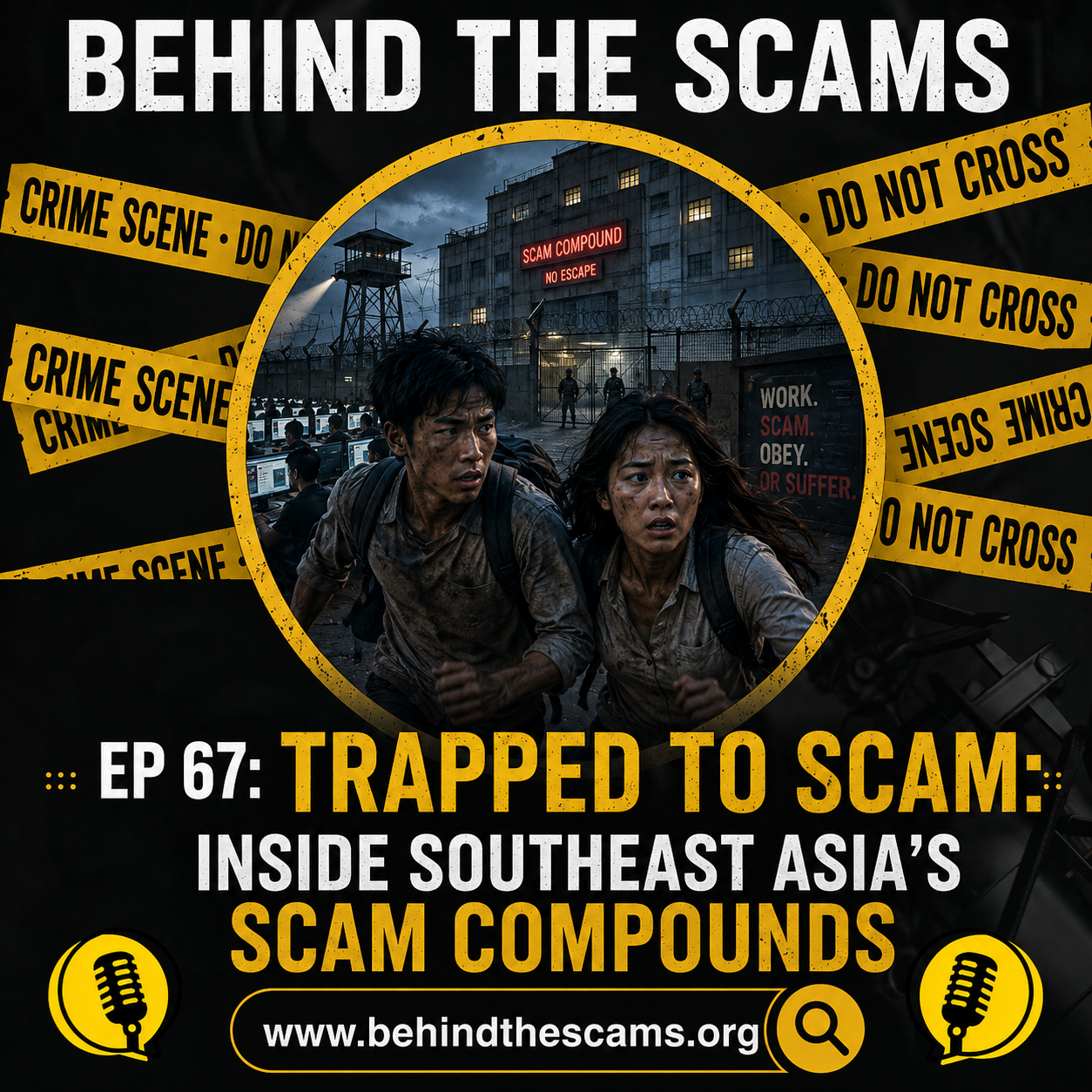
[00:00:00] Speaker A: You know, when we talk about something like a medical diagnosis, there's usually this expectation of precision. It's almost clinical, almost engineered.
You have symptoms, you run tests, and eventually a professional points to something concrete and says, this is the problem.
If you break your arm, you don't speculate about it. You go to the hospital, they take an X ray, and the doctor literally shows you the fracture.
It's visible, it's measurable, it's defined.
There's something almost reassuring about that level of clarity. Even when the outcome is bad, Right?
[00:00:35] Speaker B: Yeah. It's objective. There's no ambiguity about what's wrong.
[00:00:39] Speaker A: That's right. But, Sue, I saw something recently that completely broke that framework for me. It was a survivor account featured on 60 Minutes Australia.
And what hit me wasn't just the story itself.
It was how immediate the understanding was.
There was no doctor explaining anything, no analysis, no report, just a man standing in front of a camera. And you instantly understood what had been done to him purely by looking.
[00:01:08] Speaker B: You didn't need context. You just knew.
[00:01:11] Speaker A: Yeah. He had escaped from a scam compound in Myanmar. And the way he presented himself was almost calm. That's what makes it so unsettling. He's not emotional, he's not trying to dramatize anything. He's just standing there quietly showing the camera his body like he's documenting evidence.
And even through a screen, it was very difficult for me to look at.
To me, Southeast Asian scam compounds represent some of the highest levels of human depravity and torture.
[00:01:41] Speaker B: I agree, Nick. And you know what? That kind of stillness from a man who has suffered so much, so much, almost makes it worse.
[00:01:50] Speaker A: It really does, because all the impact comes from what you're seeing.
The footage starts with a close up of his face, and one of his eyes is so swollen and bruised that it's almost completely shut.
It's the kind of injury that on its own would already be serious. But that's just the starting point.
Then the camera pans down and he begins pointing to his legs and explaining in this very matter of fact way that the dark mottled bruising across his thighs and calves is from repeated blows with a heavy polymer rod. And ten full force strikes.
[00:02:26] Speaker B: Ten full force strikes. And he's just saying that like it's routine.
That's exactly it. And what really stopped me was what he said next. He mentions that the bruising has actually faded, that it's lighter than it used to be. And then he explains it's been 10 days since the beating.
10 days and you're looking at him thinking, this doesn't look old. This looks like something that just happened. Then he turns around and his entire back is covered in these raised crisscrossed marks, almost like a grid carved into his skin. And again, no dramatics, just showing it. You don't really have anywhere to look away at that point.
[00:03:09] Speaker A: No, you don't. And then he adds more details. Electric shocks, being locked in a dark room for 15 days. No food, no water.
And at that point, your brain tries to make sense of it by putting it into categories you already understand.
You think about prisoners of war, intelligence, interrogations, black sites, situations where extreme violence is used to extract something extremely valuable.
[00:03:36] Speaker B: Like there has to be a reason that matches that level of brutality.
[00:03:41] Speaker A: You assume there must be something massive behind it, some kind of geopolitical importance, some high stakes intelligence. And then you find out why it actually happened. This gentleman wasn't a spy. He wasn't involved in politics. He wasn't part of any conflict. He was there because of a job, a job he thought he was taking voluntarily.
And when he couldn't meet the expectations, when he tried to resist or leave, this was the result.
He was beaten, starved and isolated. For one reason.
[00:04:12] Speaker B: He didn't scam enough people on the Internet. That completely changes how you process it.
Because when we think about scams, none of this is what comes to mind.
[00:04:23] Speaker A: Not at all.
We imagine something faceless. A hacker, an automated bot, a system that's detached from real human consequences.
But the reality is much more human and a lot darker.
Behind that message, behind that phone call, there could be someone exactly like this. Someone trapped, someone under threat, someone trying to avoid being hurt again.
[00:04:48] Speaker B: And that reframes the entire thing. It's not just crime anymore, is it, Nick?
It's coercion at the highest levels.
[00:04:57] Speaker A: It is, Sue. It is this coercion and torture that is occurring in a scale that is unfathomable.
It's happening right now, as we speak, all over Southeast Asia. And we are going to talk about it in detail in this episode.
Hello, everybody. I'm Nick, and if you are tuning in for the first time, I was a special agent with the Federal Government for 25 years investigating financial crimes.
So I have a grasp on scams and frauds and the syndicates behind what makes them so effective. And I'm sue, and this is behind the scams. You know, sue, we've covered scam farms before, and frankly, I don't think we could ever cover it enough.
Because when you zoom out and look at the data scam farms in Southeast Asia are responsible for a huge share of global online fraud. We're talking about tens of billions of dollars a year being siphoned out of economies worldwide, much of it tied back to these same networks we're about to unpack. And that scale, that's what turns this from a story about scams into something much bigger. It's an entire system operating in plain sight.
[00:06:04] Speaker B: And hearing it framed like that, it stops feeling like isolated crimes and starts feeling like something industrial, like something that's been built, refined, and scaled intentionally.
And that makes it a lot harder to look away from.
[00:06:21] Speaker A: Exactly.
Today we're taking you inside that system.
Not just the scams themselves, but the full pipeline behind them. How people get pulled in, how they're trapped, and how the whole thing sustains itself.
Because these compounds don't run on technology alone. They run on people.
[00:06:40] Speaker B: And that's the part that really shifts how you think about it.
Because when we hear scam, we tend to imagine something abstract, maybe annoying, maybe frustrating, but distant, not something rooted in human suffering.
[00:06:57] Speaker A: Right. But once you dig into it, you realize there's a very real human cost on both sides of this.
And to understand how it all starts, we have to rewind.
Before the compounds, before the violence, we have to look at recruitment. Because the people inside these places didn't knowingly sign up for that reality.
[00:07:16] Speaker B: Yeah, that's the question that keeps coming up for me. How do you cross that line? How does someone go from an ordinary life into something this extreme?
[00:07:26] Speaker A: It starts with scale.
According to UN Human Rights reporting, we're looking at over 300,000 people trafficked into these scam operations.
And that's not just a statistic you gloss over. That's the size of a major city.
Except instead of people living freely, you have hundreds of thousands of individuals operating under coercion.
[00:07:49] Speaker B: That number. It's overwhelming because once you hear it, you realize this isn't rare, this isn't occasional.
This is happening at a level that should be impossible to ignore.
[00:08:03] Speaker A: And it's global.
Victims have been identified from at least 66 countries across Asia, Africa, Europe, and the Americas. Completely different backgrounds, languages, skill sets, all being funneled into the same system. And most of them end up concentrated in one region. The Mekong Sub region. Myanmar, Cambodia, Laos.
[00:08:27] Speaker B: So this isn't just a regional issue, it's international.
And that makes it feel a lot closer, because it means the pathway into this system can start almost anywhere.
[00:08:40] Speaker A: Exactly. And this is where one of the most damaging misconceptions Comes in.
When people hear about fake job offers, there's this instinct to assume the person fell for it because they were careless or overly trusting. But the data doesn't support that at all.
Nearly half of these individuals were unemployed or underemployed at the time they were recruited. And the majority said the salary wasn't about improvement, it was about survival.
[00:09:08] Speaker B: And when you put it that way, it changes everything.
Because now you're not looking at someone making a bad decision, you're looking at someone who felt like they didn't have a better option.
[00:09:21] Speaker A: Exactly.
These aren't people chasing opportunity. They're trying to avoid collapse. And a lot of this accelerated during the pandemic.
Entire industries shut down. Hospitality, tourism, retail. And millions of people suddenly lost stable income.
In many of these regions, there were no backup systems, no safety nets. So when someone offers you a stable job abroad with good pay and structured support, it doesn't feel risky.
[00:09:51] Speaker B: It feels like relief. It feels like a solution to something urgent.
[00:09:57] Speaker A: Right. There's a documented case of a man who lost his job during lockdown and ended up doing physically exhausting construction work just to survive.
When he got an offer for a customer service role overseas, he didn't see danger. He saw a way out of something that was already breaking him down physically and financially.
[00:10:17] Speaker B: And that's what makes it so painful to hear, because from his perspective, that decision probably felt responsible, like he was taking control of his situation.
[00:10:28] Speaker A: Exactly. And that's what makes this system so effective, because it doesn't rely on random deception, it often relies on trust.
Recruitment frequently comes through people the victim already knows. Friends, co workers, even neighbors.
[00:10:45] Speaker B: So you're not evaluating a stranger. You're relying on someone you already believe.
[00:10:50] Speaker A: There's one case where a man accepted a job because it was recommended by a neighbor he had known for five years.
That's not a casual connection, that's built trust. And he took that job specifically to support his disabled father.
[00:11:05] Speaker B: That detail alone changes the entire emotional weight of it.
That's not ambition, that's responsibility.
That's someone trying to do the right thing.
[00:11:17] Speaker A: Right? Which is why this doesn't fit the mold of traditional trafficking. People aren't being grabbed off the street, they're being guided into the system through relationships. It functions almost like a multi level structure, except instead of selling products, it's pulling people into captivity.
And in many cases, the person recruiting you is already inside being forced to do it under pressure.
[00:11:41] Speaker B: That's such a disturbing layer to it, because it means the person you trust might also Be a victim.
It turns relationships into part of the mechanism.
[00:11:51] Speaker A: It creates a cycle, victims feeding new victims into the system.
And then on top of that, there's urgency.
Recruiters push immediate decisions.
The job is closing. The visa window is limited. You need to act now.
That removes the space to think critically, to verify details, or to step back.
[00:12:13] Speaker B: And once you remove that space, people stop questioning things. They just act. Because the pressure feels real.
[00:12:21] Speaker A: Exactly. And often there's a financial stake involved.
Some families borrow money, more mortgage assets, or take out high interest loans to pay recruitment fees, sometimes thousands of dollars just to secure the opportunity.
[00:12:37] Speaker B: Which means by the time they make the decision, they're already committed. There's already something to lose.
[00:12:44] Speaker A: And that's the final piece.
Once that money is spent, walking away doesn't feel like an option anymore.
The risk of backing out feels bigger than the risk of going.
And that's when the system locks in.
[00:12:58] Speaker B: Once they leave, the system closes around them.
[00:13:02] Speaker A: One of the things that stands out to me and sue, you and I have touched on this before, is just how much this recruitment process has evolved.
When I was a special agent working financial crimes, we dealt with fraud schemes, international networks, even coordinated operations across borders.
I was part of joint task forces working with multiple agencies, trying to untangle complex money flows. But what we're seeing here is something fundamentally different in scale and structure.
These scam farms, they didn't exist in this form during my career. And honestly, that's what makes this so concerning.
Because if something like this had started emerging back then, it would have triggered a global response.
And yet here we are looking at something operating almost out in the open.
[00:13:52] Speaker B: And that's what makes it feel so unsettling to me, because you're not describing something hidden or underground.
You're describing something organized, visible, and still expanding.
And people are being drawn into it before they even understand what they're stepping into.
[00:14:12] Speaker A: Exactly. And the recruitment side of this has become incredibly sophisticated. It's no longer just word of mouth or personal referrals. A huge portion of it now happens in plain sight on social media platforms, telegram channels, job boards, messaging apps. And the thing is, these aren't sloppy or obvious scams. They're well constructed, professionally presented opportunities.
[00:14:36] Speaker B: So if you're someone already under pressure, financially, emotionally, it wouldn't feel suspicious at all. It would feel legitimate.
[00:14:45] Speaker A: That's exactly right. These postings have company logos, structured job descriptions, clear salary expectations, onboarding language. Everything you would expect from a legitimate recruitment process.
From an investigative standpoint, they're disturbingly effective. They Mirror real hiring environments almost perfectly, which lowers resistance immediately.
[00:15:09] Speaker B: Which means people aren't walking into this thinking they're taking a risk. They think they're making a responsible decision.
[00:15:16] Speaker A: And that's what makes it so effective.
And it gets even more targeted than that. There was a case tied to a U.S. department of justice investigation where a telegram channel with thousands of followers was actively recruiting people to travel to Cambodia.
But what stood out wasn't just the number of people, it was how specific the requirements were.
[00:15:38] Speaker B: You mean they weren't just looking for anyone?
[00:15:41] Speaker A: Exactly. They were looking for individuals who could speak with American accents. And from an investigative perspective, that tells you immediately who the end target is.
[00:15:52] Speaker B: People in the US that is frightening.
[00:15:56] Speaker A: Right, because when someone answers a call and hears a familiar accent, it lowers suspicion instantly. It feels local, it feels trustworthy. That's not accidental. That's deliberate design.
[00:16:08] Speaker B: So even the voice is part of the manipulation.
[00:16:12] Speaker A: Exactly. And they structured work schedules around that as well.
Many of these roles required night shifts because night in Cambodia aligns with daytime hours in the United States.
So now you have a workforce operating in perfect size, sync with their targets.
[00:16:28] Speaker B: That's calculated.
Every part of it is intentional, it's engineered.
[00:16:33] Speaker A: And it goes even further.
Some postings specifically sought candidates comfortable appearing on video, even requesting certain appearances because they needed people for face to face calls. That's a major shift. This isn't just text based deception anymore. This is performance.
[00:16:52] Speaker B: They're not just running scams, they're building characters.
[00:16:57] Speaker A: Yep, they're casting roles. Law enforcement officers, customer service agents, financial advisors. When I was working fraud cases years ago, impersonation existed, but it was much simpler. Emails, phone calls. This is immersive. It's designed to feel real at every level.
[00:17:16] Speaker B: And the person on the other end has no, no reason to question it. Because everything lines up right.
[00:17:23] Speaker A: The environment feels legitimate. The voice sounds credible. The behavior matches expectations.
From the victim's perspective, there's consistency. And consistency builds trust.
[00:17:35] Speaker B: So at this point, everything still feels normal for the person taking the job?
[00:17:40] Speaker A: Precisely. They've accepted the offer, they've made arrangements, they've told their families. Everything reinforces the idea that they're moving towards something better.
And that's the critical part.
Because the transition into the next phase isn't sudden. It feels logical.
[00:17:57] Speaker B: Until it's not.
[00:17:58] Speaker A: You got it. Until it's not. Because the moment they physically arrive, that's when everything breaks.
[00:18:05] Speaker B: The illusion collapses instantly.
[00:18:07] Speaker A: Instantly, completely.
Instead of the office they were promised, they're taken somewhere else. Gated compounds, high perimeter Walls, barbed wire, armed guards. And from my perspective, having worked around secure facilities, that kind of setup is about control, not business.
[00:18:27] Speaker B: That has to be the moment where it hits. This isn't what I signed up for.
[00:18:32] Speaker A: You got it. Reality sets in real quick because it's visual. It's unmistakable. This doesn't look like a workplace. It feels like containment. And within minutes, the control measures begin.
Passports taken, phones confiscated. No communication.
[00:18:50] Speaker B: Just like that. They're cut off from everything.
[00:18:54] Speaker A: And that's intentional. I've seen variations of this in coercive environments before.
Once you remove communication and identity, you remove options.
You isolate someone physically and psychologically at the same time.
[00:19:08] Speaker B: And at that point, there's no reaching out, no asking for help, no stepping away, no.
[00:19:16] Speaker A: And then comes the final step, the one that defines everything moving forward.
They're handed scripts, assigned tasks, and told to begin working immediately.
[00:19:27] Speaker B: And that's when they understand.
[00:19:29] Speaker A: Yep. The job they thought they accepted doesn't exist.
There's no legitimate role, no company structure, no career path. What they've been recruited into is something entirely different. It's a controlled system designed for exploitation.
[00:19:46] Speaker B: And by then, it's already too late to walk away.
[00:19:50] Speaker A: Once someone is inside these compounds, the next layer of the system becomes very clear.
And from an investigative standpoint, this is where it shifts from recruitment into structured criminal operations.
When I was working financial crime cases, we always tried to break schemes down into mechanics. How they operate, how they scale, what systems keep them running.
And what stands out here is that these scam operations aren't random. They're standardized. Almost like a playbook that's being executed across multiple locations at once.
[00:20:25] Speaker B: So this isn't chaos. It's organized.
[00:20:27] Speaker A: It's highly organized. And one of the most common methods they're forced to run is something called a pig butchering scam.
Now, even the name tells you something. It's crude, but it's accurate. It reflects a process, not a moment. This isn't about quickly tricking someone. It's about slowly building trust over time, creating a relationship, and then exploiting it when it's fully formed.
[00:20:51] Speaker B: Now, Nick, I know we have discussed pig butchering scams in detail on previous episodes, but that phrase alone, it makes it feel incredibly personal.
Not just financial, but emotional.
[00:21:06] Speaker A: We have discussed that scam quite often because it is such a common scam nowadays.
The person running the scam, who, remember, may be under coercion themselves, is instructed to start with something simple. A wrong number, text, a friendly conversation.
From there, they build rapport. They learn about the Victim's life, routines, vulnerabilities.
This can go on for weeks, even months.
[00:21:31] Speaker B: So by the time money even comes up, it's not a stranger anymore.
[00:21:36] Speaker A: Exactly. From an investigative perspective, that's what makes it so effective.
Traditional fraud relies on urgency. Get in, get out, disappear.
This flips that model completely. It uses time as a tool.
The longer the interaction, the stronger the trust, and the harder it is for the victim to recognize what's happening.
[00:21:58] Speaker B: And when they finally do, it's too late.
[00:22:02] Speaker A: Right? Eventually, the scammer introduces an opportunity, usually something framed as an investment, often cryptocurrency. They might show fake platforms, fabricated returns, controlled dashboards that make it look like the victim is making money. That's another layer of sophistication. It's not just persuasion, it's visual confirmation.
[00:22:24] Speaker B: Like proof.
[00:22:26] Speaker A: Exactly. And once that trust is locked in, that's when the extraction happens. The victim commits larger and larger amounts, believing they're participating in something legitimate. And then at a certain point, everything disappears.
[00:22:41] Speaker B: Just gone.
[00:22:42] Speaker A: Gone. And from the victim's perspective, it's not just financial loss, it's emotional shock.
Because they weren't just investing, they were trusting someone.
[00:22:52] Speaker B: That's the part that really stays with me, because they're losing more than money. They're losing the sense that they can trust people at all.
[00:23:01] Speaker A: And that's something we saw in cases even years ago, that long term psychological impact.
But what's new here is the structure behind it.
This isn't one person running one scam. This is thousands of conversations happening simultaneously, all following similar scripts, all feeding into the same system.
[00:23:22] Speaker B: So it's scaled, empathy, weaponized.
[00:23:25] Speaker A: That's a really good way to put it. And then there's another type of scam that's even more direct in its pressure. Something known as a digital arrest.
This is where the operation shifts from building trust to creating fear.
[00:23:39] Speaker B: That sounds exactly as bad as it feels it is.
[00:23:43] Speaker A: The worker is instructed to pose as law enforcement, FBI, Interpol, local authorities, and contact the victim, claiming they're implicated in serious criminal activity.
Money laundering, fraud, even terrorism.
[00:23:58] Speaker B: Those are accusations that immediately put someone into panic mode.
[00:24:02] Speaker A: That's absolutely right, Sue. And that's intentional.
Fear compresses decision making.
When someone believes they're in immediate legal danger, they're not thinking critically. They're trying to resolve the threat as quickly as possible.
[00:24:16] Speaker B: And that's when the manipulation happens.
[00:24:19] Speaker A: Right.
They escalate it further by forcing the victim onto a video call. And this is where the system becomes incredibly elaborate. They might use staged backgrounds, uniforms, Props. Creating the appearance of an official setting.
[00:24:33] Speaker B: Wow. Real Hollywood type stuff.
So it looks real even if you're staring right at it.
[00:24:40] Speaker A: Bingo. From an investigative standpoint, it's a very controlled environment.
And then they issue instructions.
Transfer funds to a secure account, verify your identity, cooperate or face arrest.
The pressure is constant, immediate and convincing.
[00:24:56] Speaker B: And in that moment, most people aren't asking questions, they're reacting.
[00:25:02] Speaker A: You got that right. And both of these systems, the long term trust building and the immediate fear response, are highly effective.
But here's the part that stands out to me.
Having spent years investigating fraud, the people carrying out these scams are being forced to override their own instincts.
[00:25:20] Speaker B: What do you mean?
[00:25:21] Speaker A: Most people don't naturally want to deceive or harm someone else, especially not over long periods of time.
But in these environments, that resistance gets broken down through pressure, through punishment, through fear. And from what we've seen, that's intentional.
[00:25:39] Speaker B: So the system doesn't just teach the scam, it reshapes the person.
[00:25:45] Speaker A: Exactly. It conditions behavior. And one survivor described something that stuck with me. He said he would delay the final step of a scam as long as possible, especially when talking to older victims, because he knew what would happen to them.
[00:26:00] Speaker B: He didn't want to do it, did he, Nick?
[00:26:02] Speaker A: No. But eventually he was punished for not meeting quotas.
And at that point, it becomes survival. You're no longer making choices based on right and wrong. You're making choices based on what keeps you safe.
[00:26:16] Speaker B: That's such a terrifying shift, losing that sense of who you are.
[00:26:20] Speaker A: It is. And from an investigative standpoint, that's what makes this system so difficult to combat. Because the people inside it aren't traditional perpetrators. They're part of the machinery.
And yet they're the ones interacting with victims directly.
[00:26:36] Speaker B: Which makes the whole thing feel layered in a way that's hard to separate.
[00:26:43] Speaker A: Good point, Sue. You have victims being forced to create victims, and that creates a cycle that feeds itself.
[00:26:50] Speaker B: And that's what keeps the system running on both sides.
[00:26:54] Speaker A: Once you start looking at these compounds from an investigative standpoint, there's a question that becomes impossible to ignore.
And, sue, you said it earlier, how does something this large actually exist without being stopped?
When I was a special agent, we dealt with organized crime, international fraud rings, even transnational networks moving millions across borders.
But any operation that required infrastructure, real estate, logistics, manpower, left footprints. And those footprints gave law enforcement something to act on.
What we're looking at here, those footprints aren't hidden.
[00:27:32] Speaker B: They're visible.
[00:27:34] Speaker A: They are visible. These compounds aren't small, we're talking hundreds of acres. In some cases, multi building complexes, construction on a massive scale.
You don't build something like that quietly. You don't run it quietly either, not with the number of people and resources involved.
[00:27:53] Speaker B: So this isn't something slipping through the cracks, it's something being allowed to exist.
[00:27:59] Speaker A: That's the conclusion you eventually have to come to.
There's a term used in international security circles, state embedded organized crime. And what that means is the line between criminal enterprise and local authority starts to blur.
These operations aren't necessarily hiding from governments. In some cases they're operating with protection.
[00:28:21] Speaker B: That's a very different kind of threat because it means enforcement isn't just failing, it might be compromised.
[00:28:30] Speaker A: It could very well be compromised. And this is something I've seen in a different form during my career.
When you're dealing with large scale criminal organizations, they don't survive long unless they have some level of protection, Whether that's corruption, intimidation, or financial influence.
But the scale we're seeing here, it suggests something more structural.
[00:28:51] Speaker B: Meaning it's built into the system.
[00:28:54] Speaker A: Right. These compounds often exist in border regions or special economic zones, areas where governance is weaker or more fragmented. That creates an environment where accountability becomes unclear. And in those gaps, operations like this can take hold and expand.
[00:29:12] Speaker B: And once they're established, it's probably very difficult to dismantle them.
[00:29:18] Speaker A: Extremely difficult. Especially when you consider the financial side of it. This is a multi billion dollar industry.
Estimates put it around $64 billion annually.
That kind of money doesn't just fund operations, it buys influence.
[00:29:35] Speaker B: It changes incentives.
[00:29:36] Speaker A: It sure does.
From an investigative perspective, if you follow the money, you start to see how that influence spreads payments to local officials, protection agreements, even direct involvement in maintaining these sites. There have been reports, credible onesof law enforcement entering these compounds not to shut them down, but to collect payments.
[00:29:59] Speaker B: That changes everything.
Because now it's not just tolerated, it's supported.
[00:30:05] Speaker A: And once that happens, you don't have a traditional law enforcement problem anymore, you have a systemic one.
Because the structure that's supposed to enforce the law is now partially benefiting from the violation of it.
[00:30:19] Speaker B: That's the part that's hardest to understand, because it means the people trapped inside have nowhere to turn.
There's no authority they can rely on.
[00:30:29] Speaker A: There really isn't. And when you combine that with the infrastructure these places require, it becomes even clearer. Think about what it takes to operate one of these compounds. Thousands of people, constant Internet connectivity, power, food supply, housing, security.
That's not something you can Sustain in isolation.
[00:30:49] Speaker B: It's an ecosystem.
[00:30:51] Speaker A: That's exactly what it is, is. And interestingly, many of these sites didn't start out this way. A lot of them were originally built as casino hubs. Large scale developments meant to attract foreign gambling revenue, particularly from areas where gambling was restricted.
[00:31:08] Speaker B: So they already had the infrastructure in place?
[00:31:11] Speaker A: They sure did.
Hotels, high speed Internet security, perimeters, all of the physical components were already there.
Then the pandemic hit, Travel stopped, and those revenue streams collapsed almost overnight. And what we've seen historically, whether in organized crime or other illicit markets, is that these systems adapt.
[00:31:32] Speaker B: They don't disappear, they pivot.
[00:31:35] Speaker A: Right, and that pivot was from physical gambling to digital fraud. Instead of bringing people into the casino, they brought the casino to people through the Internet. And the workforce changed with it.
Hospitality staff were replaced with trafficked individuals. Hotel rooms became dormitories. Casino floors turned into rows of workstations.
[00:31:58] Speaker B: That's such a stark transformation from something that at least appeared legitimate to something entirely exploitative.
[00:32:06] Speaker A: And because the infrastructure was already established, the transition didn't require starting from scratch.
It was a repurposing of existing assets,
[00:32:16] Speaker B: which probably made it faster and harder to stop.
[00:32:19] Speaker A: Much harder.
And this brings us to something that's important to understand.
This system sustains itself.
It generates enormous revenue, it has built in protection, and it continuously brings in new people through recruitment.
From a law enforcement perspective, that's a very challenging combination because it's not just
[00:32:40] Speaker B: operating, it's reinforcing itself.
[00:32:43] Speaker A: Yes, and the most important part of that system is the human component. You have people inside the compounds being forced to scam and people outside losing money to those scams. And both sides are being exploited by the same structure.
[00:32:59] Speaker B: Victims on both ends.
[00:33:01] Speaker A: That's exactly right. And when you look at it that way, it stops being just a story about fraud. It becomes a story about a global system that's taking advantage of human vulnerability at every level.
[00:33:13] Speaker B: And that's what makes it so difficult and so important to understand.
[00:33:17] Speaker A: Because once you see it that way, you can't really unsee it. Once you step inside these compounds, really look at what life is like there.
That's when the system reveals what it actually depends on.
Because everything we've talked about so far are recruitment, infrastructure, coordination.
That's just the outer layer. What keeps this running day to day is control.
And from my experience in law enforcement, control systems like this are never accidental. They're structured, reinforced, and repeated until they become routine.
[00:33:53] Speaker B: And I think that's the part that's hardest to process.
Because we're not just talking about people being trapped.
We're talking about people being managed, controlled, in a very deliberate way.
[00:34:07] Speaker A: Yes, they are. And there's one survivor account that really lays this out in a way that's hard to forget.
This was a man in his late 20s, lost his job during the pandemic, ended up taking what looked like a legitimate position overseas.
Everything about the problem process felt structured. Flight, arranged transportation, handled someone waiting for him when he landed. From the outside, it looked like a clean transition into a better opportunity.
[00:34:35] Speaker B: Like everything was going according to plan.
[00:34:38] Speaker A: Right. And then they drove him to the compound. And he describes this moment driving through the gates, seeing the walls, the barbed wire, the guards, and realizing immediately that something wasn't right.
[00:34:52] Speaker B: That's the moment where everything flips.
[00:34:55] Speaker A: From my perspective, that moment is critical, because once someone recognizes they're in a controlled environment, their instinct is to leave. That's what he did. He told them he wanted to go home.
[00:35:07] Speaker B: And that's when the system pushes back.
[00:35:11] Speaker A: Exactly. Instead of letting him leave, they gave him a number. $5,000.
That's what they told him he owed for travel, for recruitment, for housing.
From an investigative standpoint, that's classic coercive debt. It doesn't have to be real. It just has to be enforced.
[00:35:31] Speaker B: And he couldn't pay it, right, Nick?
[00:35:33] Speaker A: No. So the next step was punishment.
He described being taken into a separate room. No windows, concrete walls, and beaten.
Not chaotic violence. Controlled. Deliberate. And that distinction matters because it tells you this isn't impulsive. It's part of the system.
[00:35:53] Speaker B: That's terrifying because it means it's routine.
[00:35:56] Speaker A: And after that, things change.
Because once someone understands the consequences, their behavior shifts. He started working not because he wanted to, but because he understood what would happen if he didn't.
[00:36:09] Speaker B: That's not compliance on their part. That's a matter of survival.
[00:36:14] Speaker A: Right, Sue? And this is where quotas come in. From everything we've seen, these workers are given daily financial targets, sometimes the equivalent of thousands of dollars per day. Not messages sent, not outreach, actual money extracted.
[00:36:29] Speaker B: That's an impossible expectation.
[00:36:31] Speaker A: It is, and that's the point.
From a control standpoint, unreachable targets create constant pressure. You're always behind, always at risk of punishment. There's no safe zone.
[00:36:44] Speaker B: So you're never able to relax, not even for a moment.
[00:36:48] Speaker A: Not only that, sue, when those quotas aren't met, the punishments escalate. One of the most commonly reported methods is something survivors refer to as a water prison.
[00:36:58] Speaker B: That term alone creates visions of Some other ugly things.
[00:37:02] Speaker A: It sounds abstract until you understand what it is.
Victims are placed in confined spaces, sometimes cages filled with dirty water up to their chest or neck. They can't sit down because they risk going under. They can't sleep because they have to stay upright.
[00:37:19] Speaker B: So they're forced to stay alert the entire time.
[00:37:23] Speaker A: Yes. And that creates both physical exhaustion and psychological stress. Stress. That's a very effective coercion method. It breaks resistance without requiring constant supervision.
[00:37:34] Speaker B: It breaks people down slowly.
[00:37:37] Speaker A: That's the intent.
And then there's public punishment. Workers are brought together and forced to watch others being beaten or shocked. That's not just about the individual being punished. It's about the group.
[00:37:50] Speaker B: It sends a message.
[00:37:52] Speaker A: Exactly. You don't have to punish everyone if everyone sees what happens when someone fails.
And then there's another layer, one that's particularly disturbing. In some cases, victims are forced to participate in punishing others.
[00:38:07] Speaker B: They're made to hurt each other.
[00:38:09] Speaker A: Yes. And from a control standpoint, that's extremely effective because it destroys trust. It isolates individuals. It removes any sense of confidence, collective resistance.
[00:38:20] Speaker B: It turns survival into something individual.
You're no longer thinking about anyone else.
[00:38:27] Speaker A: And going back to that survivor, he described one of the most difficult parts of this. He had been talking to a victim online for weeks, an older woman. He said she reminded him of his aunt. And he delayed the scam as long as he could because he knew what would happen to her.
[00:38:44] Speaker B: Sounds like he just didn't want to do it.
[00:38:47] Speaker A: No. But eventually he was punished for not meeting quota. And at that point, the equation changes. It's no longer about right or wrong. It's about consequences.
[00:38:58] Speaker B: Survival over morality.
[00:39:00] Speaker A: Yep. And that's the shift the system is designed to create.
Over time, people stop thinking in ethical terms and start thinking in terms of avoiding harm.
That's not accidental. That's the outcome of sustained pressure.
[00:39:14] Speaker B: And once that shift happens, it's hard to come back from.
[00:39:18] Speaker A: It is. And this is where, from an investigative perspective, things become very complex, because the people inside these compounds are both participants and victims at the same time. They're carrying out the scams, but they're doing it under coercion, which makes it
[00:39:34] Speaker B: hard to draw a clean line.
[00:39:37] Speaker A: It really does, Sue.
[00:39:38] Speaker B: That's the engine of this entire system,
[00:39:41] Speaker A: and it's running on fear. Once someone escapes one of these compounds, you would expect that to be the end of the story.
From a law enforcement perspective, that's how it's supposed to work.
You identify a victim, you remove them from danger, and Then recovery begins.
But what we're seeing here is something very different.
Because in many cases, the escaping the compound doesn't mean freedom. It just means entering another system entirely. One that doesn't always recognize what that person has actually gone through.
[00:40:13] Speaker B: And that's honestly one of the hardest parts of this whole thing, because you imagine that moment getting out, surviving, and you think, okay, you made it, you're safe now.
[00:40:26] Speaker A: But for a lot of these survivors, that's not what happened.
And this is where we get into what I would call the legal paradox.
During my time as a special agent, everything revolved around evidence, transactions, accounts, digital trails. You follow the money and the data leads you to a suspect. But in this case, the people being forced to run scams are often the ones whose names are attached to those financial trails.
[00:40:51] Speaker B: So on paper, they look like the perpetrators.
[00:40:55] Speaker A: They really do. Because you know what? The records don't show coercion. They don't show threats, violence, or confinement. They just show activity. Accounts opened, money moved, transactions executed. And without context, those individuals can be treated as willing participants.
[00:41:13] Speaker B: That's devastating because it ignores everything that led to that moment.
[00:41:18] Speaker A: It does. And there are real cases where survivors have escaped, returned home, and then been arrested or detained because of their involvement in those financial systems.
In one case, a survivor described escaping the compound after months of abuse, only to be prosecuted because his identity had been used in scam related transfers.
[00:41:38] Speaker B: So he survives one system and then gets pulled into another.
[00:41:42] Speaker A: Yes. And he said something that really stuck with me. He described it as escaping a tiger only to be caught by a crocodile. And from a legal standpoint, that's exactly what it is.
You leave immediate physical danger, but you enter a system that doesn't recognize your status as a victim.
[00:42:00] Speaker B: There's no clean way out.
[00:42:02] Speaker A: No, there isn't. And even in cases where they aren't prosecuted, the fallout is severe. Survivors often return home without money, without identification, sometimes even without documentation.
Many end up stranded, in some cases literally sleeping on streets after escaping compounds, unable to get assistance fast enough.
[00:42:23] Speaker B: So even after everything, they still don't have stability.
They're still trying to survive.
[00:42:30] Speaker A: Not only that, sue, we've seen verified accounts of victims who escaped only to find themselves in another humanitarian crisis. No passports, no resources, waiting for help that may take weeks or months to arrive.
[00:42:44] Speaker B: It's like the system doesn't end when you leave. It just changes form.
[00:42:49] Speaker A: It really does. And there are stories that really put that into perspective.
One man trafficked into a scam compound after accepting a job offer described being Moved across borders at night, guarded the entire time.
He knew something was wrong only when he saw armed men surrounding him during transport.
[00:43:09] Speaker B: That realization hits him when it's already too late to turn back.
[00:43:14] Speaker A: Not only that, he had spent months inside the compound, forced to scam, under constant threat before eventually escaping.
But even after that, he had no clear path home. No resources, no safety net.
[00:43:28] Speaker B: It just keeps going.
[00:43:30] Speaker A: And there are even more extreme cases.
Survivors have described escape attempts where people jump from buildings, broke bones, or crawled significant distances just to get out.
One individual literally jumped from a window during an escape attempt, broke both ankles, and still continued moving to reach a rescue team.
[00:43:50] Speaker B: That's. That's desperation at a level most people can't even imagine it is.
[00:43:56] Speaker A: And that's part of why we wanted to do something a little different with this topic. We actually produced a video short that ties directly into what we're talking about here. It's on our YouTube channel, Scam TV.
What it is is a dramatization of what it might be like if an enslaved couple were actually able to escape one of these scam farms. We hope to publish it in various Asian languages so it reaches countries where these enslaved victims come from. We will also embed it in the podcast description for this podcast episode on our
[email protected] and what's important to say
[00:44:33] Speaker B: is that's not real footage, Right?
[00:44:35] Speaker A: Right. The visuals are recreations, but the story itself is grounded in real world accounts.
We built it based on multiple survivor testimonies. People who were held for extended periods, in some cases close to two years before escaping.
[00:44:51] Speaker B: Two years.
I can't even process what that would feel like.
[00:44:55] Speaker A: Yasu. It's hard to envision. And that's what we were trying to bring to life.
Not just the physical act of escaping, but the emotional and psychological weight of that experience.
The isolation, the fear, the constant uncertainty. What it feels like to be trapped in that environment for that long, to
[00:45:13] Speaker B: wake up every day not knowing if you're going to get out.
[00:45:17] Speaker A: Yes. And when you watch that short, we will also link a full, full video on Scam TV covering what we covered in this episode.
Hopefully it helps people understand what that experience actually feels like. Because a lot of this doesn't translate through statistics alone.
[00:45:33] Speaker B: It makes it real in a way that numbers can't.
[00:45:36] Speaker A: And that brings us back to something important, because while we're talking about survivors on one side, there are also victims on the other. People losing their savings, their. Their livelihoods, sometimes their entire financial security.
[00:45:51] Speaker B: Two completely different people connected by the same system.
[00:45:55] Speaker A: That's right, Sue. There are documented cases of individuals who were targeted over weeks or months, built relationships with someone they trusted, and then lost everything.
In one example, a victim described being drawn into a fake investment platform where early returns were shown, trust was established, and eventually large sums were transferred, only for everything to disappear.
[00:46:19] Speaker B: That's not just financial loss. That's emotional damage, too.
[00:46:24] Speaker A: It is. And from an investigative standpoint, when you trace that money, it often flows through accounts opened under coercion inside these compounds, then moves through multiple layers, sometimes cryptocurrency networks, before ending up back in the hands of the syndicates.
[00:46:41] Speaker B: So the system feeds itself.
[00:46:43] Speaker A: You do really have victims on both sides. One being financially exploited, the other being physically and psychologically controlled. And both are part of the same cycle.
[00:46:54] Speaker B: That's what makes this different.
[00:46:56] Speaker A: It's not just crime, it's exploitation at every level. And that's why this matters. Because every one of us has encountered this system. System in some way.
A random message, a wrong number text.
Something that feels small.
[00:47:12] Speaker B: Hi, is this John?
[00:47:14] Speaker A: Right, Sue. That's how it often start. And most of the time, many of us ignore it.
[00:47:19] Speaker B: But now it feels different.
[00:47:22] Speaker A: It should.
Because behind that message, there may be someone who doesn't have a choice.
Someone trying to meet a quota, someone trying to avoid punishment, someone trying to survive. That's what it comes down to. Simple survival.
It's just so very sad. We've covered how people are recruited, how these compounds operate, the control systems inside them, and what happens when people try to get out.
[00:47:48] Speaker B: And what you're left with is a system that exploits vulnerability on both ends. Financial vulnerability on one side, human vulnerability on the other. And neither side really wins.
[00:48:02] Speaker A: No, they don't. I'm Nick.
[00:48:04] Speaker B: And I'm Sue.
[00:48:05] Speaker A: And this has been behind the Scams. Thank you so much for tuning in. Please don't forget to like and subscribe to our podcast. Bye for now.