[00:00:00] Speaker A: Ladies and gentlemen, scam fighters of all ages, welcome to behind the Scams, the only podcast where con artists get caught, fine print gets roasted, and your hosts, Nick and Sue, remind you that common sense is the best kind of antivirus software.
Today, we're cracking open a brand new series inspired by a book that had us laughing, nodding, and clutching our wallets all at the same time.
It's called your Lovable Lawyer's Guide to Legal Wellness.
Yes, it's a guide to surviving in a world that's basically out to cheat you. And spoiler alert, the world's doing a pretty good job at it. So buckle up, friends.
Whether you've ever fallen for a free trial that wasn't free, signed a warranty that covered nothing, or just want to outwit the scammers before they outwit you, this episode's for you.
[00:00:56] Speaker B: Welcome to behind the Scams, where my wife sue and I explore the sneaky, slimy, and sometimes downright silly tricks scammers use to separate you from your money.
Today's episode is extra special because we're launching a new series inspired by a book that we have actually loved so far.
The author of youf Lovable Lawyer's Guide to Legal Fighting Back Against a World that's out to Cheat yout gave us a copy to review.
And I must be honest, since we just got the book, we haven't had the time to read and dissect it in its entirety. However, we both have loved what we have read so far. It's funny, it's practical, and it pulls back the curtain on scams that don't always look like scams. Sue and I both decided right away the information in this book is super important for our listeners to either read or to hear.
The author's name is Danny Karan. He calls himself your lovable lawyer. Mr. Karan is a class action trial attorney specializing in antitrust, consumer fraud, and wage and hour litigation. He also teaches consumer law at the University of Michigan Law School and the Ohio State University College of Law and taught complex litigation at Columbia Law School. For more information regarding Danny Karan's legal and teaching background, visit visit his law Firm's
[email protected] Sosu along with being the lovable lawyer, he possesses remarkable legal credentials. And it's interesting that as both you and I started to read this book, it struck us right away that there was a lot of very important information contained within the book. In fact, just way too much to cover in one podcast episode.
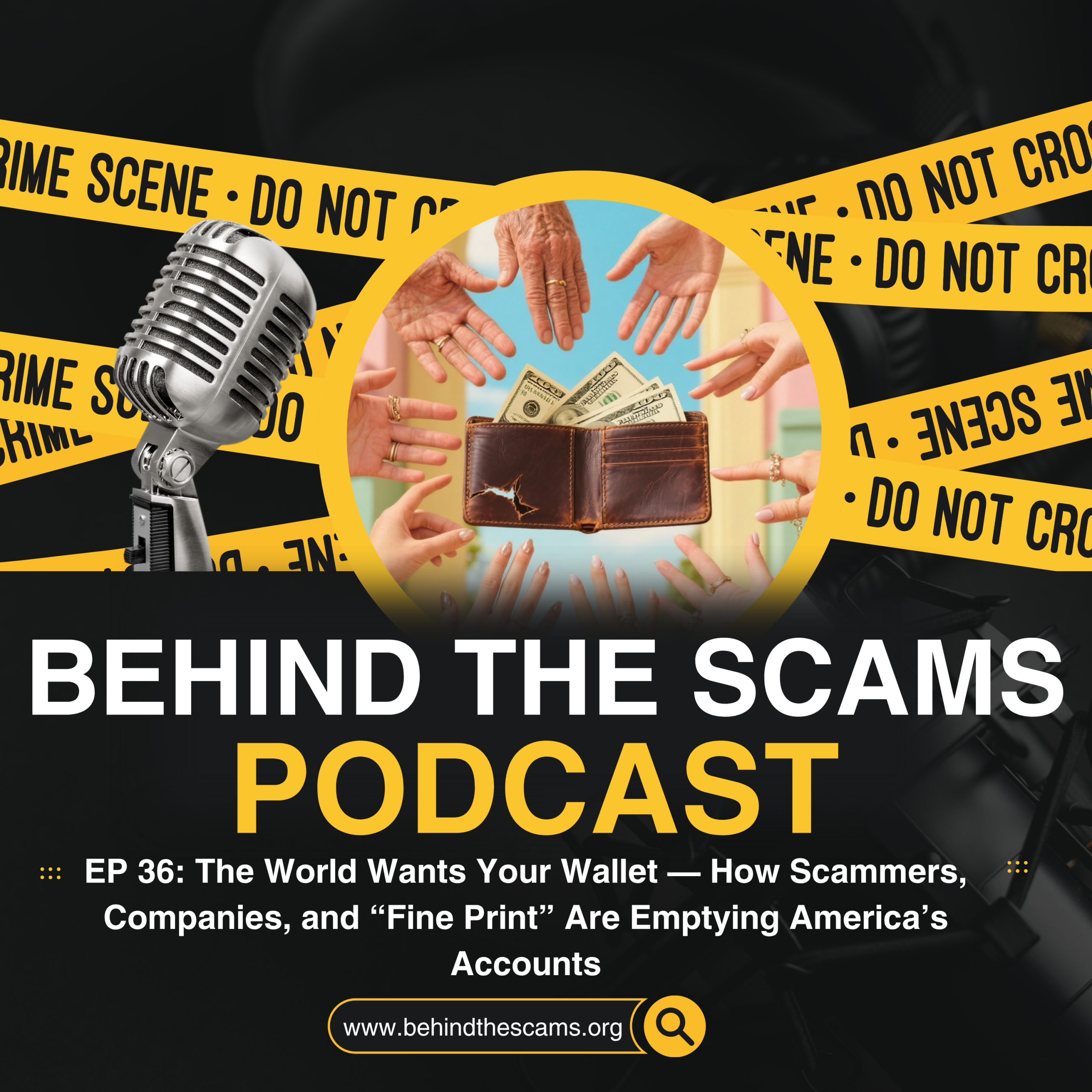
And I think we both decided Right away, this book coverage needed a whole podcast series, which is what we're doing. And we will call this first segment of the series the world wants your wallet.
[00:02:59] Speaker C: That's right. We were both inspired right away to do a series of podcast episodes right here on behind the Scams. Although, if I recall, I came up with the idea first. Anyways, we will defer that fight for later. But, Nick, so far, I find the book to be both insightful and funny. And, Nick, I like the title of this episode because, let's be honest, if you've got a wallet, somebody out there has a scheme to get into it, or a purse, or a Venmo account. Whatever it is, there's a scammer who's already figured out a way to poke at it. In today's episode, we're going to break down some of the most creative tactics scammers are using right now and give you the tools to protect yourself. In our review and feedback on this book, we will also be interspersing real stories drawn from our actual interactions with victims who contact our charity or from stories we may have come across on the Internet.
[00:03:58] Speaker B: That's right, Sue. So today, I think a good place to start is by exploring the scope of the problem. We'll look at the data and stories that prove scams aren't just a nuisance, they're a billion dollar industry.
Then we'll take some of the book's examples of everyday scams like free trials and warranties, and show how they connect to real cases. And of course, we'll sprinkle in humor in a few scam reenactments, because laughing while you learn makes it stick.
And so when we talk about the scale of this problem, the numbers are absolutely staggering. The FTC just reported that consumers lost more than $12.5 billion to fraud in 2024 alone.
But here's the kicker, and this is where it gets really scary. Experts estimate that only 5 to 10% of fraud is ever reported, which means the real number could be over $100 billion annually.
[00:04:55] Speaker C: Over a hundred billion? Nick, that's. I mean, that's like every single person in Los Angeles paying for a gym membership they never use, but for the entire country.
And that's just what we know about. I can't even wrap my head around how much money that is, which is depressing, because that's 100 billion we could be using for things like roads, schools, or my secret plan to bring back Blockbuster Video.
[00:05:23] Speaker B: Wait, you want Blockbuster back?
I like that plan. But be sure and Charge rewind fees for those fraudsters who don't read the label. Be kind and rewind. I hate those guys.
But sue, this problem only gets worse. There's a Pew research study that shows 73% of Americans have experienced some kind of online scam, with about one third of those happening in just the last year.
So we're not talking about some rare occurrence here. This is happening to almost everyone.
You know, this book really opened our eyes to this concept of legal wellness. And what I love about that term is it recognizes that free fraud today doesn't always look like the traditional scams we grew up hearing about. It's not just the Nigerian prince emails anymore. These scammers have gotten sophisticated and they're targeting legitimate looking opportunities, investment schemes, even dating apps. The line between legitimate business and fraud has gotten really, really blurry. And here's something really disturbing that the book covers. There's this thing called sucker lists. Once you fall for a scam, once your information gets sold to other scammers. There was a study that showed 62% of fraud victims had multiple incidents, averaging nine scams per victim. Nine. Can you imagine?
[00:06:47] Speaker C: Oh my gosh. That explains so much. Nick, you remember that caller we had last month to our charities business line?
If you recall, she told us she fell for one of those sweepstakes scams. You know, the ones where they tell you you've won money but you need to pay taxes first? Well, she told us rather angrily that after she sent the money, she started getting calls from other companies saying she owed taxes on her winnings from different contests she'd never even entered. It was like they were passing her name around.
[00:07:19] Speaker B: Oh yeah, I remember her call vividly. We had her on the speakerphone in her office and she was so mad and loud, she scared the dogs out of the office.
But I don't blame her. However, here's what people really need to understand.
These scams aren't about intelligence. They're about emotions. The best scammers are basically psychologists. They exploit fear, greed, love, trust. They catch you when you're vulnerable, when you're excited about an opportunity, when you're worried about your family's safety, or when you're lonely and someone's showing you attention.
Smart people fall for scams every day because scammers have figured out how to push our emotional button.
[00:08:04] Speaker C: Speaking of emotional buttons, should we show our listeners what one of these calls actually sounds like? Nick's been practicing his scammer voice.
[00:08:14] Speaker B: Alright, here we go. Let me go into scammer mode.
Hello, this is Mike from your bank's security department.
We've detected some suspicious activity on your account and we need to verify some information immediately to protect your funds. Can you please confirm your account number and the last four digits of your Social Security number?
[00:08:36] Speaker C: Oh, absolutely, Mike. My account number is 12-3-456789. And the last four digits of my social are 0000.
By the way, what's the weather like there in your totally legitimate bank call center?
Nice try, buddy.
[00:09:01] Speaker B: Wow, sue, great job. But that's exactly how you handle these calls, folks. Except there's not any overacting like sue just demonstrated. You have to remember that she's a method actor. But her message through all that overacting is clear.
Legitimate banks would never call you asking for that information. They already have it.
[00:09:20] Speaker C: Ouch, Nick, sounds like you're still mad that I burned dinner last night. But you're right about the message we are trying to deliver. And that is when someone calls you and immediately asks for sensitive information, that should be your first red flag. Real banks, real government agencies, they don't work that way. When in doubt, hang up and call them back at the number you know is legitimate.
[00:09:43] Speaker B: You know, sue, one of my biggest, biggest pet peeves is the so called free trial. The author nails this in the book. He tells a story about signing up for what looked like a harmless seven day subscription for $1.95. No big deal, right? But then, tucked into the fine print was the kicker. If you don't cancel by a certain date, you'll automatically get hit with a $37 monthly charge every month until you cancel.
[00:10:14] Speaker C: Oh, the old free trial. That's about as free as a Vegas buffet. Once you add drinks, kips, and the cab ride home.
[00:10:21] Speaker B: Exactly. The book calls this a negative option, which basically means unless you jump through hoops to stop it, you've just signed up for a never ending bill.
[00:10:32] Speaker C: And the worst part?
Companies bank on people forgetting. I mean, let's be honest. How many of us have signed up for a free trial? Thought all cancel later and three months later realized we've basically bought stock in some random app we don't even use. It's sleazy. It's legal, but it's sleazy. And the book makes the point. This stuff is everywhere. You have to watch for it. Like you'd watch for potholes in the road. Or in our case, watch for suspicious credit card charges that make you say, wait, when did I sign up for the premium deluxe ultra streaming package?
You know Nick, if the word trial is followed by the words credit card required, that's your red flag.
You know, my sister in law is just telling me a story about some magazine that she received at her house. I mean, who gets magazines anymore? But she didn't give it any thought. Although it was a subscription for something like Popular Mechanics or some biker magazine. She thought my brother had ordered it but forgot to ask him.
[00:11:32] Speaker B: What?
[00:11:32] Speaker C: Well, two weeks later, she gets charged $8 for a monthly subscription she never agreed to. And when she tried to cancel, they told her she had to mail a written cancellation request to some P.O. box in Nevada. Nevada? She lives in Texas.
[00:11:48] Speaker B: Oh, no. Really? Nevada? That's classic. And let me guess. When she finally sent the letter, they probably claimed they never received it, right?
[00:11:57] Speaker C: Exactly. And when she called for a follow up, they said the letter must have gotten lost in the mail and she'd have to send another one.
Meanwhile, they kept charging her every month. She ended up having to dispute it with her credit card company.
I think these companies really expect customers to get so fed up with the process, they either forget about it or just keep putting it off.
[00:12:17] Speaker B: You're exactly right. But that story reminds me of another scam that's everywhere these days. Extended warranties. I like to think of these as cobwebs. They look like they're gonna catch you when you fall, but when you actually need them, they just fall apart in your hand.
[00:12:33] Speaker C: That's such a perfect analogy. They look so sturdy and protective until you actually try to use them. Wait, hold on. Didn't you buy one of those extended warranties once?
[00:12:44] Speaker B: Oh, sue, you had to bring that up, didn't you? Yes. I'm embarrassed to say I fell for it once. I bought this extended warranty for a washing machine. Cost me like 300 bucks. The salesperson made it sound like the machine was going to explode the minute the manufacturer's warranty expired. I was convinced I was being smart and protecting our investment.
[00:13:07] Speaker C: Oh, no. And what happened when you actually tried to use it?
[00:13:10] Speaker B: Well, about a year and a half later, the washing machine starts making this horrible grinding noise. So I call a warranty company all excited, thinking I'm finally going to get my money's worth. They send out a technician who takes one look at it and says, sorry, this is normal wear and tear. Not covered normal wear and tear. The thing sounded like a freight train.
[00:13:32] Speaker C: Oh, I remember that. You were so mad. It was awful.
Now, our lovable lawyer addresses this exact issue in the book, doesn't he?
[00:13:41] Speaker B: Oh, yes, he sure does. He explains that most warranties are written with exclusions so wide you could drive a semi through them. A part fails. Well, sorry that failure isn't covered. You didn't have the work done at their authorized service center. Sorry again. Voided. He even points out that it's not an accident. It's built into the design. The warranty is really just another profit center.
[00:14:10] Speaker C: That is so frustrating. They'll take your money for years, but the minute you need them, they find some tiny loophole to get out of paying you. You know what, Nick? I think this calls for another one of your scammer impressions. How about you call me about my car warranty?
[00:14:27] Speaker B: Oh, Sue, I thought you would never ask. I love role playing.
Hello, this is Brad from Vehicle Protection Services.
Our records show that your car's extended warranty is about to expire, and we're calling to offer you one final opportunity to renew your coverage.
Can you please confirm the make and model of your vehicle?
[00:14:50] Speaker C: Oh, wonderful. I drive a 1994 Honda Civic. It's got about 300,000 miles on it. The radio only picks up AM stations, and I'm pretty sure it's being held together with duct tape and prayers. Are you telling me you want to warranty this magnificent piece of automotive history?
[00:15:08] Speaker B: Yes, ma'. Am. Our comprehensive coverage plan will protect you from all major breakdowns and repairs.
For just $199 a month, you'll have complete peace of mind. Now, can I get your credit card information to get you signed up today?
[00:15:25] Speaker C: $200 a month? Brad, my car is worth about $50 on a good day. That warranty would cost more than the car in three months.
Thanks, but I think I'll stick with my current coverage plan, which is crossing my fingers and hoping for the best.
[00:15:41] Speaker B: And that's exactly the right response. But you know, sue, all of these scams have one thing in common. They rely on contracts and fine print that nobody reads. It's like companies have figured out that they can hide absolutely anything in those terms and conditions.
[00:15:59] Speaker C: Oh, absolutely. And here's what's really sneaky about it. They put all the good stuff at the beginning of the contract. Free this and guaranteed that and money back promise. But then all the traps, all the gossips, patches, all the ways they can weasel out of their promises, that's buried at the end where they know most people will never read. And can I confess something embarrassing? I totally click. I agree on terms and conditions without reading them. Like every single time I could have agreed to sell our dog for all I Know, last week I was signing up for some app and just clicked through about 15 pages of legal text without reading a word.
[00:16:39] Speaker B: Wait, hold on. You could have agreed to sell our dog. So please tell me you at least skimmed the part about pet ownership. But honestly, you're not alone. Studies show that if people actually read every terms and conditions agreement they encounter, it would take about 76 working days per year. Nobody has time for that.
[00:17:01] Speaker C: 76 days. No wonder companies get away with burying the bad stuff in there.
But you know, even when you think you understand what you're agreeing to, they still get you. Remember that listener who called about the gym contract?
She thought she was signing up for a month to month membership.
[00:17:18] Speaker B: Oh, right. That was brutal. She went in for a tour, the salesperson was super friendly, kept talking about how flexible their membership was. No long term commitment. He said, cancel anytime. So she signed up thinking she could quit whenever she wanted.
Three months later, when she tried to cancel, that's when she found out she'd actually signed a two year contract.
[00:17:41] Speaker C: Two years. And the worst part was when she said she couldn't afford it anymore and tried to get out of it. They offered to freeze her membership for just $10 a month. $10 a month? To not use a gym? It's like paying rent for an apartment you don't live in.
[00:17:57] Speaker B: And don't even get me started on cable companies.
We had another caller who thought she was getting a great deal. No contract Internet service for $39.99 a month. The sales rep was very clear about that. No contract, ma', am. You're free to cancel anytime with no penalty.
[00:18:14] Speaker C: Oh, no, let me guess. There was a catch.
[00:18:18] Speaker B: Oh, there's always a catch. Six months later, her bill jumps to $90.
When she called to complain, they said, well, the promotional rate expired, but you're still not in my contract.
Technically true, but buried in the fine print was this clause that said they could increase rates at any time with just 30 days notice. So while she could cancel anytime, they could also price her out anytime.
[00:18:43] Speaker C: That's so sneaky. They give you the freedom to leave, but they also give themselves the freedom to make you want to leave by jacking up the price. It's like saying you can leave this restaurant anytime you want, but by the way, your burger now costs $50.
[00:19:00] Speaker B: You know, sue, this brings us to something really important. The psychology behind how these scams actually work. It's not about tricking stupid people. These scammers are basically running psychological warfare. And they've identified four key triggers that bypass our logical thinking. The author calls out how companies and scammers alike thrive on what's called decision fatigue. You get so many offers, pop ups and fine print traps thrown at you that your brain just gets tired.
And when you're tired, you stop analyzing and you just click yes to get it over with. That's one. The second trigger is urgency. You've heard it a million times. Act now. Limited time only. The book points out that once urgency gets into your head, you make emotional choices instead of rational ones.
[00:19:48] Speaker C: I find the psychology around scammers and the mind games they play both scary and fascinating.
Please keep going.
[00:19:56] Speaker B: Whoa. I didn't know the psychology stuff excited you. Note to self, my wife likes Freudian stuff. Well, Sue. Third is what is referred to as authority bias. Scammers love to impersonate people we trust. IRS agents, bank managers, tech support. They'll use official sounding language, reference account numbers they found online, anything to make you think they have legitimate authority over you.
Second is fear and urgency. Your account will be closed in 24 hours. The IRS is sending police. They want you panicking so you don't have time to think clearly. And finally is scarcity tactics. This offer expires today. Only three spots left. They make you feel like you'll miss out on something valuable if you don't act immediately. And fourth is social proof. Thousands of people have already signed up or fake testimonials and reviews. They create the illusion that everyone else is doing it, so you should too. That fear of missing out shuts down your logic. The book ties all of these together as tools in the scammer's toolbox. They don't need to outsmart you. They just need to hit one of these emotional switches.
[00:21:02] Speaker C: Wow, that explains so much. And you know, when you and your new bromance, the lovable lawyer put it like that, I can see how even smart people would fall for these. Especially when they're hitting you with multiple triggers at once.
[00:21:17] Speaker B: That's right, sue, but I need to correct you. It's not quite a bromance yet. Let's just call it a light man crush with the chance of evolving into a bromance. But I do love how he uses humor throughout his book. You know how much I love humor. I've watched every episode of Seinfeld just so I can steal his jokes. I know, I know. I'm droning on. You're thinking to yourself, here goes Nick again. Yada, yada, yada. But you know what, Sue? This psychology stuff ties in exactly with what Happened to a woman named Linda who reached out to us last month. She received an official looking letter in the mail that appeared to be from Social Security administration.
The letter said her benefits would be suspended unless she paid a reinstatement fee within 48 hours.
[00:22:02] Speaker C: Oh, no. Really? That must have been terrifying for her. Social Security benefits are a lifeline for so many people.
[00:22:10] Speaker B: Exactly. That's what the scammers were counting on. The letter had all the psychological triggers. Authority looked official, fear, benefits suspended and urgency, 48 hours. Linda panicked. She couldn't afford to lose her Social Security, so she called the number in the letter. They told her the reinstatement fee was $800 and it had to be paid in Apple gift cards. She went straight to the store and bought them.
[00:22:37] Speaker C: Wait, hold on. The Social Security administration wanted to be paid in Apple gift cards?
That should have been the biggest red flag ever.
When has any government agency ever asked for payment in iTunes cards?
[00:22:53] Speaker B: You'd think so. But here's what people need to understand. These scammers are professionals. They've perfected their scripts through thousands of calls. They know exactly how to explain away the gift card thing. They told Linda that gift cards were a temporary secure payment method due to system maintenance and that her account would be properly credited. When someone's panicked about losing their only source of income, they'll believe almost anything.
[00:23:22] Speaker C: That's heartbreaking.
And you know what makes me really sad about these stories? It's not just the money that victims lose. It's the emotional damage.
When Linda called us, she kept saying, I feel so stupid. How could I have fallen for this?
The shame and humiliation that victims feel is just crushing.
Many people don't even report these scams because they're too embarrassed.
[00:23:48] Speaker B: And that shame factor is exactly what scammers are counting on. The book really drives home that scammers don't have to be smarter than you. They just have to catch you in a vulnerable moment. What the author writes about ties in so well with what we do here at our nonprofit. Of course, that is scam prevention and scam education.
But it also ties in with a lot of things I witnessed during my 25 years in law enforcement. I saw many of the tricks and tactics he addresses in the book so often during my investigations. Speaking of our nonprofit, we had another caller recently. Let's call her Margaret, who fell victim to a romance scam. And she met someone on a dating app who seemed perfect, charming, attentive, said all the right things. After a few months of chatting, he started having emergencies. Sick mother Job loss. You know, the.
[00:24:40] Speaker C: Oh, no. I can see where this is going. Let me guess. He needed money to help with these emergencies.
[00:24:48] Speaker B: Exactly. Over six months, Margaret sent him $20,000. 20,000. She drained her savings account, maxed out credit cards, even borrowed money from friends to help this man she'd never actually met in person. When she finally realized it was a scam, she was devastated. But here's the worst part. She didn't tell her kids would happen for months because she was so ashamed.
[00:25:14] Speaker C: $20,000?
That's devastating. And she couldn't tell her own kids what happened. When she finally did tell them, unfortunately.
[00:25:24] Speaker B: It made things worse. Her son's reaction was basically, mom, how could you be so naive? Didn't you watch the news stories about this stuff? Instead of getting support, she got lectured. That kind of response just reinforces the shame and makes other victims even less likely to speak up. When it happens to them, that's just awful.
[00:25:45] Speaker C: But you know what? The scammers know this will happen. The shame and embarrassment isn't just a side effect of the scam. It's part of their strategy. They want victims to feel too humiliated to report it, too ashamed to tell their friends and family. Because the more isolated and silent the victims stay, the easier it is for scammers to keep operating. I think Margaret's story is exactly what the author calls deceit.
When you're worn down, your brain just wants to get the problem off your plate. You don't stop to fact check or question if the offer makes sense.
[00:26:23] Speaker B: Right. And Margaret's scammer played the whole playbook. Urgency, authority, and scarcity. He told her she'd lose her benefits if she didn't act now. And he spoke with enough authority that she didn't feel like she could argue.
That's exactly what the book warns about. These cons aren't random shots in the dark. They're carefully engineered to hit people right where they're weakest.
I hate to keep telling more real war stories, but in reading the book, I had so many aha moments.
So much of what I read tied into real stories I hear from victims who reach out to us.
We had a teacher call us about an investment scam that. That really demonstrates this point.
She thought she was investing her retirement savings in something called the Educational Excellence Fund. Sounded legitimate, right? Especially for someone in education.
[00:27:17] Speaker C: Oh, wow. They even targeted her profession. That's so manipulative. What happened?
[00:27:23] Speaker B: She lost $30,000 from her retirement fund. $30,000.
When she realized it was a scam, she not Only did she lose her savings, but she had to take on extra jobs. Tutoring, substitute teaching, even working at a grocery store on weekends just to try to rebuild what she'd lost.
A woman who dedicated her life to educating kids was suddenly working three jobs because of some criminal who preyed on her trust.
[00:27:53] Speaker C: And that's exactly what the book says. Today's frauds are more sophisticated, harder to trace and tougher to prove. That's the heartbreaking part. It's not snake oil salesmen in traveling wagons anymore. It's well polished, well rehearsed. Operations that look every bit as professional as the real thing.
[00:28:12] Speaker B: Right? And that's why I keep saying it's not stupidity, it's psychology.
Scammers don't need you to be careless. They just need you to be human.
And Margaret or this teacher or anyone who's been through it, they're not dumb.
They were manipulated by a system designed to do just that.
[00:28:31] Speaker C: You go. This all reminds me of a line in the book where the author says, one of the most powerful tools we have against scams is simply giving ourselves a moment to breathe before we react. He jokes that most scams only work because they don't give you time to think. That really hit me. Because it's so true. We get tricked when we're rushed.
[00:28:51] Speaker B: The pause reflex. I like that. Tell our listeners more about how this works. It's simple but powerful. The moment someone says, you need to act now or this offer expires today, or there's no time to think about it, that's when you stop. You say, I need to think about this, or, I'll call you back tomorrow, or, let me talk to my family first.
Legitimate businesses will respect that.
Scammers will get angry and pushy because they know that if you have time to think, you'll realize something isn't right.
[00:29:26] Speaker C: That's brilliant advice. And speaking of pushy scammers, I think it's time for another one of your famous impressions. How about you call me pretending to be from the power company? I feel like that's a scam we've been hearing about a lot lately.
[00:29:41] Speaker B: Wow, sue, you keep making these requests of me. I'm gonna have to reactivate my Screen Actors Guild membership.
But that's okay. I have been wanting to resurrect my acting career anyways.
Hello, this is Steve from Metro Power Company.
Ma', am, I'm calling because your electric service is scheduled for disconnection in 30 minutes due to unpaid bills. To avoid having your power shut off immediately, you need to make a payment of $247 in Bitcoin right now. Do you have access to Bitcoin?
[00:30:12] Speaker C: Wait, hold on there, Steve. Bitcoin.
The power company accepts bitcoin now. What's next? Are you going to start taking Pokemon cards as payment? And why would the power company call me about disconnection instead of just sending a notice in the mail like they always do?
[00:30:29] Speaker B: Ma', am, this is an emergency situation. We use Bitcoin for security reasons to prevent fraud. I don't have time to explain our new payment system. Your power is getting shut off in 25 minutes. The technician is already in your neighborhood. You need to go to the nearest gas station and and use the Bitcoin ATM right now.
[00:30:47] Speaker C: You know what, Steve? I'm going to use that pause reflex. My husband just taught me. I need to think about this and talk to my family. I'll call the power company back at the number on my bill. Thanks for your concern, but I'm not making any financial decisions right now. Bye.
[00:31:04] Speaker B: Perfect acting and a perfect teaching moment. That's exactly how you handle these calls. You question the unusual payment method. You used the pause reflex. And most importantly, you said you'd call them back at the official number. Real power companies don't demand bitcoin payments and 30 minute ultimatums.
[00:31:23] Speaker C: And that brings us to a great point. The author really drives this home in the book when he says most scams aren't hidden at all. The red flags are waving right in front of us, but we are often too distracted, rushed, or trusting to notice them.
Now, Nick, can you please point out for our listeners what some typical red flags might be when it comes to scammers?
[00:31:47] Speaker B: Absolutely. First and most obvious, any request for payment in gift cards, wire transfers, or cryptocurrency should immediately set off alarm bells. No legitimate business operates this way. These payment methods are popular with scammers because they're hard to trace and impossible to reverse.
[00:32:07] Speaker C: Right. And threats of arrest or legal action.
Real government agencies don't call you up and threaten to send police to your house if you don't pay a bill immediately. That's just not how they work. They send official notices through the mail. They give you time to respond, and they have proper procedures.
[00:32:27] Speaker B: And finally, demands for secrecy. If someone tells you, don't tell anyone about this, or this needs to stay between us, or your family won't understand.
Run legitimate businesses want you to be comfortable, to ask questions, to get second opinions. Only criminals benefit from keeping you isolated and silent.
[00:32:49] Speaker C: You know, Nick, talking about all these red flags and how to spot scams. I've been thinking about something.
Sometimes when I hear these ridiculous scammer stories, they. I just can't help but laugh. Like that guy who wanted me to pay my power bill with Pokemon cards. That's so absurd, it's almost funny. Is that terrible of me?
[00:33:10] Speaker B: No, sue, that's not terrible at all. In fact, humor is one of your best weapons against scams. When you can laugh at the absurdity of what they're saying, it helps you stay calm and think clearly. The moment you start giggling at Please pay your electric bill with itunes gift cards. You've already won because you're not panicking anymore.
[00:33:30] Speaker C: That makes so much sense. When you're laughing, you're not scared. And fear is exactly what these scammers are counting on to make you act without thinking.
Speaking of staying calm and thinking clearly, let's talk about some practical protection strategies. You know what I love about the book by the lovable lawyer, Nick? The author doesn't just warn us about scams.
[00:33:52] Speaker B: He.
[00:33:53] Speaker C: He makes us laugh at them. And there's actually power in that. If you can laugh at the absurdity, you break the scammer's spell. I think that's a fantastic recommendation. Now, Nick, my dear, I know you have some strong opinions about credit cards versus debit cards.
[00:34:10] Speaker B: Oh, do I ever. This is one of my biggest soapbox issues.
If you take away nothing else from today's episode besides reading the lovable lawyer's new book about scams is to remember this. Use credit cards, not debit cards, for any purchase you're not 100% certain about.
The fraud protection laws are completely different. With a credit card, you're disputing charges on the bank's money. With a debit card, you're trying to get your own money back after it's already been taken from your account.
[00:34:42] Speaker C: Oh, wow, that's such a good point. I never really thought about it that way. When it's a credit card, you're fighting over the bank's money, not your own. That gives you so much more leverage. And didn't you tell me about a woman who learned this lesson the hard way? With a vacation rental?
[00:34:59] Speaker B: Yes. This story perfectly illustrates why this matters. A woman named Carol found what looked like the perfect beach house rental on a vacation website.
Great photos, reasonable price, lots of positive reviews. Or so she thought.
She paid the $1,200 deposit with her debit card. When she showed up for her vacation, there was no rental. The house existed, but it wasn't for rent. The whole listing was fake.
[00:35:27] Speaker C: Oh, no. So she's standing there with her suitcases, no place to stay, and she's out twelve hundred dollars. That's awful.
[00:35:36] Speaker B: Exactly. And here's where the credit card versus debit card issue becomes crucial.
Because she used a debit card, that $1,200 was immediately gone from her checking account. She had to fight with her bank for weeks to try to get it back. Meanwhile, she had to scramble to find last minute accommodations that cost way more. And she didn't have the money because it was tied up in this fraud dispute.
If she'd used a credit card, she could have disputed the charge immediately and wouldn't have been out the money while fighting to get it back.
[00:36:11] Speaker C: That's such an important distinction. I mean, having to fight to get your own money back while you're already dealing with a vacation disaster, that's adding insult to injury. This whole conversation is really making me think about contracts and fine print differently. Earlier you mentioned that study about how long it would take to read every Terms and conditions agreement. 76 days a year.
There's got to be a better way to protect ourselves without becoming lawyers.
[00:36:42] Speaker B: Actually, there is.
The book we've been talking about has some really practical advice for this. If you don't have time to read a whole contract, and let's be honest, most of us don't, at minimum read the first paragraph. And the last paragraph. The first paragraph tells you what they're promising to do for you. The last paragraph tells you, tells you how they plan to get out of doing it. It's like reading the beginning and end of a mystery novel. You get the setup and the twist ending. The author refers to it as one of the smartest legal wellness habits consumers can adapt.
[00:37:18] Speaker C: That's brilliant. First paragraph is the promise. Last paragraph is the loophole. I'm definitely going to start doing that. Speaking of promises that don't deliver, what were those statistics you mentioned about free trials? Because those things seem to be everywhere now.
[00:37:34] Speaker B: Oh, this statistic is going to blow your mind. The Better Business Bureau did a study and found that 45% of people who signed up for free trials ended up getting billed even after they thought they had successfully canceled. 45%. That means nearly half of all free trial customers are getting charged for something they tried to cancel. That's not an accident, that's a business model.
[00:37:58] Speaker C: 45%. That's nearly half. So almost every other person who signs up for a free trial gets charged. Trapped into paying for something they don't want. That's outrageous. You know what? I think this calls for another one of our scammer skits. How about we do one of those Amazon Security calls? I feel like everyone's getting those now.
[00:38:18] Speaker B: Great idea, Sue. I've actually been practicing my Amazon voice while you have been overtaking the podcast. Just kidding, darling. Okay, let's do this.
Hello, this is David from Amazon Security Department. We have detected suspicious activity on your account. Someone tried to purchase a $7,500 MacBook using your account.
To secure your account, I need to verify your credit card information.
Can you please provide your credit card number, expiration date, and security code?
[00:38:51] Speaker C: Oh, my goodness, David, thank you for calling. I definitely didn't buy a MacBook. Let me give you that information right away.
But while I have you on the line, do you also need my Netflix password and my gym membership number? Oh, and, David, since you're with Amazon Security, would you mind mowing my lawn this weekend? I figure if you're going to steal my identity, you might as well help with the yard work.
[00:39:15] Speaker B: I love that response, Sue. Since you're stealing my identity anyway, might as well help with yard work. That's perfect. But, you know, joking aside, this brings up something really important.
When people do fall for these scams, our reaction as friends and family members really matters.
[00:39:32] Speaker C: You're absolutely right. I think about that woman, Margaret, who lost $20,000 in the romance scam and how her son's first reaction was basically, mom, how could you be so naive? That had to make her feel even worse.
We need to stop saying things like, how could you fall for that? Or didn't you know better?
Those responses just add shame to someone who's already been victimized.
[00:40:00] Speaker B: Exactly. The response should be support, not judgment. I'm so sorry this happened to you. This isn't your fault. What can I do to help? Because here's the thing. Victim blaming doesn't just hurt the person who got scammed. It hurts future victims, too. When people know they'll be judged and blamed, they don't report scams. They suffer in silence. And that silence helps scammers keep operating. You know, the book makes a really important point about how people react when a friend or family member gets scammed. Usually, the first thing out of someone's mouth is, how could you fall for that? I never would have. Now, sue, you know, I deal with a lot of victims through our nonprofit. Whether I'm talking with them over the phone or through email, I hear this very often. Victims are so afraid to let others Know their story. I had one woman who I was helping. After being a victim of a romance scam and losing her life savings, I set up a GoFundMe campaign for her. After I set it up, I told her to forward the GoFundMe link to her friends and family. She said absolutely not, because she had not told anyone and she did not want to start. Now, a lot of people think that if you set up a GoFundMe campaign, that it'll take off like a rocket. Well, that is not the case.
Most successful GoFundMe campaigns are successful because of word of mouth. In other words, victims telling their stories on the news or social media or friends and family telling their story on their behalf. And you know what, Sue? It is so important for recovery, both emotional recovery and financial recovery.
[00:41:33] Speaker C: That makes so much sense. And if people are too shamed to talk about it, then other people don't know what scams are out there. It becomes this vicious cycle where the scammers win because everyone's keeping quiet.
We need to normalize talking about scams the same way we'd talk about other crimes. Like if someone's house got broken into, we wouldn't say, how could you be so careless leaving your house unlocked, even if they did forget to lock it?
[00:42:03] Speaker B: Perfect analogy. And reporting these scams isn't just about trying to get your money back, though you should definitely try.
It's about helping law enforcement track patterns and shut down operations.
Every report adds to the database. When the FBI sees 50 reports of the same romance scammer using the same photos and the same story, they can build a case. But if only five people report it because everyone else is too embarrassed, that scammer keeps operating. You know, Sue, I saw this a lot during my law enforcement career. People underestimate the power of reporting scams and frauds. It is so crucial to taking down scammers. The information I extracted from our intelligence databases was crucial to solving a lot of crimes.
[00:42:48] Speaker C: That's such a good point.
Every report helps build the bigger picture. You know, this whole conversation is really reinforcing what you mentioned at the beginning about legal wellness. I love that concept. Can you explain more about how that works?
[00:43:04] Speaker B: I love this concept because it's so practical.
Think of legal wellness like physical wellness. You don't need to be a perfect athlete to be healthy, but you do need some basic habits. Eat reasonably well, get some exercise, get regular checkups. Legal wellness is the same thing. You don't need to be a lawyer, but you need some basic habits. Read before you sign, Pause before you pay. Research before you commit. Small, consistent habits that protect you over time.
[00:43:33] Speaker C: I love that it's not about being perfect, it's about building good habits. And speaking of habits, it sounds like some of these companies have made a habit out of trapping customers.
Earlier we talked about gyms and cable companies, but it feels like this goes way beyond just obvious scammers like legitimate businesses are using the same tactic.
[00:43:56] Speaker B: You're absolutely right, Su. The line between legitimate business and predatory practices has gotten really blurry.
Phone companies with those confusing unlimited plans that aren't actually unlimited. Gyms that make it easier to get married than to cancel a membership.
Cable companies with promotional rates that explode after six months.
Streaming services that sign you up for annual plans when you think you're getting monthly. These aren't accidents.
These are carefully designed business models that profit from customer confusion and inertia.
[00:44:31] Speaker C: Oh my gosh, subscription services are the worst for this I looked at my credit card statement last month and found I was paying for three different streaming services. I forgot I had a meditation app I used twice and some makeup subscription box that I signed up for during a weak moment at 2am they make it so easy to subscribe with one click, but canceling requires a PhD in customer service navigation.
[00:45:01] Speaker B: A PhD in customer service navigation. That's perfect. And that's exactly what I'm talking about. These companies have figured out that they can make millions of dollars off of human forgetfulness and procrastination.
How many people are paying for gym memberships they never use, streaming services they forgot about, or software subscriptions they signed up for Dream Free trials. It's become a massive revenue stream that depends on customer confusion and inconvenience.
[00:45:29] Speaker C: It's basically weaponized laziness. They're counting on us being too busy or too overwhelmed to keep track of all these small monthly charges.
And you know what? This conversation has been so eye opening, but I feel like we've only scratched the surface. There's so much more to explore about contracts and how to protect ourselves.
[00:45:50] Speaker B: You're absolutely right, Sue. We could do an entire series just on contracts.
And you know what? That's exactly what we're going to do in our next episode. Covering the book I must admit I have really enjoyed reading the youe Lovable Lawyer's Guide to Legal Wellness. We both appreciate him and his team providing us with an advanced copy. It has really been fantastic for us because there is so much important scam prevention information and guidance in the book. As we mentioned at the beginning of this podcast episode, we can expand our review to numerous additional podcast episodes, so please stay tuned for those they are expected to be insightful along with a little bit of humor. Because let's face it, how can you not have humor when reviewing a book by someone who calls himself your lovable lawyer? I think our listeners will appreciate it as well as enjoy it. I believe the official release date for the book is on October 21st first. For more updated information, check his official website at YourLovableLawyer.com As I mentioned in our next upcoming episode covering this book, we're going to dive deep into the world of contracts, the sneaky clauses companies use, how to spot the dangerous language, and most importantly, how to negotiate better terms for yourself. We'll talk about everything from apartment leases to employment contracts to those terms and conditions we all click agree on without reading. I know you might be saying to yourself, contracts? How boring is that? But stick with us. We'll make it way more fun than scrolling through 47 pages of iTunes terms you pretended to read before clicking.
[00:47:30] Speaker C: I agree, breaking down our review into segments is a fantastic idea. But you know what? I am starting to get a little jealous of your growing relationship with the lovable lawyer. To me, it is really moving into the bromance stage very fast. I mean, devoting more episodes to his book? Come on, what wife wouldn't be jealous? But I completely understand. There is so much crucial information in the book that fits right into what our nonprofit is trying to achieve. So for now, I will stop monitoring your iPhone for any text or secret late night communiques with the love of a lawyer. So far I have found none. All joking aside, I do really think all it is is your honest appreciation and respect for someone who really has the interest of consumers at heart. Which is absolutely fantastic. But Nick, I really am so excited about all our upcoming podcasts covering this important information.
I think our listeners will really benefit from here moving forward. I'm definitely going to start reading those first and last paragraphs you mentioned, and I have a feeling our listeners are going to have some incredible contract horror stories to share with us. If you've got a contract nightmare, whether it's a gym membership, a subscription service, a rental agreement, or anything else, send us your story. You can email us directly through our charity's main public email address of infostampoutscams.org that's right, Sue.
[00:49:08] Speaker B: We would love to hear from you. And before we wrap up today's episode, let's recap the key things we want everyone to Remember, use your pause reflex. Never make financial decisions under pressure. Use credit cards instead of debit cards for better fraud protection. Read at least the first and last paragraphs of any contract. And remember, if you fall for a scam, it's not because you're stupid. These are professional criminals using sophisticated psychological techniques.
[00:49:36] Speaker C: And most importantly, if someone you know falls victim to a scam, respond with support, not judgment. Help them report it. Help them protect themselves going forward, and help them heal from the experience.
Together, we can build a community that's resilient against these predators.
Thanks for joining us for another episode of behind the Scams. As a final word, I would like to encourage all our listeners to please forward a link to this episode to all your friends and family members.
Sometimes all someone needs is the advice and guidance from external sources. This episode might just be that external voice that saves someone from being scammed or defrauded.
[00:50:17] Speaker B: All great points, Soom. I certainly echo all your recommendations.
Also, a final thanks to Danny Koron, your lovable lawyer, for sending us a review copy of his book. We truly appreciate it. Not only is it a book I highly recommend, but it also got me to say the words lovable and lawyer together more than any other human in history. In fact, Guinness Book of Records has reached out to me to document this important milestone. This is Nick from Behind the Scams reminding all of you to keep your wallet safe, keep your sense of humor intact, and keep that pause reflect sharp until next time. Remember, the world may want your wallet, but now you know how to keep it safe. Bye for now.
[00:50:59] Speaker A: And that, dear listeners, wraps up this episode of behind the Scams. But don't worry. Just like those suspicious subscription services that somehow keep charging your credit card, we'll be back.
Only difference is, we actually deliver what we promise.
Nick and sue have only scratched the surface of your lovable lawyer's guide to Legal wellness.
This is just the beginning of a full series of episodes where we'll laugh, learn, and maybe cringe at just how many ways the world tries to separate us from our hard earned cash.
So stick around for the ride, because forewarned is forearmed and humor is the best scam repellent.
Until next time. Remember, if it sounds too good to be true, it probably belongs in a scammer's Greatest Hits album.